Lifestyle at a glance
Best for history lovers and residents seeking a compact coastal destination.

DestinationFinderAI premium guide
United States
St. Augustine, United States
Historic Atlantic coastal city combining a highly walkable colonial core, nearby beaches, live music and a year-round tourism economy.
Overview
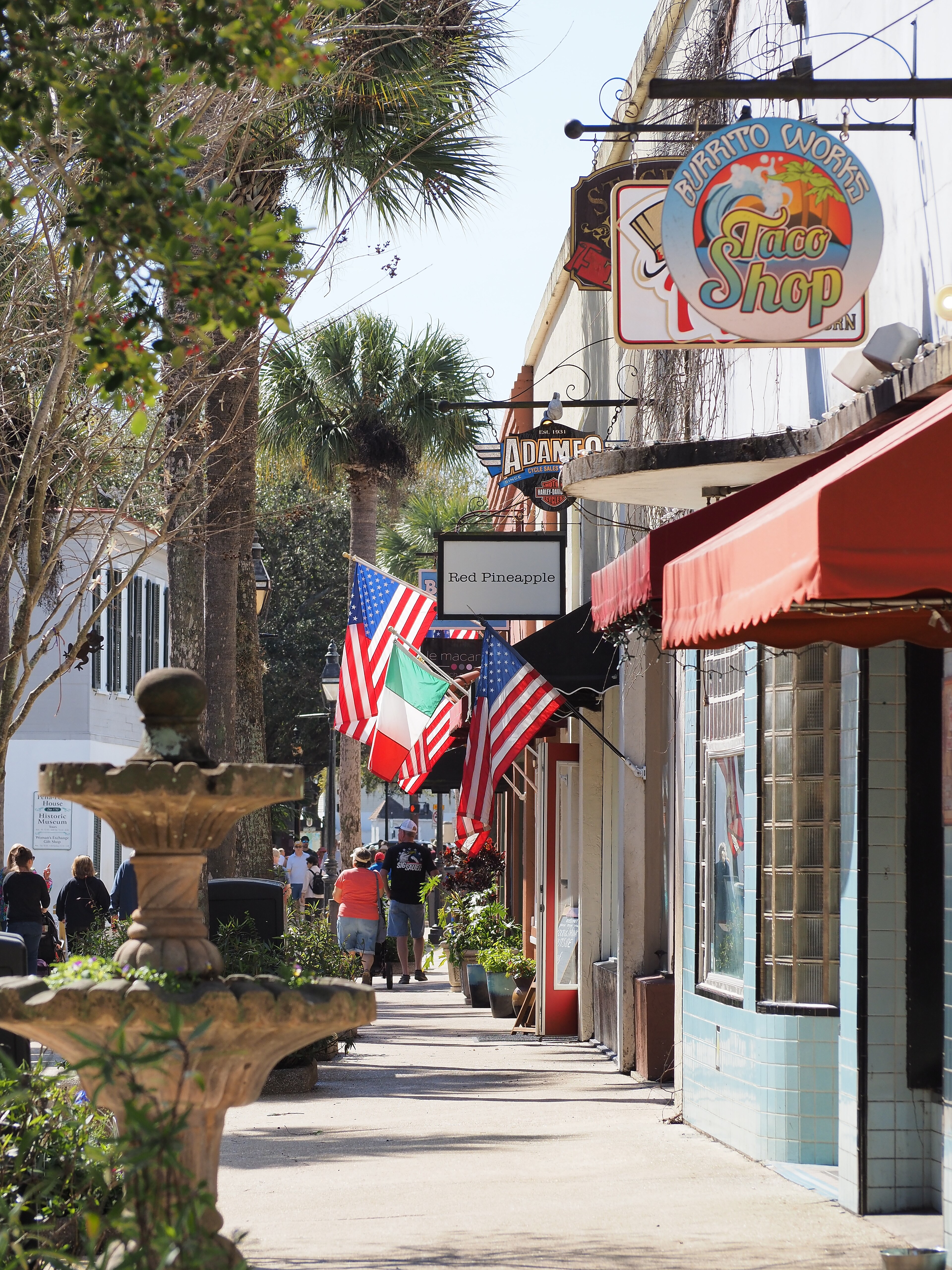
St. Augustine is unusual because the historic center is not a decorative district attached to a larger modern city; it is the city's identity. The Castillo de San Marcos, Plaza de la Constitución, St. George Street, Flagler College and the Lightner Museum sit within a compact pedestrian core that can support restaurants, culture and evening activity without a car. That gives St. Augustine more everyday texture than many Florida coastal destinations. The city changes quickly once you cross neighborhood lines. Lincolnville offers historic residential streets and a stronger local feel, Uptown and San Marco sit close to downtown with less tourist intensity, Davis Shores puts water and bridge access at the center of daily life, and St. Augustine Beach shifts the routine toward the ocean and driving. A long-stay decision should compare at least one historic-core neighborhood with one island or beach option because parking, flood exposure, home maintenance and walkability are completely different. The lifestyle is rich for a small city. The lighthouse, Anastasia State Park, Fort Mose, the amphitheatre and a strong restaurant scene create a full calendar beyond the headline historic attractions. Nights of Lights turns winter into one of the busiest periods of the year rather than an off-season. The Floridian, Collage, Ice Plant and local coffee shops add genuine repeat-use dining and nightlife, while the beaches and Intracoastal environment support a strong outdoor routine. Practical life is more mixed. UF Health Flagler Hospital covers local hospital needs, while Jacksonville provides broader specialty care and the nearest major commercial airport. Summer heat and humidity are significant, hurricane and flood exposure vary sharply by neighborhood, and insurance can change the economics of both renting and owning. Historic properties may also carry maintenance and preservation constraints that do not show up in a simple price comparison. A meaningful trial should include downtown at night, bridge traffic, a beach neighborhood, a grocery run, healthcare access and a property-level flood and insurance check. St. Augustine is especially appealing for people who want history, coast and culture in the same small city, but the right neighborhood determines whether the visitor appeal translates into a comfortable daily routine.
Cost of living snapshot
2 budget bands
Executive summary
Estimated one-adult monthly cost of living: $1,950–$3,400 per month (USD).
One adult
$1,950–$3,400 per month (USD)
Couple — two adults sharing housing
$2,575–$4,475 per month (USD)
Estimated for two adults sharing one home. Actual costs vary by housing, lifestyle and healthcare needs.
Monthly cost breakdown
10 live categories
Housing
$912–$1,664 per month (USD)
Groceries
$228–$352 per month (USD)
Dining
$171–$352 per month (USD)
Transport
$133–$256 per month (USD)
Utilities
$114–$160 per month (USD)
Internet Mobile
$66–$96 per month (USD)
Healthcare
$114–$160 per month (USD)
Fitness Recreation
$86–$160 per month (USD)
Household Personal
$76–$112 per month (USD)
Miscellaneous
$48–$80 per month (USD)
How the estimate is framed
Based on the destination's reported monthly cost-of-living range.
Media and atmosphere
4 curated assets
Destination guide
What you'll learn
What to know first
What makes it distinctive
Premium intelligence
Best for history lovers and residents seeking a compact coastal destination.
Historic Atlantic coastal city combining a highly walkable colonial core, nearby beaches, live music and a year-round tourism economy.
Neighborhood summary
Flagship neighborhood 1
Historic Downtown is St. Augustine's dense colonial core around the Plaza, Castillo and St. George Street, with the city's strongest concentration of visitor activity and walkable amenities.
Best for
People who want to live inside the historic core with St. George Street, restaurants, landmarks and nightlife steps away.
Overall vibe
It offers a clear local rhythm and strong daily-life texture.
Neighborhood resources
Best For
People who want to live inside the historic core with St. George Street, restaurants, landmarks and nightlife steps away.
Overall Vibe
It offers a clear local rhythm and strong daily-life texture.
Housing
Historic cottages, small homes, condos, apartments and mixed-use buildings, often with limited parking.
Pros
Exceptional walkability; immediate access to landmarks, dining and events; distinctive historic atmosphere.
Cons
Tourist crowds, parking pressure and older-building maintenance are constant tradeoffs.
Neighborhood intelligence
Golf
Golf
Real persisted places tied to this neighborhood.
Neighborhood
Historic Downtown
Family friendly
Family-friendly places
St. Augustine offers a lifestyle shaped by the nation's oldest continuously occupied European-founded city paired with Atlantic beaches, live music, old neighborhoods and enough year-round tourism to keep the center animated; families should test schools, childcare, pediatric care and after-school logistics from the actual neighborhood.
Remote work
Remote-work-friendly spots
Walkability
Walkability in St. Augustine varies sharply by district; test the core on foot, then compare the outer neighborhoods route by route.
How easily daily errands and neighborhood life can be handled on foot.
Transit
Sunshine Bus service connects key areas; Jacksonville International Airport is the nearest major airport.
How well the area supports car-light routines and local travel.
Safety
Neighborhood, season and time of day matter. Test Historic Downtown after dark as well as quieter residential streets; do not infer citywide risk from the visitor core. This matters differently in St.
How the area is perceived for daily calm and residential comfort.
Live neighborhood resources
Flagship neighborhood 2
Lincolnville is a historic residential district south of the Plaza known for Victorian-era homes, Black history, restaurants and walkability to downtown.
Best for
People who want historic residential character and quick access to downtown with a stronger neighborhood feel.
Overall vibe
It offers a clear local rhythm and strong daily-life texture.
Neighborhood resources
Best For
People who want historic residential character and quick access to downtown with a stronger neighborhood feel.
Overall Vibe
It offers a clear local rhythm and strong daily-life texture.
Housing
Historic cottages, renovated single-family homes, duplexes and some newer infill.
Pros
Strong neighborhood identity; walkable to downtown; rich history and local dining.
Cons
Historic-home maintenance and flood exposure vary by block, and prices have risen substantially.
Neighborhood intelligence
Golf
Golf
Real persisted places tied to this neighborhood.
Neighborhood
Lincolnville
Family friendly
Family-friendly places
St. Augustine offers a lifestyle shaped by the nation's oldest continuously occupied European-founded city paired with Atlantic beaches, live music, old neighborhoods and enough year-round tourism to keep the center animated; families should test schools, childcare, pediatric care and after-school logistics from the actual neighborhood.
Remote work
Remote-work-friendly spots
Walkability
Walkability in St. Augustine varies sharply by district; test the core on foot, then compare the outer neighborhoods route by route.
How easily daily errands and neighborhood life can be handled on foot.
Transit
Sunshine Bus service connects key areas; Jacksonville International Airport is the nearest major airport.
How well the area supports car-light routines and local travel.
Safety
Neighborhood, season and time of day matter. Test Historic Downtown after dark as well as quieter residential streets; do not infer citywide risk from the visitor core. This matters differently in St.
How the area is perceived for daily calm and residential comfort.
Live neighborhood resources
Flagship neighborhood 3
Uptown and San Marco extend north from downtown with historic homes, antique shops, local cafes and easier access to US-1.
Best for
People who want older homes and local businesses just north of the tourist center.
Overall vibe
It offers a clear local rhythm and strong daily-life texture.
Neighborhood resources
Best For
People who want older homes and local businesses just north of the tourist center.
Overall Vibe
It offers a clear local rhythm and strong daily-life texture.
Housing
Older detached homes, cottages, small apartment buildings and mixed commercial-residential properties.
Pros
Close to downtown without the same visitor intensity; local shops and restaurants; convenient north-side access.
Cons
Traffic on major corridors can be noisy and walkability drops quickly away from San Marco Avenue.
Neighborhood intelligence
Family friendly
Family-friendly places
St. Augustine offers a lifestyle shaped by the nation's oldest continuously occupied European-founded city paired with Atlantic beaches, live music, old neighborhoods and enough year-round tourism to keep the center animated; families should test schools, childcare, pediatric care and after-school logistics from the actual neighborhood.
Remote work
Remote-work-friendly spots
Walkability
Walkability in St. Augustine varies sharply by district; test the core on foot, then compare the outer neighborhoods route by route.
How easily daily errands and neighborhood life can be handled on foot.
Transit
Sunshine Bus service connects key areas; Jacksonville International Airport is the nearest major airport.
How well the area supports car-light routines and local travel.
Safety
Neighborhood, season and time of day matter. Test Historic Downtown after dark as well as quieter residential streets; do not infer citywide risk from the visitor core. This matters differently in St.
How the area is perceived for daily calm and residential comfort.
Live neighborhood resources
Flagship neighborhood 4
Davis Shores sits across the Bridge of Lions from the historic core, combining residential streets, Matanzas River views and convenient access to both downtown and the beach.
Best for
People who want waterfront views and quick access to downtown from Anastasia Island.
Overall vibe
It offers a clear local rhythm and strong daily-life texture.
Neighborhood resources
Best For
People who want waterfront views and quick access to downtown from Anastasia Island.
Overall Vibe
It offers a clear local rhythm and strong daily-life texture.
Housing
Mid-century homes, renovated waterfront properties, condos and smaller multifamily buildings.
Pros
Waterfront setting; close to downtown and beaches; more residential than the tourist core.
Cons
Flood and storm exposure matter, and bridge traffic can affect daily trips.
Neighborhood intelligence
Family friendly
Family-friendly places
St. Augustine offers a lifestyle shaped by the nation's oldest continuously occupied European-founded city paired with Atlantic beaches, live music, old neighborhoods and enough year-round tourism to keep the center animated; families should test schools, childcare, pediatric care and after-school logistics from the actual neighborhood.
Remote work
Remote-work-friendly spots
Walkability
Walkability in St. Augustine varies sharply by district; test the core on foot, then compare the outer neighborhoods route by route.
How easily daily errands and neighborhood life can be handled on foot.
Transit
Sunshine Bus service connects key areas; Jacksonville International Airport is the nearest major airport.
How well the area supports car-light routines and local travel.
Safety
Neighborhood, season and time of day matter. Test Historic Downtown after dark as well as quieter residential streets; do not infer citywide risk from the visitor core. This matters differently in St.
How the area is perceived for daily calm and residential comfort.
Live neighborhood resources
Destination highlights
Golf across St. Augustine
Real, verified St. Augustine places in this category.
Neighborhood
St. Augustine
Neighborhood
St. Augustine
Other useful destination resources across St. Augustine
Real, verified St. Augustine places in this category.
Neighborhood
St. Augustine
Neighborhood
St. Augustine
Neighborhood
St. Augustine
Neighborhood
St. Augustine
Neighborhood
St. Augustine
Neighborhood
St. Augustine
Neighborhood
St. Augustine
Neighborhood
St. Augustine
Neighborhood
St. Augustine
Neighborhood
St. Augustine
Neighborhood
St. Augustine
Neighborhood
St. Augustine
Neighborhood
St. Augustine
Neighborhood
St. Augustine
Neighborhood
St. Augustine
Neighborhood
St. Augustine
Maps and resources
Hotels
Vacation Rentals
Healthcare
Government
Weather
Neighborhood Guides
Restaurants
Consulates
Social Discovery
Editorial overview
Movement
Primary air gateway for St. Augustine.
Seasonal living
Humid subtropical climate with hot humid summers and mild winters.
Living there
Best for history lovers and residents seeking a compact coastal destination.
Morning: Historic Atlantic coastal city combining a highly walkable colonial core, nearby beaches, live music and a year-round tourism economy. Evening: St. Augustine is unusual because the historic center is not a decorative district attached to a larger modern city; it is the city's identity. The Castillo de San Marcos, Plaza de la Constitución, St. George Street, Flagler College and the Lightner Museum sit within a compact pedestrian core that can support restaurants, culture and evening activity without a car. That gives St. Augustine more everyday texture than many Florida coastal destinations. The city changes quickly once you cross neighborhood lines. Lincolnville offers historic residential streets and a stronger local feel, Uptown and San Marco sit close to downtown with less tourist intensity, Davis Shores puts water and bridge access at the center of daily life, and St. Augustine Beach shifts the routine toward the ocean and driving. A long-stay decision should compare at least one historic-core neighborhood with one island or beach option because parking, flood exposure, home maintenance and walkability are completely different. The lifestyle is rich for a small city. The lighthouse, Anastasia State Park, Fort Mose, the amphitheatre and a strong restaurant scene create a full calendar beyond the headline historic attractions. Nights of Lights turns winter into one of the busiest periods of the year rather than an off-season. The Floridian, Collage, Ice Plant and local coffee shops add genuine repeat-use dining and nightlife, while the beaches and Intracoastal environment support a strong outdoor routine. Practical life is more mixed. UF Health Flagler Hospital covers local hospital needs, while Jacksonville provides broader specialty care and the nearest major commercial airport. Summer heat and humidity are significant, hurricane and flood exposure vary sharply by neighborhood, and insurance can change the economics of both renting and owning. Historic properties may also carry maintenance and preservation constraints that do not show up in a simple price comparison. A meaningful trial should include downtown at night, bridge traffic, a beach neighborhood, a grocery run, healthcare access and a property-level flood and insurance check. St. Augustine is especially appealing for people who want history, coast and culture in the same small city, but the right neighborhood determines whether the visitor appeal translates into a comfortable daily routine. Seasonal rhythm: Humid subtropical climate with hot humid summers and mild winters.
Weather
Humid subtropical climate with hot humid summers and mild winters.
Movement
Primary air gateway for St. Augustine.
Airport access: Regional and international access
Wellness
UF Health Flagler Hospital is the main named local healthcare reference. For a long stay, map primary care, urgent care, emergency routing and where complex specialties are handled.
Insurance and access: Compare local coverage with travel/international or domestic insurance appropriate to residency status. This matters differently in St. Augustine because Historic Downtown is immensely walkable but visitor-heavy; Lincolnville feels more residential and cultural, while Davis Shores and the beach shift daily life toward water and driving.
Retirement
St. Augustine is most plausible for retirees who value history fans, beach walkers, golfers, restaurant lovers, seasonal residents and retirees who want a small coastal city rather than a master-planned resort. The counterweight is tourist congestion, hurricane and flood exposure, summer humidity, insurance costs and a relatively small local job market.
Who should not: St. Augustine is unusual because the historic center is not a decorative district attached to a larger modern city; it is the city's identity. The Castillo de San Marcos, Plaza de la Constitución, St. George Street, Flagler College and the Lightner Museum sit within a compact pedestrian core that can support restaurants, culture and evening activity without a car. That gives St. Augustine more everyday texture than many Florida coastal destinations. The city changes quickly once you cross neighborhood lines. Lincolnville offers historic residential streets and a stronger local feel, Uptown and San Marco sit close to downtown with less tourist intensity, Davis Shores puts water and bridge access at the center of daily life, and St. Augustine Beach shifts the routine toward the ocean and driving. A long-stay decision should compare at least one historic-core neighborhood with one island or beach option because parking, flood exposure, home maintenance and walkability are completely different. The lifestyle is rich for a small city. The lighthouse, Anastasia State Park, Fort Mose, the amphitheatre and a strong restaurant scene create a full calendar beyond the headline historic attractions. Nights of Lights turns winter into one of the busiest periods of the year rather than an off-season. The Floridian, Collage, Ice Plant and local coffee shops add genuine repeat-use dining and nightlife, while the beaches and Intracoastal environment support a strong outdoor routine. Practical life is more mixed. UF Health Flagler Hospital covers local hospital needs, while Jacksonville provides broader specialty care and the nearest major commercial airport. Summer heat and humidity are significant, hurricane and flood exposure vary sharply by neighborhood, and insurance can change the economics of both renting and owning. Historic properties may also carry maintenance and preservation constraints that do not show up in a simple price comparison. A meaningful trial should include downtown at night, bridge traffic, a beach neighborhood, a grocery run, healthcare access and a property-level flood and insurance check. St. Augustine is especially appealing for people who want history, coast and culture in the same small city, but the right neighborhood determines whether the visitor appeal translates into a comfortable daily routine. Best neighborhoods: Historic Downtown, Lincolnville, Uptown / San Marco, Davis Shores, St. Augustine Beach Climate considerations: Humid subtropical climate with hot humid summers and mild winters. Taxes: Estimated one-adult monthly cost of living: $1,950–$3,400 per month (USD).
Family
St. Augustine offers a lifestyle shaped by the nation's oldest continuously occupied European-founded city paired with Atlantic beaches, live music, old neighborhoods and enough year-round tourism to keep the center animated; families should test schools, childcare, pediatric care and after-school logistics from the actual neighborhood.
Activities: Best for history lovers and residents seeking a compact coastal destination. Neighborhood recommendations: Historic Downtown, Lincolnville, Uptown / San Marco, Davis Shores, St. Augustine Beach
Remote work
history fans, beach walkers, golfers, restaurant lovers, seasonal residents and retirees who want a small coastal city rather than a master-planned resort can make St. Augustine attractive to flexible workers, but test video calls, backup mobile data, noise and power reliability during a normal workweek.
Coworking: Best for history lovers and residents seeking a compact coastal destination. Visa: Requirements vary by citizenship Monthly costs: One adult: $1,950–$3,400 per month (USD) • Couple — two adults sharing housing: $2,575–$4,475 per month (USD) Best neighborhoods: Historic Downtown, Lincolnville, Uptown / San Marco, Davis Shores, St. Augustine Beach
Walkability and terrain
Daily errands and convenience
Internet and remote-work reliability
Language ease
Social integration and community character
LGBTQ+ considerations
Family
Pets
Environmental and natural-hazard risks
Crowds and seasonality
Who tends to love or struggle with this destination
Real destination-level research
What day-to-day life, the surrounding landscape, and recreation genuinely look like here - based on verified research, never a generic checklist.
Airport Access
Transport fit in St. Augustine depends on the exact neighborhood, airport/regional connection and whether weekly errands can be handled without defaulting to a car.
Culture & Museums
Castillo de San Marcos National Monument, Lightner Museum and Flagler College give St. Augustine repeatable cultural depth.
Golf
Golf references include St. Johns Golf Club, Royal St. Augustine Golf & Country Club.
Healthcare
UF Health Flagler Hospital is the local healthcare anchor; specialty depth still needs a regional check.
Named places
Nightlife
Evening energy centers on St. George Street and the local event calendar rather than a generic metro nightlife assumption.
Settlement Type
the nation's oldest continuously occupied European-founded city paired with Atlantic beaches, live music, old neighborhoods and enough year-round tourism to keep the center animated
Shopping & Markets
St. Augustine Amphitheatre Farmers Market and St. George Street are practical weekly anchors.
Walkability
Walkability in St. Augustine varies sharply by district; test the core on foot, then compare the outer neighborhoods route by route.
Climate (monthly)