Azimut gives the clearest named café reference: Café/bar and cultural space near the cathedral, representative of the city's younger arts and music scene. The social rhythm around Old Town and Dolac is more useful for judging repeat-week livability than a one-off tourist coffee stop.
walkers, sailors, culture-minded retirees and slow travelers who want Adriatic beauty without the scale and pricing of Split or Dubrovnik The most realistic social entry points are the repeat-use environments around Old Town, Dolac, Šibenik Market and Šibenik Waterfront, not a generic expat bubble.
Civitas Sacra and Šibenik City Museum capture two different layers of local identity. Modern interpretive center for Šibenik's cathedral and church heritage in the restored Galbiani Palace. Museum in the former Rector's Palace explaining the city's archaeology and local history.
Pelegrini anchors one side of the local food scene: Michelin-recognized restaurant opposite the cathedral, using Dalmatian ingredients in a highly polished format. Šibenik Market matters just as much for a long stay because daily market area for vegetables, fruit, fish and household shopping beyond the restaurant-heavy old core.
Šibenik Market is the practical grocery/market anchor: Daily market area for vegetables, fruit, fish and household shopping beyond the restaurant-heavy old core. Housing in Old Town versus Mandalina changes whether shopping is a frequent walking errand or a planned car/taxi trip.
General Hospital Šibenik is a key local-care reference: Main public hospital serving the city and county for emergency and specialist care. For serious relocation planning, the tradeoff to stress-test is steep stairs, seasonal tourism, limited winter flight options, tight old-town parking and a smaller employment/healthcare market.
Remote-work fit is strongest where reliable fixed broadband and mobile backup can be confirmed at the building level; Old Town and Baldekin offer different housing/amenity tradeoffs. The broader fit is walkers, sailors, culture-minded retirees and slow travelers who want Adriatic beauty without the scale and pricing of Split or Dubrovnik.
Croatian is the everyday language in Šibenik, while English is widely usable through the tourism economy and with many younger residents. The practical gap appears outside the summer-facing center: healthcare, building maintenance, public administration and neighborhood errands are where some Croatian pays off.
Harborfront walking route linking restaurants, ferries and the old town, especially valuable outside peak summer midday heat. Waterfalls and river landscapes within easy regional reach, a major quality-of-life asset for residents who hike regularly.
Šibenik Waterfront is the first outdoor reference: Harborfront walking route linking restaurants, ferries and the old town, especially valuable outside peak summer midday heat. Krka National Park - Skradinski Buk broadens the lifestyle radius: Waterfalls and river landscapes within easy regional reach, a major quality-of-life asset for residents who hike regularly.
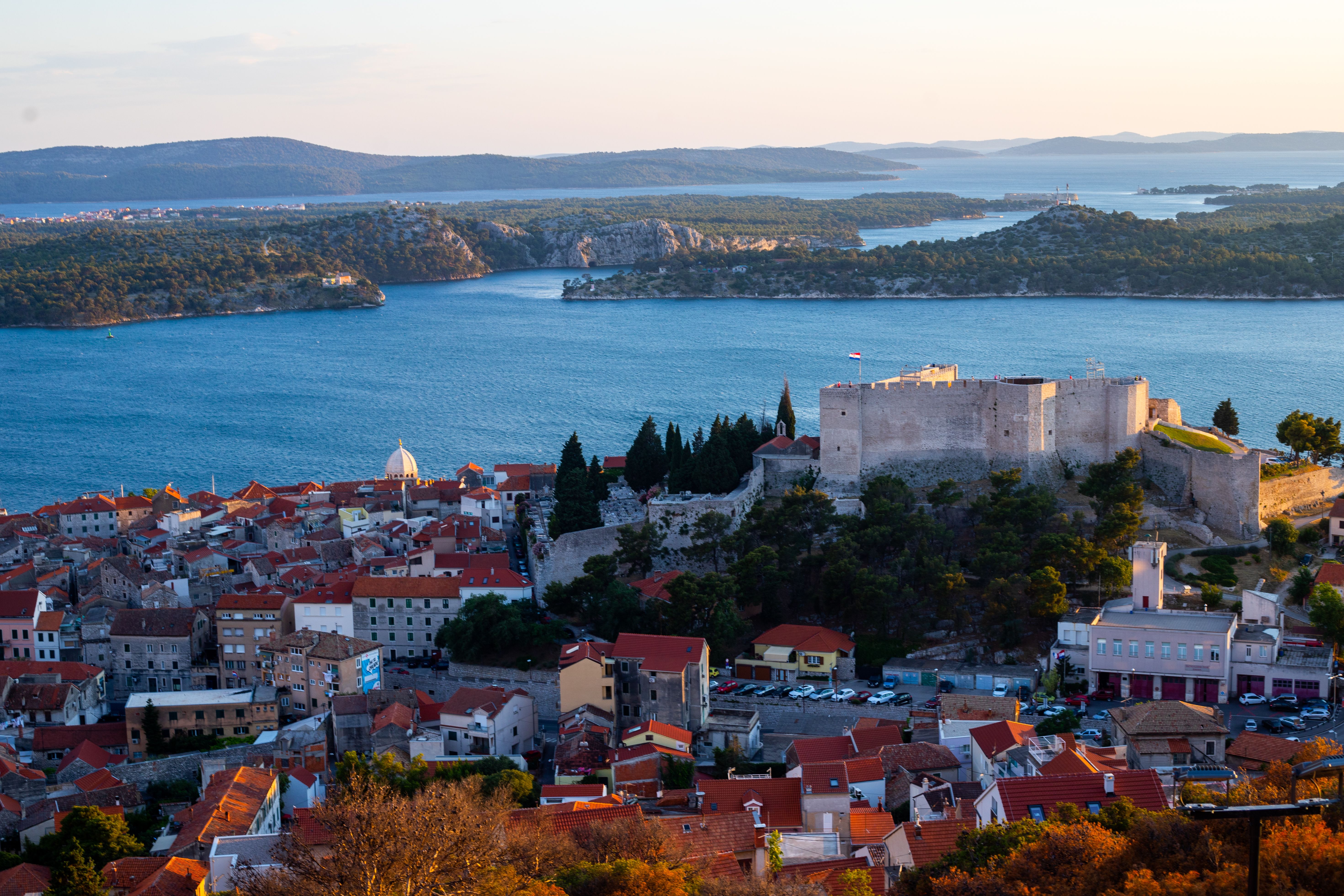
a compact Dalmatian city where medieval lanes climb from a working waterfront to fortress viewpoints, with Banj Beach, island ferries and Krka’s waterfalls forming an unusually rich lifestyle radius
Šibenik Market is a practical shopping/market anchor for day-to-day life: Daily market area for vegetables, fruit, fish and household shopping beyond the restaurant-heavy old core. City Life Shopping Center adds another useful shopping pattern: Practical indoor retail center in the modern city for groceries, pharmacy and everyday shopping. For a longer stay, this gives a more realistic read on Šibenik than visitor retail alone.
Šibenik Bus Station is the clearest transport anchor: Primary intercity transport hub with buses to Split, Zadar, Zagreb and nearby coastal towns. The mobility tradeoff across Old Town and Brodarica / Zablaće is materially different.
Old Town is the strongest pedestrian base: Stone lanes around the cathedral and waterfront deliver Šibenik’s strongest atmosphere, but stairs and protected buildings make accessibility a serious screening issue. Dolac changes the equation because immediately west of the old core, dolac mixes old stone houses, small squares and waterfront access with a slightly more residential feel.