
DestinationFinderAI premium guide
Vietnam
Quy Nhon
Quy Nhon, Vietnam
Quy Nhon is a long, curving Vietnamese beach city with a strong seafood culture, Cham heritage and easy coastal access, still feeling more local and lower-key than Da Nang or Nha Trang.
Overview
The complete picture of Quy Nhon
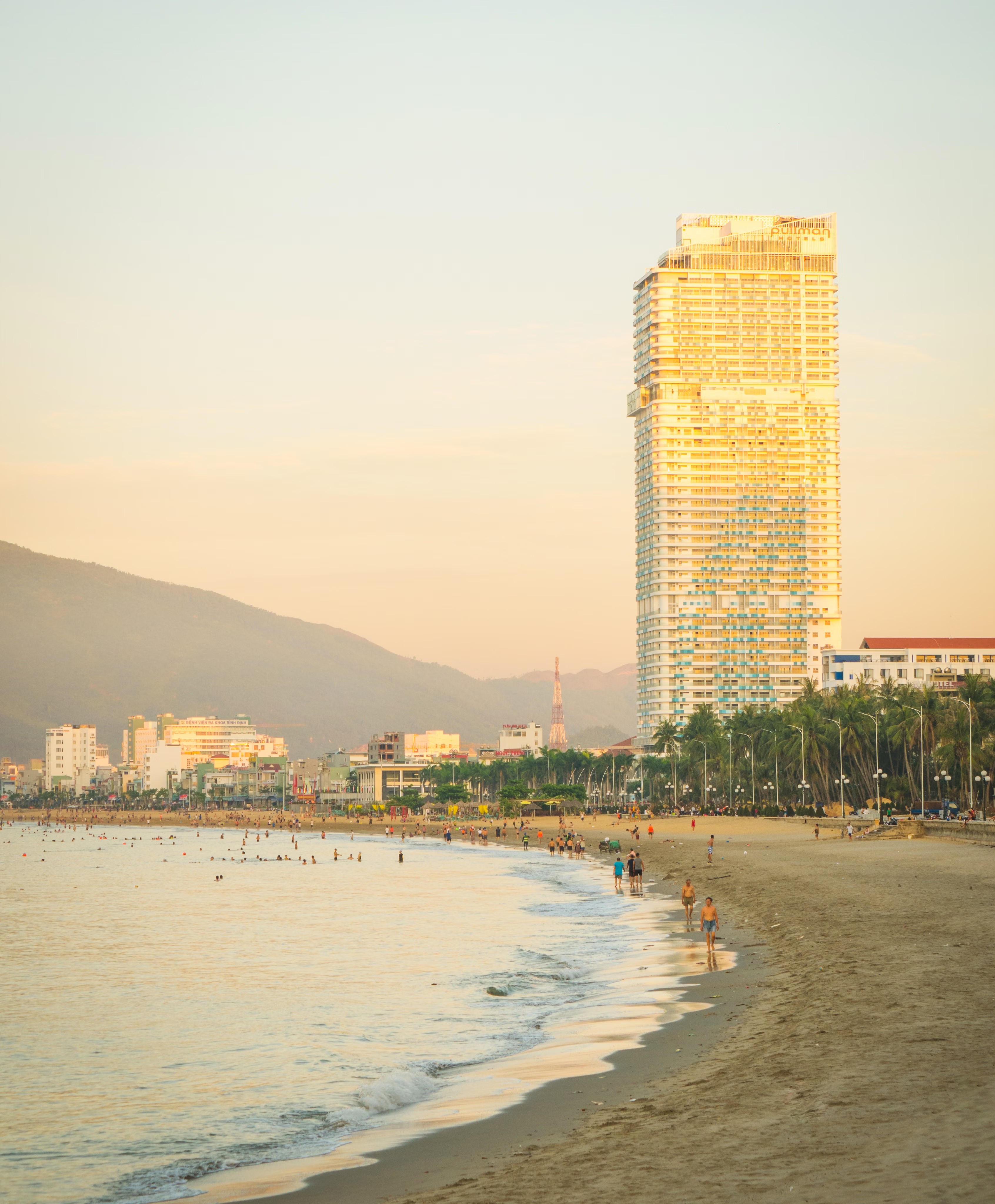
Quy Nhon has grown quickly, but its central advantage remains simple: a long urban beach directly faces a functioning Vietnamese city. Nguyen Hue and the central grid put seafood restaurants, markets and cafés within a short ride of the sand, while the Tháp Đôi Cham towers and Bình Định’s broader Vijaya heritage add a historical layer that most beach cities do not have. The center near Nguyen Hue is easiest for first-time residents. Ghềnh Ráng climbs south toward scenic coves and more residential hills. Thi Nai and the northern bridge corridor are changing fast with new development. Dong Da is practical for markets and local housing, while Nhơn Lý/Eo Gió is a separate coastal-village lifestyle better suited to people who accept distance from hospitals and city services. Motorbikes and ride-hailing dominate daily movement; walking is pleasant along the seafront but less coherent inland. The food scene is a major strength: fresh seafood, bánh xèo tôm nhảy, bún chả cá and inexpensive local restaurants make eating out part of the everyday budget. The surrounding coast opens to Kỳ Co, Eo Gió, fishing villages and dunes, while Cham sites extend inland. Internet service is generally strong in newer buildings, but specific building quality and backup power should be tested. Quy Nhon’s risks are typical of an emerging Vietnamese coastal city: construction, traffic, language barriers, seasonal storms and uneven sidewalks. Foreign property and visa rules require careful separation from tourism assumptions. Healthcare handles routine needs locally but complex cases may push residents toward Da Nang or Ho Chi Minh City. Visit during wetter weather, compare a beachfront tower with a local neighborhood, test hospital access and ride-hailing at night. The city is best for people who value local coastal life more than expat convenience.
Cost of living snapshot
A practical executive summary for residents and relocators
2 budget bands
Executive summary
Estimated one-adult monthly cost of living: $1,000–$1,562 per month (USD).
USDmedium confidence
One adult
$1,000–$1,562 per month (USD)
Couple — two adults sharing housing
$1,350–$2,265 per month (USD)
Estimated for two adults sharing one home. Actual costs vary by housing, lifestyle and healthcare needs.
Monthly cost breakdown
The detailed budget categories that shape the monthly picture
8 live categories
Dining
$144–$225 per month (USD)
Entertainment Fitness
$96–$150 per month (USD)
Groceries
$168–$262 per month (USD)
Healthcare
$104–$162 per month (USD)
Housing
$320–$500 per month (USD)
Internet Mobile
$28–$44 per month (USD)
Transport
$64–$100 per month (USD)
Utilities
$76–$119 per month (USD)
How the estimate is framed
Based on the destination's reported monthly cost-of-living range.
Media and atmosphere
Photos, streets, and daily life
4 curated assets
Destination Guide
Destination guide
A magazine-style introduction to Quy Nhon
What you'll learn
- • Whether the destination deserves serious consideration
- • Which facts matter most before you dig deeper
- • The lifestyle qualities that make the place feel distinct
What to know first
Population480,000
Elevation10 m
Average temperaturesMonthly averages range from 68°F to 93.2°F across the year
WalkabilityNguyễn Huệ / City Center is the strongest pedestrian base: The central grid behind Quy Nhon's main beach delivers restaurants, cafés, government services and the most convenient urban routine. Ghềnh Ráng changes the equation because south of the center, ghềnh ráng rises around coastal viewpoints and smaller beaches with more residential calm.
TransitQuy Nhon Railway Station (Diêu Trì) is the clearest transport anchor: Main north-south railway access is at Diêu Trì outside central Quy Nhon, requiring taxi or bus transfer. Phù Cát Airport adds: Regional airport roughly 30 km northwest, with domestic flights to major Vietnamese cities. The mobility tradeoff across Nguyễn Huệ / City Center and Nhơn Lý / Eo Gió is materially different.
HealthcareQuy Nhon's healthcare test is not whether a clinic exists, but how far routine and specialist care extend. Bệnh viện Đa khoa tỉnh Bình Định is the main named reference: Primary public referral hospital for the province, important for judging the city's real medical depth. Bệnh viện Phong - Da liễu Trung ương Quy Hòa area adds another option: Historic medical area south of town demonstrating the city's broader healthcare footprint beyond general hospitals.
Airport accessQuy Nhon Railway Station (Diêu Trì)
CurrencyVND
LanguageVietnamese
Time zoneAsia/Ho_Chi_Minh
Visa friendlyVisitor / short-stay status
What makes it distinctive
The qualities that shape daily life
Practical Details
Premium intelligence
Scores and fit
Cost of living
Quy Nhon is a long, curving Vietnamese beach city with a strong seafood culture, Cham heritage and easy coastal access, still feeling more local and lower-key than Da Nang or Nha Trang.
One adult: $1,000–$1,562 per month (USD)Couple — two adults sharing housing: $1,350–$2,265 per month (USD)
Neighborhood summary
How the city is experienced block by block
5 districts
Flagship neighborhood 1
Nguyễn Huệ / City Center
The central grid behind Quy Nhon's main beach delivers restaurants, cafés, government services and the most convenient urban routine.
Best for
beach, food, services
Overall vibe
It offers a clear local rhythm and strong daily-life texture.
Neighborhood resources
Explore this neighborhood
Best For
beach, food, services
Overall Vibe
It offers a clear local rhythm and strong daily-life texture.
Walkability
very high
Transit
medium
Safety
medium-high
Housing
Modern apartments, hotels, shophouses and growing condo stock.
Pros
beach, food, services
Cons
traffic, construction, tourist activity
Neighborhood intelligence
A curatorial guide to the places that make the neighborhood feel real
Outdoor recreation
Outdoor recreation
Real persisted places tied to this neighborhood.
Quy Nhon BeachLong crescent of sand directly fronting the central city, ideal for sunrise walks and swimming in calmer seasons.Open
Neighborhood
Nguyễn Huệ / City Center
Kỳ Co BeachClear-water cove reached from the Nhơn Lý peninsula by road/boat, popular but crowded in high season.Open
Neighborhood
Nguyễn Huệ / City Center
Family friendly
Family-friendly places
School choices in Quy Nhon follow Vietnam's public/private system; language, catchment, admissions and residence status need to be checked before choosing housing.
Remote work
Remote-work-friendly spots
Walkability
Nguyễn Huệ / City Center is the strongest pedestrian base: The central grid behind Quy Nhon's main beach delivers restaurants, cafés, government services and the most convenient urban routine. Ghềnh Ráng changes the equation because south of the center, ghềnh ráng rises around coastal viewpoints and smaller beaches with more residential calm.
How easily daily errands and neighborhood life can be handled on foot.
Transit
Quy Nhon Railway Station (Diêu Trì) is the clearest transport anchor: Main north-south railway access is at Diêu Trì outside central Quy Nhon, requiring taxi or bus transfer. Phù Cát Airport adds: Regional airport roughly 30 km northwest, with domestic flights to major Vietnamese cities. The mobility tradeoff across Nguyễn Huệ / City Center and Nhơn Lý / Eo Gió is materially different.
How well the area supports car-light routines and local travel.
Safety
In Quy Nhon, crime exposure varies by exact neighborhood, season and time of day. Test Nguyễn Huệ / City Center after dark as well as the quieter residential blocks you are actually considering.
How the area is perceived for daily calm and residential comfort.
Live neighborhood resources
Flagship neighborhood 2
Ghềnh Ráng
South of the center, Ghềnh Ráng rises around coastal viewpoints and smaller beaches with more residential calm.
Best for
views, beaches, quieter living
Overall vibe
It offers a clear local rhythm and strong daily-life texture.
Neighborhood resources
Explore this neighborhood
Best For
views, beaches, quieter living
Overall Vibe
It offers a clear local rhythm and strong daily-life texture.
Walkability
medium
Transit
medium-low
Safety
medium-high
Housing
Apartments, villas and hillside homes.
Pros
views, quieter, coastal access
Cons
hills, vehicle useful
Neighborhood intelligence
A curatorial guide to the places that make the neighborhood feel real
Restaurants
Restaurants
Real persisted places tied to this neighborhood.
Cơm Nhà 1989Well-known local restaurant for central Vietnamese home-style dishes in a polished but affordable setting.Open
Neighborhood
Ghềnh Ráng
Attractions & things to do
Attractions & things to do
Real persisted places tied to this neighborhood.
Tháp Đôi (Twin Towers)12th-century Cham temple towers within the modern city, a direct link to the Vijaya-period history of Bình Định.Open
Neighborhood
Ghềnh Ráng
Thị Nại BridgeLong bridge across Thị Nại lagoon connecting Quy Nhon with the peninsula and new development zones.Open
Neighborhood
Ghềnh Ráng
Family friendly
Family-friendly places
School choices in Quy Nhon follow Vietnam's public/private system; language, catchment, admissions and residence status need to be checked before choosing housing.
Remote work
Remote-work-friendly spots
Walkability
Nguyễn Huệ / City Center is the strongest pedestrian base: The central grid behind Quy Nhon's main beach delivers restaurants, cafés, government services and the most convenient urban routine. Ghềnh Ráng changes the equation because south of the center, ghềnh ráng rises around coastal viewpoints and smaller beaches with more residential calm.
How easily daily errands and neighborhood life can be handled on foot.
Transit
Quy Nhon Railway Station (Diêu Trì) is the clearest transport anchor: Main north-south railway access is at Diêu Trì outside central Quy Nhon, requiring taxi or bus transfer. Phù Cát Airport adds: Regional airport roughly 30 km northwest, with domestic flights to major Vietnamese cities. The mobility tradeoff across Nguyễn Huệ / City Center and Nhơn Lý / Eo Gió is materially different.
How well the area supports car-light routines and local travel.
Safety
In Quy Nhon, crime exposure varies by exact neighborhood, season and time of day. Test Nguyễn Huệ / City Center after dark as well as the quieter residential blocks you are actually considering.
How the area is perceived for daily calm and residential comfort.
Live neighborhood resources
Flagship neighborhood 3
Đống Đa
Inland and north-central Đống Đa is less visitor-focused, with markets and ordinary Vietnamese neighborhood services.
Best for
markets, value, daily life
Overall vibe
It offers a clear local rhythm and strong daily-life texture.
Neighborhood resources
Explore this neighborhood
Best For
markets, value, daily life
Overall Vibe
It offers a clear local rhythm and strong daily-life texture.
Walkability
high
Transit
medium
Safety
medium-high
Housing
Shophouses, local apartments and family homes.
Pros
local food, value, practical services
Cons
less scenic, dense traffic
Neighborhood intelligence
A curatorial guide to the places that make the neighborhood feel real
Restaurants
Restaurants
Real persisted places tied to this neighborhood.
Hải Sản Hoàng ThaoNhơn Lý-area seafood option representative of the fresh fish and shellfish culture around the peninsula.Open
Neighborhood
Đống Đa
Attractions & things to do
Attractions & things to do
Real persisted places tied to this neighborhood.
Bình Định MuseumMuseum presenting Cham sculpture, regional history and revolutionary-era exhibits in the center.Open
Neighborhood
Đống Đa
Family friendly
Family-friendly places
School choices in Quy Nhon follow Vietnam's public/private system; language, catchment, admissions and residence status need to be checked before choosing housing.
Remote work
Remote-work-friendly spots
Walkability
Nguyễn Huệ / City Center is the strongest pedestrian base: The central grid behind Quy Nhon's main beach delivers restaurants, cafés, government services and the most convenient urban routine. Ghềnh Ráng changes the equation because south of the center, ghềnh ráng rises around coastal viewpoints and smaller beaches with more residential calm.
How easily daily errands and neighborhood life can be handled on foot.
Transit
Quy Nhon Railway Station (Diêu Trì) is the clearest transport anchor: Main north-south railway access is at Diêu Trì outside central Quy Nhon, requiring taxi or bus transfer. Phù Cát Airport adds: Regional airport roughly 30 km northwest, with domestic flights to major Vietnamese cities. The mobility tradeoff across Nguyễn Huệ / City Center and Nhơn Lý / Eo Gió is materially different.
How well the area supports car-light routines and local travel.
Safety
In Quy Nhon, crime exposure varies by exact neighborhood, season and time of day. Test Nguyễn Huệ / City Center after dark as well as the quieter residential blocks you are actually considering.
How the area is perceived for daily calm and residential comfort.
Live neighborhood resources
Flagship neighborhood 4
Thị Nại / North Waterfront
The Thị Nại side is changing quickly with new roads, bridge views and residential projects connecting toward the peninsula.
Best for
new housing, bridge access
Overall vibe
It offers a clear local rhythm and strong daily-life texture.
Neighborhood resources
Explore this neighborhood
Best For
new housing, bridge access
Overall Vibe
It offers a clear local rhythm and strong daily-life texture.
Walkability
medium
Transit
medium
Safety
medium-high
Housing
Newer apartments, housing projects and mixed local homes.
Pros
new infrastructure, water views
Cons
construction, fewer mature services
Neighborhood intelligence
A curatorial guide to the places that make the neighborhood feel real
Attractions & things to do
Attractions & things to do
Real persisted places tied to this neighborhood.
Nguyễn Tất Thành SquareLarge public square facing the beach, busiest in the evening and used for civic events.Open
Neighborhood
Thị Nại / North Waterfront
Outdoor recreation
Outdoor recreation
Real persisted places tied to this neighborhood.
Queen's Beach (Bãi Trứng)Distinctive rounded-stone beach inside Ghềnh Ráng, scenic rather than the city's best swimming beach.Open
Neighborhood
Thị Nại / North Waterfront
Family friendly
Family-friendly places
School choices in Quy Nhon follow Vietnam's public/private system; language, catchment, admissions and residence status need to be checked before choosing housing.
Remote work
Remote-work-friendly spots
Walkability
Nguyễn Huệ / City Center is the strongest pedestrian base: The central grid behind Quy Nhon's main beach delivers restaurants, cafés, government services and the most convenient urban routine. Ghềnh Ráng changes the equation because south of the center, ghềnh ráng rises around coastal viewpoints and smaller beaches with more residential calm.
How easily daily errands and neighborhood life can be handled on foot.
Transit
Quy Nhon Railway Station (Diêu Trì) is the clearest transport anchor: Main north-south railway access is at Diêu Trì outside central Quy Nhon, requiring taxi or bus transfer. Phù Cát Airport adds: Regional airport roughly 30 km northwest, with domestic flights to major Vietnamese cities. The mobility tradeoff across Nguyễn Huệ / City Center and Nhơn Lý / Eo Gió is materially different.
How well the area supports car-light routines and local travel.
Safety
In Quy Nhon, crime exposure varies by exact neighborhood, season and time of day. Test Nguyễn Huệ / City Center after dark as well as the quieter residential blocks you are actually considering.
How the area is perceived for daily calm and residential comfort.
Live neighborhood resources
Destination highlights
Real recommendations that span all of Quy Nhon
Restaurants across Quy Nhon
Real, verified Quy Nhon places in this category.
Cơm Nhà 1989Well-known local restaurant for central Vietnamese home-style dishes in a polished but affordable setting.Open
Neighborhood
Quy Nhon
Hải Sản Hoàng ThaoNhơn Lý-area seafood option representative of the fresh fish and shellfish culture around the peninsula.Open
Neighborhood
Quy Nhon
Attractions & things to do across Quy Nhon
Real, verified Quy Nhon places in this category.
Tháp Đôi (Twin Towers)12th-century Cham temple towers within the modern city, a direct link to the Vijaya-period history of Bình Định.Open
Neighborhood
Quy Nhon
Thị Nại BridgeLong bridge across Thị Nại lagoon connecting Quy Nhon with the peninsula and new development zones.Open
Neighborhood
Quy Nhon
Bình Định MuseumMuseum presenting Cham sculpture, regional history and revolutionary-era exhibits in the center.Open
Neighborhood
Quy Nhon
Nguyễn Tất Thành SquareLarge public square facing the beach, busiest in the evening and used for civic events.Open
Neighborhood
Quy Nhon
Outdoor recreation across Quy Nhon
Real, verified Quy Nhon places in this category.
Quy Nhon BeachLong crescent of sand directly fronting the central city, ideal for sunrise walks and swimming in calmer seasons.Open
Neighborhood
Quy Nhon
Queen's Beach (Bãi Trứng)Distinctive rounded-stone beach inside Ghềnh Ráng, scenic rather than the city's best swimming beach.Open
Neighborhood
Quy Nhon
Kỳ Co BeachClear-water cove reached from the Nhơn Lý peninsula by road/boat, popular but crowded in high season.Open
Neighborhood
Quy Nhon
Other useful destination resources across Quy Nhon
Real, verified Quy Nhon places in this category.
Ghềnh Ráng Tiên SaRocky headland, viewpoints and beaches south of the city associated with poet Hàn Mặc Tử.Open
Neighborhood
Quy Nhon
Eo GióDramatic cliff-and-sea walking area near Nhơn Lý, one of Bình Định's signature coastal landscapes.Open
Neighborhood
Quy Nhon
Chợ Khu 6 / central marketBusy market for seafood, produce and household goods that gives a more local price picture than beachfront restaurants.Open
Neighborhood
Quy Nhon
Quy Nhon Night Food StreetsEvening food areas for seafood, bánh xèo and snacks, one of the cheapest ways to sample local cuisine.Open
Neighborhood
Quy Nhon
Bệnh viện Đa khoa tỉnh Bình ĐịnhPrimary public referral hospital for the province, important for judging the city's real medical depth.Open
Neighborhood
Quy Nhon
Bệnh viện Phong - Da liễu Trung ương Quy Hòa areaHistoric medical area south of town demonstrating the city's broader healthcare footprint beyond general hospitals.Open
Neighborhood
Quy Nhon
Quy Nhon Railway Station (Diêu Trì)Main north-south railway access is at Diêu Trì outside central Quy Nhon, requiring taxi or bus transfer.Open
Neighborhood
Quy Nhon
Phù Cát AirportRegional airport roughly 30 km northwest, with domestic flights to major Vietnamese cities.Open
Neighborhood
Quy Nhon
Surf Bar Quy NhonPopular open-air beach café reflecting the city's casual evening social scene.Open
Neighborhood
Quy Nhon
Maps and resources
Discovery links grouped by category
Hotels
Vacation Rentals
Transportation
Weather
Restaurants
Museums
Consulates
Social Discovery
Deep Dive
Editorial overview
The living rhythms that shape the place
Movement
Getting around
Main north-south railway access is at Diêu Trì outside central Quy Nhon, requiring taxi or bus transfer.
Seasonal living
Climate and recreation
Movement
Transportation
Main north-south railway access is at Diêu Trì outside central Quy Nhon, requiring taxi or bus transfer.
Continue reading
Airport access: Regional and international access
Wellness
Healthcare
Quy Nhon's healthcare test is not whether a clinic exists, but how far routine and specialist care extend. Bệnh viện Đa khoa tỉnh Bình Định is the main named reference: Primary public referral hospital for the province, important for judging the city's real medical depth. Bệnh viện Phong - Da liễu Trung ương Quy Hòa area adds another option: Historic medical area south of town demonstrating the city's broader healthcare footprint beyond general hospitals.
Continue reading
Insurance and access: For a long stay in Quy Nhon, private or international insurance is most useful as a bridge where public eligibility, wait times or specialist access are uncertain. The need should be tested against Bệnh viện Đa khoa tỉnh Bình Định and the escalation path to the nearest higher-acuity center. In Quy Nhon, the practical stress point is Vietnamese-language bureaucracy, motorbike traffic, tropical storms, limited international flights and thinner high-end specialist healthcare than major metros, so coverage should be tested against the real referral path beyond Bệnh viện Đa khoa tỉnh Bình Định.
Retirement
Retirement
Quy Nhon can fit value-seeking beach residents, seafood lovers, digital nomads who prefer a local city and long-stay travelers willing to operate outside a large expat ecosystem, but healthcare escalation, immigration/tax status, housing accessibility and Vietnamese-language bureaucracy, motorbike traffic, tropical storms, limited international flights and thinner high-end specialist healthcare than major metros should be stress-tested before retirement commitment.
Continue reading
Who should not: Quy Nhon has grown quickly, but its central advantage remains simple: a long urban beach directly faces a functioning Vietnamese city. Nguyen Hue and the central grid put seafood restaurants, markets and cafés within a short ride of the sand, while the Tháp Đôi Cham towers and Bình Định’s broader Vijaya heritage add a historical layer that most beach cities do not have. The center near Nguyen Hue is easiest for first-time residents. Ghềnh Ráng climbs south toward scenic coves and more residential hills. Thi Nai and the northern bridge corridor are changing fast with new development. Dong Da is practical for markets and local housing, while Nhơn Lý/Eo Gió is a separate coastal-village lifestyle better suited to people who accept distance from hospitals and city services. Motorbikes and ride-hailing dominate daily movement; walking is pleasant along the seafront but less coherent inland. The food scene is a major strength: fresh seafood, bánh xèo tôm nhảy, bún chả cá and inexpensive local restaurants make eating out part of the everyday budget. The surrounding coast opens to Kỳ Co, Eo Gió, fishing villages and dunes, while Cham sites extend inland. Internet service is generally strong in newer buildings, but specific building quality and backup power should be tested. Quy Nhon’s risks are typical of an emerging Vietnamese coastal city: construction, traffic, language barriers, seasonal storms and uneven sidewalks. Foreign property and visa rules require careful separation from tourism assumptions. Healthcare handles routine needs locally but complex cases may push residents toward Da Nang or Ho Chi Minh City. Visit during wetter weather, compare a beachfront tower with a local neighborhood, test hospital access and ride-hailing at night. The city is best for people who value local coastal life more than expat convenience. Best neighborhoods: Nguyễn Huệ / City Center, Ghềnh Ráng, Đống Đa, Thị Nại / North Waterfront, Nhơn Lý / Eo Gió Taxes: Estimated one-adult monthly cost of living: $1,000–$1,562 per month (USD).
Family
Family
School choices in Quy Nhon follow Vietnam's public/private system; language, catchment, admissions and residence status need to be checked before choosing housing.
Continue reading
Neighborhood recommendations: Nguyễn Huệ / City Center, Ghềnh Ráng, Đống Đa, Thị Nại / North Waterfront, Nhơn Lý / Eo Gió
Remote work
Digital nomad
value-seeking beach residents, seafood lovers, digital nomads who prefer a local city and long-stay travelers willing to operate outside a large expat ecosystem For serious remote work, compare fixed broadband, mobile signal and noise in the exact property, and remember that Vietnamese-language bureaucracy, motorbike traffic, tropical storms, limited international flights and thinner high-end specialist healthcare than major metros may matter more than a speed-test screenshot.
Continue reading
Visa: Requirements vary by citizenship Monthly costs: One adult: $1,000–$1,562 per month (USD) • Couple — two adults sharing housing: $1,350–$2,265 per month (USD) Best neighborhoods: Nguyễn Huệ / City Center, Ghềnh Ráng, Đống Đa, Thị Nại / North Waterfront, Nhơn Lý / Eo Gió
Practical Living Snapshot
Personal safety
- In Quy Nhon, crime exposure varies by exact neighborhood, season and time of day. Test Nguyễn Huệ / City Center after dark as well as the quieter residential blocks you are actually considering. Neighborhood-level safety evidence exists and varies by district - check the specific area before assuming citywide consistency.
Walkability and terrain
- Accessibility planning should combine paving/curbs, heat or rain, stairs, transit boarding and the distance to Chợ Khu 6 / central market. The right neighborhood may matter more than the city's overall rating. The same trip can feel very different when Vietnamese-language bureaucracy, motorbike traffic, tropical storms, limited international flights and thinner high-end specialist healthcare than major metros are in play, so assess the route in the season you would actually live there.
Daily errands and convenience
- Chợ Khu 6 / central market is a practical everyday shopping anchor: Busy market for seafood, produce and household goods that gives a more local price picture than beachfront restaurants. Pair it with neighborhood supermarkets and pharmacies when judging whether a car-free grocery routine is realistic.
- The most common relocation surprise is that the destination average hides block-level tradeoffs. In Quy Nhon, test an ordinary week from the exact building, including evening errands, weather, parking/transit and access to Chợ Khu 6 / central market. In practice, Chợ Khu 6 / central market and Quy Nhon Railway Station (Diêu Trì) are the two named anchors that reveal whether the chosen neighborhood works without constant improvisation. For relocation rather than tourism, the decisive context is that a broad Bình Định bay city where fishermen, university life and high-rise apartments share the coast with Cham towers, peninsula villages and striking headlands. The hard-season reality includes Vietnamese-language bureaucracy, motorbike traffic, tropical storms, limited international flights and thinner high-end specialist healthcare than major metros.
Internet and remote-work reliability
- value-seeking beach residents, seafood lovers, digital nomads who prefer a local city and long-stay travelers willing to operate outside a large expat ecosystem For serious remote work, compare fixed broadband, mobile signal and noise in the exact property, and remember that Vietnamese-language bureaucracy, motorbike traffic, tropical storms, limited international flights and thinner high-end specialist healthcare than major metros may matter more than a speed-test screenshot.
Language ease
- Use local classes, tutors, municipal/university programs and language-exchange groups; verify current offerings. A week of errands around Đống Đa and Chợ Khu 6 / central market gives a much more honest language test than staying inside the most visitor-facing streets. For relocation rather than tourism, the decisive context is that a broad Bình Định bay city where fishermen, university life and high-rise apartments share the coast with Cham towers, peninsula villages and striking headlands. The hard-season reality includes Vietnamese-language bureaucracy, motorbike traffic, tropical storms, limited international flights and thinner high-end specialist healthcare than major metros.
- English tends to be more usable in tourism-facing and international businesses than in bureaucracy, trades and neighborhood services.
Community and Personal Comfort
Social integration and community character
- Community fit in Quy Nhon is easiest to judge through repeat routines, not expat headcounts. Chợ Khu 6 / central market and Ghềnh Ráng Tiên Sa create different kinds of recurring contact, while Nguyễn Huệ / City Center and Ghềnh Ráng reveal how visitor-facing and residential social life differ. The local character is anchored by Bình Định Museum and Ghềnh Ráng Tiên Sa, which gives newcomers something concrete to participate in beyond expat-only events. For relocation rather than tourism, the decisive context is that a broad Bình Định bay city where fishermen, university life and high-rise apartments share the coast with Cham towers, peninsula villages and striking headlands. The hard-season reality includes Vietnamese-language bureaucracy, motorbike traffic, tropical storms, limited international flights and thinner high-end specialist healthcare than major metros.
- Look for groups tied to the destination's actual assets: Bình Định Museum, Ghềnh Ráng Tiên Sa, food/market life around Chợ Khu 6 / central market, or professional/university networks where present. Those are more durable than generic newcomer mixers. The local character is anchored by Bình Định Museum and Ghềnh Ráng Tiên Sa, which gives newcomers something concrete to participate in beyond expat-only events. For relocation rather than tourism, the decisive context is that a broad Bình Định bay city where fishermen, university life and high-rise apartments share the coast with Cham towers, peninsula villages and striking headlands. The hard-season reality includes Vietnamese-language bureaucracy, motorbike traffic, tropical storms, limited international flights and thinner high-end specialist healthcare than major metros.
LGBTQ+ considerations
- Qualitative assessment combines Vietnam's legal framework with Quy Nhon's actual urban/tourism profile and should be rechecked before relocation.
- Visible community infrastructure is more likely around central/cultural districts such as Nguyễn Huệ / City Center, but verify current local organizations and venues directly.
- This reflects general legal and cultural context only - not individualized legal advice, and not a guarantee of safety or comfort.
Family
- School choices in Quy Nhon follow Vietnam's public/private system; language, catchment, admissions and residence status need to be checked before choosing housing.
- Regional tertiary options should be checked from Quy Nhon Beach.
- Childcare fit in Quy Nhon is neighborhood-specific: commute, opening hours and waitlists matter as much as headline fees.
- Higher-education presence can influence rentals, cafés, cultural programming and age mix even for households without students.
- Use current local/regional university directories; a named reference is Quy Nhon Beach.
Pets
- Pet acceptance is property-specific in Quy Nhon; ask about size limits, deposits, common-area rules and landlord consent before paying a holding deposit.
- For exercise, check the actual rules at Ghềnh Ráng Tiên Sa; leash, wildlife, beach-season and protected-area restrictions can differ.
Reality and Environment
Environmental and natural-hazard risks
- Air comfort in Quy Nhon is shaped by its emerging coastal city setting; traffic, marine air, dust, winter inversions, smoke or humidity should be tested in the least favorable season.
- Water practicality in Quy Nhon should be checked at the building level: municipal supply may be reliable while old plumbing, storage tanks, taste/mineral content or storm disruptions vary by neighborhood. Ask what residents in Nguyễn Huệ / City Center actually drink. The outdoor reference point Ghềnh Ráng Tiên Sa makes the contrast tangible because rocky headland, viewpoints and beaches south of the city associated with poet hàn mặc tử.
- The environmental risk profile is tied to the real setting around Ghềnh Ráng Tiên Sa: Vietnamese-language bureaucracy, motorbike traffic, tropical storms, limited international flights and thinner high-end specialist healthcare than major metros.
- Transport risk is about adapting to local road and pedestrian behavior around Quy Nhon Railway Station (Diêu Trì), Nguyễn Huệ / City Center and outer districts rather than assuming home-country driving norms transfer cleanly.
Crowds and seasonality
- This is when Quy Nhon's best-known assets such as Ghềnh Ráng Tiên Sa are easiest to enjoy, but it is also when parking, restaurant demand and short-stay housing can distort the year-round resident experience. For Quy Nhon, the test is whether you still like the destination when Vietnamese-language bureaucracy, motorbike traffic, tropical storms, limited international flights and thinner high-end specialist healthcare than major metros are present rather than hidden by the event/holiday atmosphere.
- Use this period to expose the housing and mobility weaknesses hidden by peak weather: Vietnamese-language bureaucracy, motorbike traffic, tropical storms, limited international flights and thinner high-end specialist healthcare than major metros.
- Confirm the current dates and street/venue impacts for Bình Định summer sea and culture season; festivals can temporarily change traffic, lodging prices and the feel of Nguyễn Huệ / City Center.
Who tends to love or struggle with this destination
- Quy Nhon is attractive because a broad Bình Định bay city where fishermen, university life and high-rise apartments share the coast with Cham towers, peninsula villages and striking headlands. Daily life still has friction: Vietnamese-language bureaucracy, motorbike traffic, tropical storms, limited international flights and thinner high-end specialist healthcare than major metros. Test ordinary weekdays before making a move.
- Nguyễn Huệ / City Center works for beach, food, services, while Nhơn Lý / Eo Gió is better for beaches, scenery, quiet. Housing, car need and noise can change quickly between them.
- Healthcare is a fit question, not a checkbox. Bệnh viện Đa khoa tỉnh Bình Định is a named local healthcare reference, but a household that needs frequent specialty care should verify referral travel, language and after-hours escalation before treating Quy Nhon as retirement-ready. That is part of the same broader fit question: a broad Bình Định bay city where fishermen, university life and high-rise apartments share the coast with Cham towers, peninsula villages and striking headlands.
- The least comfortable season exposes the real version of Quy Nhon: Vietnamese-language bureaucracy, motorbike traffic, tropical storms, limited international flights and thinner high-end specialist healthcare than major metros. Visit then, not only during the destination's showcase weather.
- The regional lifestyle radius can be a major strength: Ghềnh Ráng Tiên Sa and Quy Nhon Railway Station (Diêu Trì) show what sits beyond the immediate neighborhood. But if every beach, trail, airport or medical referral requires a car and careful timing, that convenience cost belongs in the relocation decision. That is part of the same broader fit question: a broad Bình Định bay city where fishermen, university life and high-rise apartments share the coast with Cham towers, peninsula villages and striking headlands.
Real destination-level research
Lifestyle & Recreation
What day-to-day life, the surrounding landscape, and recreation genuinely look like here - based on verified research, never a generic checklist.
Coffee & Cafés
Surf Bar Quy Nhon gives the clearest named café reference: Popular open-air beach café reflecting the city's casual evening social scene. The social rhythm around Nguyễn Huệ / City Center and Ghềnh Ráng is more useful for judging repeat-week livability than a one-off tourist coffee stop.
Community
value-seeking beach residents, seafood lovers, digital nomads who prefer a local city and long-stay travelers willing to operate outside a large expat ecosystem The most realistic social entry points are the repeat-use environments around Nguyễn Huệ / City Center, Ghềnh Ráng, Chợ Khu 6 / central market and Ghềnh Ráng Tiên Sa, not a generic expat bubble.
Culture & Museums
Bình Định Museum and Tháp Đôi (Twin Towers) capture two different layers of local identity. Museum presenting Cham sculpture, regional history and revolutionary-era exhibits in the center. 12th-century Cham temple towers within the modern city, a direct link to the Vijaya-period history of Bình Định.
Dining
Cơm Nhà 1989 anchors one side of the local food scene: Well-known local restaurant for central Vietnamese home-style dishes in a polished but affordable setting. Chợ Khu 6 / central market matters just as much for a long stay because busy market for seafood, produce and household goods that gives a more local price picture than beachfront restaurants.
Named places
Groceries
Chợ Khu 6 / central market is the practical grocery/market anchor: Busy market for seafood, produce and household goods that gives a more local price picture than beachfront restaurants. Housing in Nguyễn Huệ / City Center versus Thị Nại / North Waterfront changes whether shopping is a frequent walking errand or a planned car/taxi trip.
Named places
Healthcare
Bệnh viện Đa khoa tỉnh Bình Định is a key local-care reference: Primary public referral hospital for the province, important for judging the city's real medical depth. Bệnh viện Phong - Da liễu Trung ương Quy Hòa area adds another option: Historic medical area south of town demonstrating the city's broader healthcare footprint beyond general hospitals. For serious relocation planning, the tradeoff to stress-test is Vietnamese-language bureaucracy, motorbike traffic, tropical storms, limited international flights and thinner high-end specialist healthcare than major metros.
Internet / Remote Work
Remote-work fit is strongest where reliable fixed broadband and mobile backup can be confirmed at the building level; Nguyễn Huệ / City Center and Đống Đa offer different housing/amenity tradeoffs. The broader fit is value-seeking beach residents, seafood lovers, digital nomads who prefer a local city and long-stay travelers willing to operate outside a large expat ecosystem.
Language
Vietnamese becomes important quickly in Quy Nhon because the city is less internationalized than Hanoi, Ho Chi Minh City or Da Nang. English works in some hotels, cafés and younger professional circles, but markets, medical visits, apartment negotiations and neighborhood life are much easier with basic Vietnamese or trusted translation help.
Natural Setting
Rocky headland, viewpoints and beaches south of the city associated with poet Hàn Mặc Tử. Dramatic cliff-and-sea walking area near Nhơn Lý, one of Bình Định's signature coastal landscapes.
Named places
Parks / Outdoors
Ghềnh Ráng Tiên Sa is the first outdoor reference: Rocky headland, viewpoints and beaches south of the city associated with poet Hàn Mặc Tử. Eo Gió broadens the lifestyle radius: Dramatic cliff-and-sea walking area near Nhơn Lý, one of Bình Định's signature coastal landscapes.
Settlement Type
a broad Bình Định bay city where fishermen, university life and high-rise apartments share the coast with Cham towers, peninsula villages and striking headlands
Shopping & Markets
Chợ Khu 6 / central market is a practical shopping/market anchor for day-to-day life: Busy market for seafood, produce and household goods that gives a more local price picture than beachfront restaurants. Quy Nhon Night Food Streets adds another useful shopping pattern: Evening food areas for seafood, bánh xèo and snacks, one of the cheapest ways to sample local cuisine. For a longer stay, this gives a more realistic read on Quy Nhon than visitor retail alone.
Transit / Mobility
Quy Nhon Railway Station (Diêu Trì) is the clearest transport anchor: Main north-south railway access is at Diêu Trì outside central Quy Nhon, requiring taxi or bus transfer. Phù Cát Airport adds: Regional airport roughly 30 km northwest, with domestic flights to major Vietnamese cities. The mobility tradeoff across Nguyễn Huệ / City Center and Nhơn Lý / Eo Gió is materially different.
Walkability
Nguyễn Huệ / City Center is the strongest pedestrian base: The central grid behind Quy Nhon's main beach delivers restaurants, cafés, government services and the most convenient urban routine. Ghềnh Ráng changes the equation because south of the center, ghềnh ráng rises around coastal viewpoints and smaller beaches with more residential calm.
Climate (monthly)
- Jan: 68–78.8°F
- Feb: 69.8–80.6°F
- Mar: 73.4–84.2°F
- Apr: 77–87.8°F
- May: 78.8–91.4°F
- Jun: 80.6–93.2°F
- Jul: 80.6–93.2°F
- Aug: 80.6–93.2°F
- Sep: 78.8–89.6°F
- Oct: 75.2–86°F
- Nov: 71.6–82.4°F
- Dec: 68–78.8°F