Lifestyle at a glance
Best for residents and remote workers seeking history and affordability.

DestinationFinderAI premium guide
Bulgaria
Plovdiv, Bulgaria
Plovdiv layers Roman ruins, Ottoman-era houses, Kapana’s creative district and a large everyday Bulgarian city into one of Europe’s most compelling value-oriented long-stay bases.
Overview
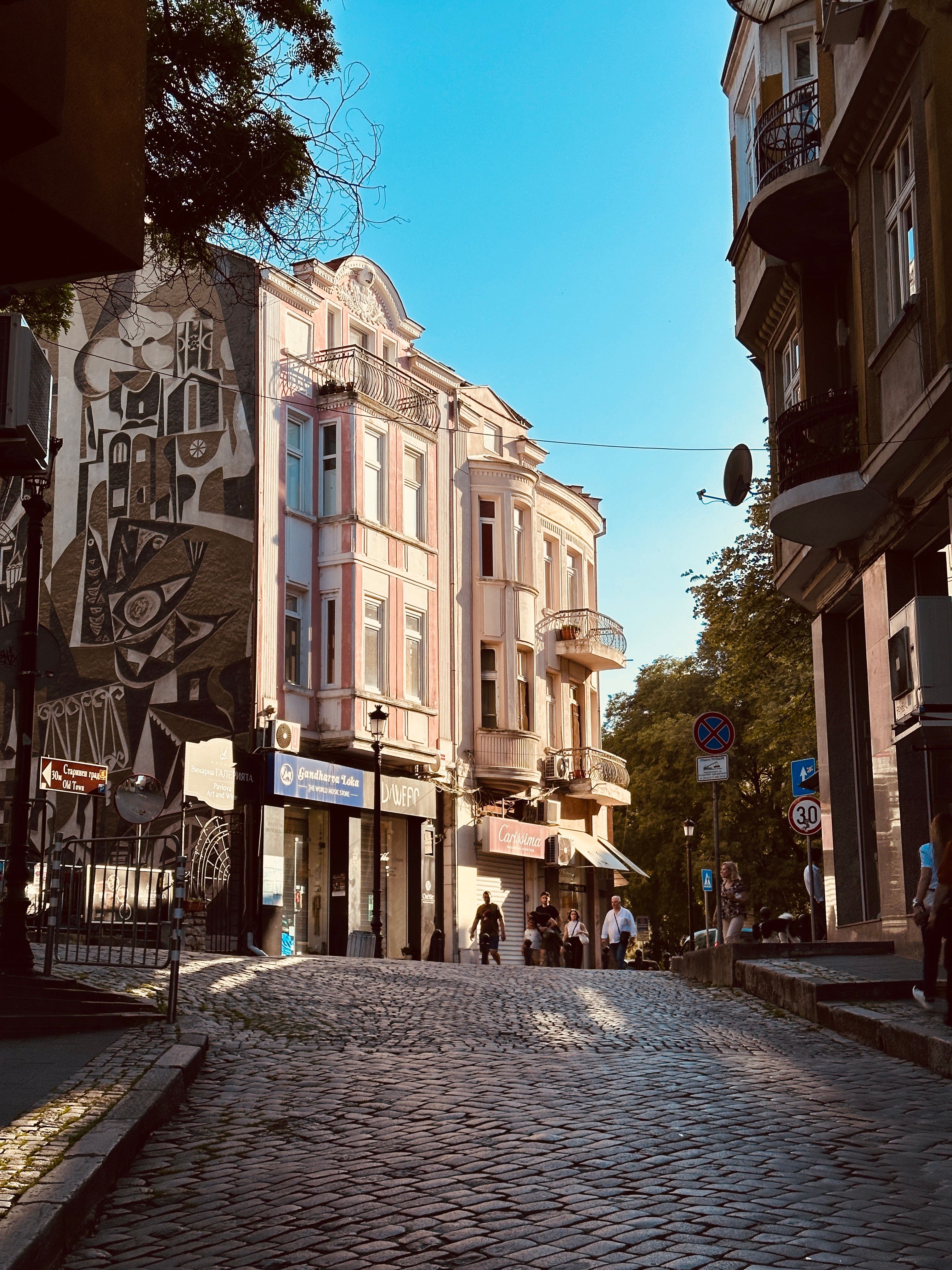
Plovdiv’s unusual strength is that its headline history is embedded in a large living city. The Roman Theatre, Stadium remains, Bishop’s Basilica and Old Town are not isolated archaeological parks; they sit beside pedestrian shopping streets, Kapana’s studios and cafés, university neighborhoods and ordinary apartment districts. That makes it possible to have a culturally rich daily routine without paying capital-city prices. Kapana is the obvious creative/restaurant choice but can be noisy. The Old Town is beautiful and steep, with protected buildings and cobbles. The central pedestrian corridor around Glavnata is practical for car-light living. Karshiyaka across the Maritsa offers greener residential streets with easy center access, while Trakia provides modern housing, larger stores and parking at the cost of historic atmosphere. Buses cover the city, and taxis are affordable, so a car is optional for most central households. Food markets, wine from the Thracian lowlands, galleries and a dense events calendar make Plovdiv more than an architectural destination. Sofia is reachable by road and rail for international flights and deeper medical services, while the Rhodope Mountains are close enough for day trips. Remote work is straightforward in modern apartments and coworking spaces, though exact building infrastructure still matters. The city’s tradeoffs show up in climate and administration. Summers can be very hot, winter inversions can worsen air quality, and English drops off quickly in government offices or older neighborhoods. Historic-center accessibility is imperfect. Spend time in both Kapana and a residential district, ride buses, visit a municipal office or bank, and test winter as well as spring. Plovdiv is strongest for residents who want culture woven into normal life rather than packaged as tourism.
Cost of living snapshot
2 budget bands
Executive summary
Estimated one-adult monthly cost of living: $1,224–$1,913 per month (USD).
One adult
$1,224–$1,913 per month (USD)
Couple — two adults sharing housing
$1,652–$2,774 per month (USD)
Estimated for two adults sharing one home. Actual costs vary by housing, lifestyle and healthcare needs.
Monthly cost breakdown
8 live categories
Dining
$176–$275 per month (USD)
Entertainment Fitness
$112–$175 per month (USD)
Groceries
$208–$325 per month (USD)
Healthcare
$112–$175 per month (USD)
Housing
$440–$688 per month (USD)
Internet Mobile
$28–$44 per month (USD)
Transport
$52–$81 per month (USD)
Utilities
$96–$150 per month (USD)
How the estimate is framed
Based on the destination's reported monthly cost-of-living range.
Media and atmosphere
4 curated assets
Destination guide
What you'll learn
What to know first
What makes it distinctive
Premium intelligence
Best for residents and remote workers seeking history and affordability.
Plovdiv layers Roman ruins, Ottoman-era houses, Kapana’s creative district and a large everyday Bulgarian city into one of Europe’s most compelling value-oriented long-stay bases.
Neighborhood summary
Flagship neighborhood 1
Kapana’s small blocks are packed with bars, studios and restaurants, making it lively and walkable but noisy for light sleepers.
Best for
cafés, nightlife, arts
Overall vibe
It offers a clear local rhythm and strong daily-life texture.
Neighborhood resources
Best For
cafés, nightlife, arts
Overall Vibe
It offers a clear local rhythm and strong daily-life texture.
Walkability
very high
Transit
high
Safety
medium-high
Housing
Renovated apartments above commercial spaces; limited parking.
Pros
culture, nightlife, centrality
Cons
noise, tourist pricing, parking
Neighborhood intelligence
Restaurants
Restaurants
Real persisted places tied to this neighborhood.
Neighborhood
Kapana
Shopping
Shopping
Real persisted places tied to this neighborhood.
Neighborhood
Kapana
Attractions & things to do
Attractions & things to do
Real persisted places tied to this neighborhood.
Neighborhood
Kapana
Family friendly
Family-friendly places
School choices in Plovdiv follow Bulgaria's public/private system; language, catchment, admissions and residence status need to be checked before choosing housing.
Remote work
Remote-work-friendly spots
Walkability
Kapana is the strongest pedestrian base: Kapana’s small blocks are packed with bars, studios and restaurants, making it lively and walkable but noisy for light sleepers. Old Town changes the equation because cobblestones and revival houses around the ancient theatre create plovdiv’s most beautiful setting, but hills and protected buildings complicate accessibility.
How easily daily errands and neighborhood life can be handled on foot.
Transit
Plovdiv Railway Station is the clearest transport anchor: Primary rail hub for Sofia, Burgas and regional destinations; useful though services are slower than Western European high-speed networks. Plovdiv Central Bus Station adds: Main intercity coach terminal near the railway station for regional and international buses. The mobility tradeoff across Kapana and Trakia is materially different.
How well the area supports car-light routines and local travel.
Safety
In Plovdiv, crime exposure varies by exact neighborhood, season and time of day. Test Kapana after dark as well as the quieter residential blocks you are actually considering.
How the area is perceived for daily calm and residential comfort.
Live neighborhood resources
Flagship neighborhood 2
Cobblestones and Revival houses around the Ancient Theatre create Plovdiv’s most beautiful setting, but hills and protected buildings complicate accessibility.
Best for
architecture, museums, atmosphere
Overall vibe
It offers a clear local rhythm and strong daily-life texture.
Neighborhood resources
Best For
architecture, museums, atmosphere
Overall Vibe
It offers a clear local rhythm and strong daily-life texture.
Walkability
high
Transit
medium
Safety
medium-high
Housing
Historic houses and boutique apartments; highly variable condition.
Pros
heritage, views, museums
Cons
cobbles, hills, limited cars
Neighborhood intelligence
Restaurants
Restaurants
Real persisted places tied to this neighborhood.
Neighborhood
Old Town
Attractions & things to do
Attractions & things to do
Real persisted places tied to this neighborhood.
Neighborhood
Old Town
Neighborhood
Old Town
Family friendly
Family-friendly places
School choices in Plovdiv follow Bulgaria's public/private system; language, catchment, admissions and residence status need to be checked before choosing housing.
Remote work
Remote-work-friendly spots
Walkability
Kapana is the strongest pedestrian base: Kapana’s small blocks are packed with bars, studios and restaurants, making it lively and walkable but noisy for light sleepers. Old Town changes the equation because cobblestones and revival houses around the ancient theatre create plovdiv’s most beautiful setting, but hills and protected buildings complicate accessibility.
How easily daily errands and neighborhood life can be handled on foot.
Transit
Plovdiv Railway Station is the clearest transport anchor: Primary rail hub for Sofia, Burgas and regional destinations; useful though services are slower than Western European high-speed networks. Plovdiv Central Bus Station adds: Main intercity coach terminal near the railway station for regional and international buses. The mobility tradeoff across Kapana and Trakia is materially different.
How well the area supports car-light routines and local travel.
Safety
In Plovdiv, crime exposure varies by exact neighborhood, season and time of day. Test Kapana after dark as well as the quieter residential blocks you are actually considering.
How the area is perceived for daily calm and residential comfort.
Live neighborhood resources
Flagship neighborhood 3
The main pedestrian axis links Roman remains, parks, stores and transit, providing the easiest full-time urban routine.
Best for
car-light daily life, shopping
Overall vibe
It offers a clear local rhythm and strong daily-life texture.
Neighborhood resources
Best For
car-light daily life, shopping
Overall Vibe
It offers a clear local rhythm and strong daily-life texture.
Walkability
very high
Transit
very high
Safety
medium-high
Housing
Mixed historic and mid-century apartments, often above retail.
Pros
shopping, transit, walkability
Cons
busy, higher central rents
Neighborhood intelligence
Attractions & things to do
Attractions & things to do
Real persisted places tied to this neighborhood.
Neighborhood
Center / Glavnata
Neighborhood
Center / Glavnata
Family friendly
Family-friendly places
School choices in Plovdiv follow Bulgaria's public/private system; language, catchment, admissions and residence status need to be checked before choosing housing.
Remote work
Remote-work-friendly spots
Walkability
Kapana is the strongest pedestrian base: Kapana’s small blocks are packed with bars, studios and restaurants, making it lively and walkable but noisy for light sleepers. Old Town changes the equation because cobblestones and revival houses around the ancient theatre create plovdiv’s most beautiful setting, but hills and protected buildings complicate accessibility.
How easily daily errands and neighborhood life can be handled on foot.
Transit
Plovdiv Railway Station is the clearest transport anchor: Primary rail hub for Sofia, Burgas and regional destinations; useful though services are slower than Western European high-speed networks. Plovdiv Central Bus Station adds: Main intercity coach terminal near the railway station for regional and international buses. The mobility tradeoff across Kapana and Trakia is materially different.
How well the area supports car-light routines and local travel.
Safety
In Plovdiv, crime exposure varies by exact neighborhood, season and time of day. Test Kapana after dark as well as the quieter residential blocks you are actually considering.
How the area is perceived for daily calm and residential comfort.
Live neighborhood resources
Flagship neighborhood 4
Across the Maritsa, Karshiyaka offers greener residential blocks and calmer evenings while staying close to the center.
Best for
residential comfort, green streets
Overall vibe
It offers a clear local rhythm and strong daily-life texture.
Neighborhood resources
Best For
residential comfort, green streets
Overall Vibe
It offers a clear local rhythm and strong daily-life texture.
Walkability
high
Transit
high
Safety
medium-high
Housing
Apartments and houses with more parking and larger floor plans.
Pros
parks, value, residential feel
Cons
less old-town atmosphere
Neighborhood intelligence
Parks & recreation
Parks & recreation
Real persisted places tied to this neighborhood.
Neighborhood
Karshiyaka
Attractions & things to do
Attractions & things to do
Real persisted places tied to this neighborhood.
Neighborhood
Karshiyaka
Family friendly
Family-friendly places
School choices in Plovdiv follow Bulgaria's public/private system; language, catchment, admissions and residence status need to be checked before choosing housing.
Remote work
Remote-work-friendly spots
Walkability
Kapana is the strongest pedestrian base: Kapana’s small blocks are packed with bars, studios and restaurants, making it lively and walkable but noisy for light sleepers. Old Town changes the equation because cobblestones and revival houses around the ancient theatre create plovdiv’s most beautiful setting, but hills and protected buildings complicate accessibility.
How easily daily errands and neighborhood life can be handled on foot.
Transit
Plovdiv Railway Station is the clearest transport anchor: Primary rail hub for Sofia, Burgas and regional destinations; useful though services are slower than Western European high-speed networks. Plovdiv Central Bus Station adds: Main intercity coach terminal near the railway station for regional and international buses. The mobility tradeoff across Kapana and Trakia is materially different.
How well the area supports car-light routines and local travel.
Safety
In Plovdiv, crime exposure varies by exact neighborhood, season and time of day. Test Kapana after dark as well as the quieter residential blocks you are actually considering.
How the area is perceived for daily calm and residential comfort.
Live neighborhood resources
Destination highlights
Restaurants across Plovdiv
Real, verified Plovdiv places in this category.
Neighborhood
Plovdiv
Neighborhood
Plovdiv
Parks & recreation across Plovdiv
Real, verified Plovdiv places in this category.
Neighborhood
Plovdiv
Shopping across Plovdiv
Real, verified Plovdiv places in this category.
Neighborhood
Plovdiv
Attractions & things to do across Plovdiv
Real, verified Plovdiv places in this category.
Neighborhood
Plovdiv
Neighborhood
Plovdiv
Neighborhood
Plovdiv
Neighborhood
Plovdiv
Neighborhood
Plovdiv
Neighborhood
Plovdiv
Neighborhood
Plovdiv
Other useful destination resources across Plovdiv
Real, verified Plovdiv places in this category.
Neighborhood
Plovdiv
Neighborhood
Plovdiv
Neighborhood
Plovdiv
Neighborhood
Plovdiv
Neighborhood
Plovdiv
Neighborhood
Plovdiv
Neighborhood
Plovdiv
Maps and resources
Hotels
Vacation Rentals
Healthcare
Transportation
Weather
Restaurants
Museums
Consulates
Social Discovery
Editorial overview
Movement
Primary rail hub for Sofia, Burgas and regional destinations; useful though services are slower than Western European high-speed networks.
Seasonal living
Humid subtropical climate with hot summers and cool winters
Living there
Best for residents and remote workers seeking history and affordability.
Morning: Plovdiv layers Roman ruins, Ottoman-era houses, Kapana’s creative district and a large everyday Bulgarian city into one of Europe’s most compelling value-oriented long-stay bases. Evening: Plovdiv’s unusual strength is that its headline history is embedded in a large living city. The Roman Theatre, Stadium remains, Bishop’s Basilica and Old Town are not isolated archaeological parks; they sit beside pedestrian shopping streets, Kapana’s studios and cafés, university neighborhoods and ordinary apartment districts. That makes it possible to have a culturally rich daily routine without paying capital-city prices. Kapana is the obvious creative/restaurant choice but can be noisy. The Old Town is beautiful and steep, with protected buildings and cobbles. The central pedestrian corridor around Glavnata is practical for car-light living. Karshiyaka across the Maritsa offers greener residential streets with easy center access, while Trakia provides modern housing, larger stores and parking at the cost of historic atmosphere. Buses cover the city, and taxis are affordable, so a car is optional for most central households. Food markets, wine from the Thracian lowlands, galleries and a dense events calendar make Plovdiv more than an architectural destination. Sofia is reachable by road and rail for international flights and deeper medical services, while the Rhodope Mountains are close enough for day trips. Remote work is straightforward in modern apartments and coworking spaces, though exact building infrastructure still matters. The city’s tradeoffs show up in climate and administration. Summers can be very hot, winter inversions can worsen air quality, and English drops off quickly in government offices or older neighborhoods. Historic-center accessibility is imperfect. Spend time in both Kapana and a residential district, ride buses, visit a municipal office or bank, and test winter as well as spring. Plovdiv is strongest for residents who want culture woven into normal life rather than packaged as tourism. Seasonal rhythm: Humid subtropical climate with hot summers and cool winters
Weather
Humid subtropical climate with hot summers and cool winters
Movement
Primary rail hub for Sofia, Burgas and regional destinations; useful though services are slower than Western European high-speed networks.
Airport access: Regional and international access
Wellness
Plovdiv's healthcare test is not whether a clinic exists, but how far routine and specialist care extend. University Hospital St. George is the main named reference: Major teaching hospital and referral center serving Plovdiv and southern Bulgaria. Ancient Theatre of Philippopolis adds another option: Exceptionally preserved Roman theater still used for concerts and performances, embedded directly in the Old Town.
Insurance and access: For a long stay in Plovdiv, private or international insurance is most useful as a bridge where public eligibility, wait times or specialist access are uncertain. The need should be tested against University Hospital St. George and the escalation path to the nearest higher-acuity center. In Plovdiv, the practical stress point is hot summers, Bulgarian-language bureaucracy, uneven sidewalks in historic areas, winter air-quality episodes and a smaller expat support network than Sofia, so coverage should be tested against the real referral path beyond University Hospital St. George.
Retirement
Plovdiv can fit culture-focused retirees, remote workers, value seekers and people who want a European city with depth but less cost and congestion than a capital, but healthcare escalation, immigration/tax status, housing accessibility and hot summers, Bulgarian-language bureaucracy, uneven sidewalks in historic areas, winter air-quality episodes and a smaller expat support network than Sofia should be stress-tested before retirement commitment.
Who should not: Plovdiv’s unusual strength is that its headline history is embedded in a large living city. The Roman Theatre, Stadium remains, Bishop’s Basilica and Old Town are not isolated archaeological parks; they sit beside pedestrian shopping streets, Kapana’s studios and cafés, university neighborhoods and ordinary apartment districts. That makes it possible to have a culturally rich daily routine without paying capital-city prices. Kapana is the obvious creative/restaurant choice but can be noisy. The Old Town is beautiful and steep, with protected buildings and cobbles. The central pedestrian corridor around Glavnata is practical for car-light living. Karshiyaka across the Maritsa offers greener residential streets with easy center access, while Trakia provides modern housing, larger stores and parking at the cost of historic atmosphere. Buses cover the city, and taxis are affordable, so a car is optional for most central households. Food markets, wine from the Thracian lowlands, galleries and a dense events calendar make Plovdiv more than an architectural destination. Sofia is reachable by road and rail for international flights and deeper medical services, while the Rhodope Mountains are close enough for day trips. Remote work is straightforward in modern apartments and coworking spaces, though exact building infrastructure still matters. The city’s tradeoffs show up in climate and administration. Summers can be very hot, winter inversions can worsen air quality, and English drops off quickly in government offices or older neighborhoods. Historic-center accessibility is imperfect. Spend time in both Kapana and a residential district, ride buses, visit a municipal office or bank, and test winter as well as spring. Plovdiv is strongest for residents who want culture woven into normal life rather than packaged as tourism. Best neighborhoods: Kapana, Old Town, Center / Glavnata, Karshiyaka, Trakia Climate considerations: Humid subtropical climate with hot summers and cool winters Taxes: Estimated one-adult monthly cost of living: $1,224–$1,913 per month (USD).
Family
School choices in Plovdiv follow Bulgaria's public/private system; language, catchment, admissions and residence status need to be checked before choosing housing.
Activities: Best for residents and remote workers seeking history and affordability. Neighborhood recommendations: Kapana, Old Town, Center / Glavnata, Karshiyaka, Trakia
Remote work
culture-focused retirees, remote workers, value seekers and people who want a European city with depth but less cost and congestion than a capital For serious remote work, compare fixed broadband, mobile signal and noise in the exact property, and remember that hot summers, Bulgarian-language bureaucracy, uneven sidewalks in historic areas, winter air-quality episodes and a smaller expat support network than Sofia may matter more than a speed-test screenshot.
Coworking: Best for residents and remote workers seeking history and affordability. Visa: Requirements vary by citizenship Monthly costs: One adult: $1,224–$1,913 per month (USD) • Couple — two adults sharing housing: $1,652–$2,774 per month (USD) Best neighborhoods: Kapana, Old Town, Center / Glavnata, Karshiyaka, Trakia
Personal safety
Walkability and terrain
Daily errands and convenience
Internet and remote-work reliability
Language ease
Social integration and community character
LGBTQ+ considerations
Family
Pets
Environmental and natural-hazard risks
Crowds and seasonality
Who tends to love or struggle with this destination
Real destination-level research
What day-to-day life, the surrounding landscape, and recreation genuinely look like here - based on verified research, never a generic checklist.
Coffee & Cafés
Dzhumaya Coffee / Central Café Scene gives the clearest named café reference: Cafés around Dzhumaya Square and Kapana illustrate Plovdiv's strong outdoor coffee culture. The social rhythm around Kapana and Old Town is more useful for judging repeat-week livability than a one-off tourist coffee stop.
Community
culture-focused retirees, remote workers, value seekers and people who want a European city with depth but less cost and congestion than a capital The most realistic social entry points are the repeat-use environments around Kapana, Old Town, Monday Market / Ponedelnik Pazar and Tsar Simeon Garden, not a generic expat bubble.
Culture & Museums
Bishop's Basilica of Philippopolis and Regional Ethnographic Museum Plovdiv capture two different layers of local identity. Modern museum built around expansive early-Christian mosaics, one of Plovdiv's strongest newer cultural attractions. Museum in a lavish Revival-era house, useful for understanding regional crafts and domestic culture.
Named places
Dining
Pavaj anchors one side of the local food scene: Kapana restaurant known for modern Bulgarian dishes and a lively local atmosphere. Monday Market / Ponedelnik Pazar matters just as much for a long stay because traditional food market near the old town for produce, cheese and everyday household buying.
Named places
Groceries
Monday Market / Ponedelnik Pazar is the practical grocery/market anchor: Traditional food market near the Old Town for produce, cheese and everyday household buying. Housing in Kapana versus Karshiyaka changes whether shopping is a frequent walking errand or a planned car/taxi trip.
Healthcare
University Hospital St. George is a key local-care reference: Major teaching hospital and referral center serving Plovdiv and southern Bulgaria. For serious relocation planning, the tradeoff to stress-test is hot summers, Bulgarian-language bureaucracy, uneven sidewalks in historic areas, winter air-quality episodes and a smaller expat support network than Sofia.
Internet / Remote Work
Remote-work fit is strongest where reliable fixed broadband and mobile backup can be confirmed at the building level; Kapana and Center / Glavnata offer different housing/amenity tradeoffs. The broader fit is culture-focused retirees, remote workers, value seekers and people who want a European city with depth but less cost and congestion than a capital.
Language
Bulgarian is the working language of Plovdiv. English is increasingly usable in the creative district, universities and newer businesses, but Cyrillic literacy and basic Bulgarian make a major difference for transport notices, clinics, tradespeople and the less tourist-oriented parts of the city.
Natural Setting
Landscaped park beside the pedestrian core with fountains and shaded paths, heavily used by residents. Archaeological hilltop with sunset views over the old city and Maritsa plain.
Named places
Parks / Outdoors
Tsar Simeon Garden is the first outdoor reference: Landscaped park beside the pedestrian core with fountains and shaded paths, heavily used by residents. Nebet Tepe broadens the lifestyle radius: Archaeological hilltop with sunset views over the old city and Maritsa plain.
Settlement Type
a city built across ancient hills where a functioning Roman theatre, colorful Revival houses and contemporary Kapana cafés sit inside a much larger year-round urban economy
Shopping & Markets
Markovo Tepe Mall is a practical shopping/market anchor for day-to-day life: Central modern mall for cinema, supermarket and practical retail close to residential neighborhoods. Monday Market / Ponedelnik Pazar adds another useful shopping pattern: Traditional food market near the Old Town for produce, cheese and everyday household buying. For a longer stay, this gives a more realistic read on Plovdiv than visitor retail alone.
Transit / Mobility
Plovdiv Railway Station is the clearest transport anchor: Primary rail hub for Sofia, Burgas and regional destinations; useful though services are slower than Western European high-speed networks. Plovdiv Central Bus Station adds: Main intercity coach terminal near the railway station for regional and international buses. The mobility tradeoff across Kapana and Trakia is materially different.
Walkability
Kapana is the strongest pedestrian base: Kapana’s small blocks are packed with bars, studios and restaurants, making it lively and walkable but noisy for light sleepers. Old Town changes the equation because cobblestones and revival houses around the ancient theatre create plovdiv’s most beautiful setting, but hills and protected buildings complicate accessibility.
Climate (monthly)