
DestinationFinderAI premium guide
Uruguay
Piriápolis
Piriápolis, Uruguay
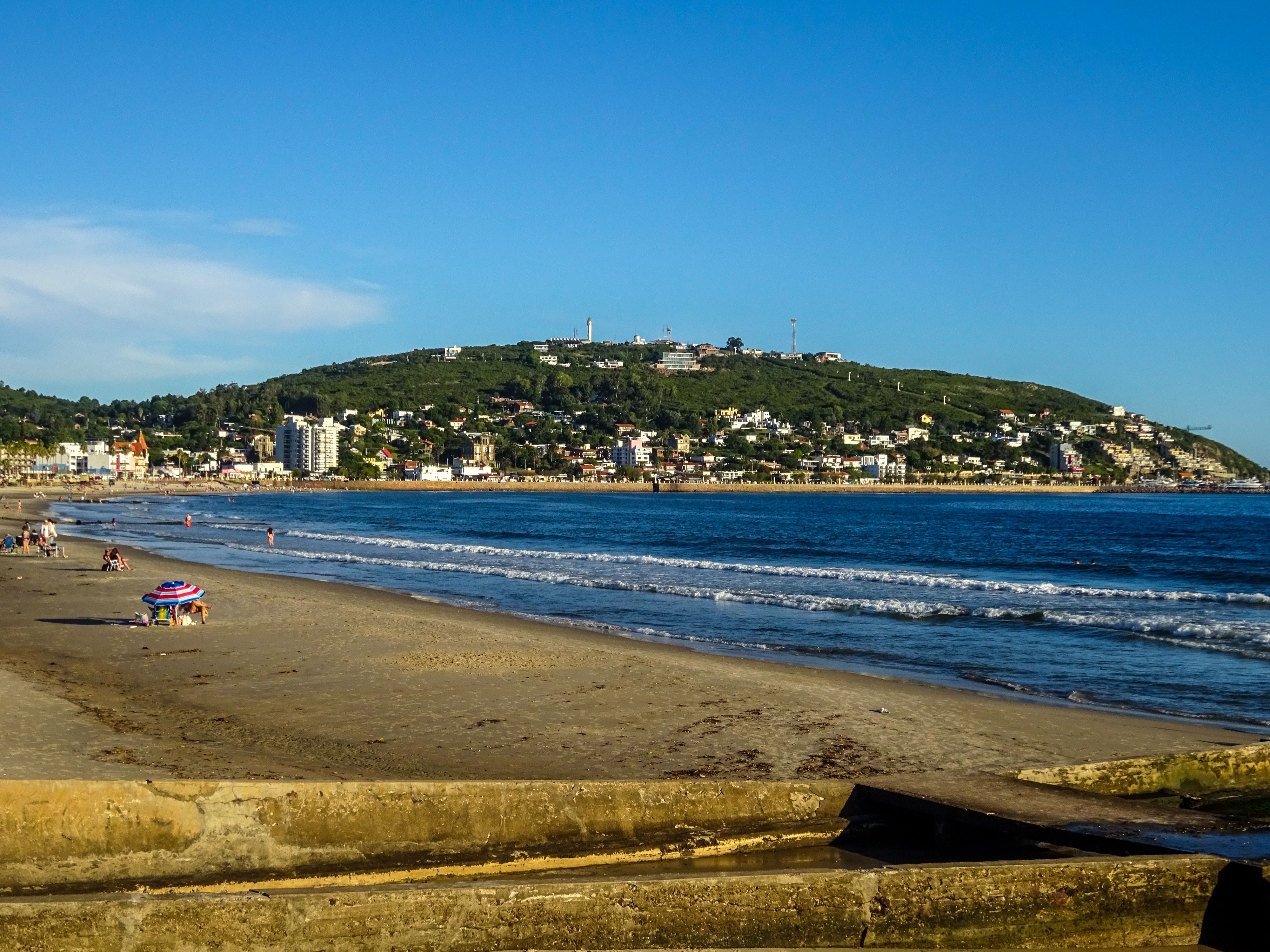
Piriápolis is a small Uruguayan beach city with a broad rambla, early-20th-century resort architecture, walkable services and low hills behind the coast, offering a calmer alternative to Punta del Este.
Overview
The complete picture of Piriápolis
Piriápolis has an identity that predates modern high-rise beach development. Francisco Piria planned the resort around the Rambla, the Argentino Hotel, hill viewpoints and a collection of eclectic landmarks, and that early resort fabric still gives the town a sense of place. The beach is wide and directly integrated with the center rather than separated by highways or private compounds. Centro and the Rambla are best for car-light living, with supermarkets, cafés and the port close by. San Francisco is a quieter residential beach area; Punta Fría has rockier shoreline and a local feel; Playa Grande spreads west with more detached housing; the slopes toward Cerro San Antonio trade flat walkability for views. The urban core is simple to navigate, but a car becomes useful for Pan de Azúcar, rural areas and broader Maldonado services. The town’s pace is a major part of the proposition. Summer brings families and domestic tourism, but much of the year is slower, with long promenade walks, mate culture, simple seafood and easy outdoor routines. The nearby hills make this more than a flat beach destination, while Punta del Este and Maldonado provide larger hospitals, retail and entertainment within driving distance. The biggest question is whether the off-season feels peaceful or too quiet. Some businesses shorten hours, Atlantic weather can be windy and damp, and Uruguay is not a bargain-country once groceries, utilities and specialty goods are considered. A serious trial should include winter, test specialist healthcare access, compare Rambla and hillside housing, and price ordinary supermarket baskets. For the right person, Piriápolis offers the rare combination of small-town beach life and enough urban structure to stay for months.
Cost of living snapshot
A practical executive summary for residents and relocators
2 budget bands
Executive summary
Estimated one-adult monthly cost of living: $1,572–$2,456 per month (USD).
USDmedium confidence
One adult
$1,572–$2,456 per month (USD)
Couple — two adults sharing housing
$2,122–$3,561 per month (USD)
Estimated for two adults sharing one home. Actual costs vary by housing, lifestyle and healthcare needs.
Monthly cost breakdown
The detailed budget categories that shape the monthly picture
8 live categories
Dining
$224–$350 per month (USD)
Entertainment Fitness
$136–$212 per month (USD)
Groceries
$264–$412 per month (USD)
Healthcare
$144–$225 per month (USD)
Housing
$560–$875 per month (USD)
Internet Mobile
$44–$69 per month (USD)
Transport
$80–$125 per month (USD)
Utilities
$120–$188 per month (USD)
How the estimate is framed
Based on the destination's reported monthly cost-of-living range.
Media and atmosphere
Photos, streets, and daily life
4 curated assets
Destination Guide
Destination guide
A magazine-style introduction to Piriápolis
What you'll learn
- • Whether the destination deserves serious consideration
- • Which facts matter most before you dig deeper
- • The lifestyle qualities that make the place feel distinct
What to know first
Population12,000
Elevation20 m
Average temperaturesMonthly averages range from 44.6°F to 82.4°F across the year
WalkabilityCentro / Rambla is the strongest pedestrian base: The central Rambla puts the beach, port, supermarkets and restaurants along a flat walking spine with the best car-light routine in town. San Francisco changes the equation because east of the center, san francisco has a more residential beach atmosphere and less foot traffic while remaining close by car.
TransitTerminal de Ómnibus de Piriápolis is the clearest transport anchor: Intercity bus hub for Montevideo, Maldonado and Punta del Este; essential for car-free regional travel. The mobility tradeoff across Centro / Rambla and Cerro San Antonio / Beaulieu is materially different.
HealthcarePiriápolis's healthcare test is not whether a clinic exists, but how far routine and specialist care extend. Hospital de Piriápolis / RAP Maldonado is the main named reference: Local public health services handle primary and routine needs; deeper specialist care usually means Maldonado. Sanatorio Mautone Maldonado adds another option: Private hospital option in Maldonado for broader specialist and emergency services.
Airport accessTerminal de Ómnibus de Piriápolis
CurrencyUYU
LanguageSpanish
Time zoneAmerica/Montevideo
Visa friendlyVisitor / short-stay status
What makes it distinctive
The qualities that shape daily life
Practical Details
Premium intelligence
Scores and fit
Cost of living
Piriápolis is a small Uruguayan beach city with a broad rambla, early-20th-century resort architecture, walkable services and low hills behind the coast, offering a calmer alternative to Punta del Este.
One adult: $1,572–$2,456 per month (USD)Couple — two adults sharing housing: $2,122–$3,561 per month (USD)
Neighborhood summary
How the city is experienced block by block
5 districts
Flagship neighborhood 1
Centro / Rambla
The central Rambla puts the beach, port, supermarkets and restaurants along a flat walking spine with the best car-light routine in town.
Best for
walkability, cafés, beach
Overall vibe
It offers a clear local rhythm and strong daily-life texture.
Neighborhood resources
Explore this neighborhood
Best For
walkability, cafés, beach
Overall Vibe
It offers a clear local rhythm and strong daily-life texture.
Walkability
very high
Transit
medium
Safety
medium-high
Housing
Apartments, older hotels converted to residences and small houses.
Pros
beach, services, promenade
Cons
summer crowds, waterfront premiums
Neighborhood intelligence
A curatorial guide to the places that make the neighborhood feel real
Restaurants
Restaurants
Real persisted places tied to this neighborhood.
Lo de JaimeEstablished local restaurant associated with seafood and traditional Uruguayan dishes near the waterfront.Open
Neighborhood
Centro / Rambla
Family friendly
Family-friendly places
School choices in Piriápolis follow Uruguay's public/private system; language, catchment, admissions and residence status need to be checked before choosing housing.
Remote work
Remote-work-friendly spots
Walkability
Centro / Rambla is the strongest pedestrian base: The central Rambla puts the beach, port, supermarkets and restaurants along a flat walking spine with the best car-light routine in town. San Francisco changes the equation because east of the center, san francisco has a more residential beach atmosphere and less foot traffic while remaining close by car.
How easily daily errands and neighborhood life can be handled on foot.
Transit
Terminal de Ómnibus de Piriápolis is the clearest transport anchor: Intercity bus hub for Montevideo, Maldonado and Punta del Este; essential for car-free regional travel. The mobility tradeoff across Centro / Rambla and Cerro San Antonio / Beaulieu is materially different.
How well the area supports car-light routines and local travel.
Safety
In Piriápolis, crime exposure varies by exact neighborhood, season and time of day. Test Centro / Rambla after dark as well as the quieter residential blocks you are actually considering.
How the area is perceived for daily calm and residential comfort.
Live neighborhood resources
Flagship neighborhood 2
San Francisco
East of the center, San Francisco has a more residential beach atmosphere and less foot traffic while remaining close by car.
Best for
quiet beach life, families
Overall vibe
It offers a clear local rhythm and strong daily-life texture.
Neighborhood resources
Explore this neighborhood
Best For
quiet beach life, families
Overall Vibe
It offers a clear local rhythm and strong daily-life texture.
Walkability
medium
Transit
low
Safety
medium-high
Housing
Detached homes, low-rise apartments and seasonal rentals.
Pros
quieter beach, space, residential feel
Cons
car useful, fewer services
Neighborhood intelligence
A curatorial guide to the places that make the neighborhood feel real
Restaurants
Restaurants
Real persisted places tied to this neighborhood.
La Pasiva PiriápolisCasual place for chivitos and everyday Uruguayan comfort food rather than destination dining.Open
Neighborhood
San Francisco
Shopping
Shopping
Real persisted places tied to this neighborhood.
Supermercado El Dorado PiriápolisMajor local supermarket for realistic weekly grocery pricing and household shopping.Open
Neighborhood
San Francisco
Outdoor recreation
Outdoor recreation
Real persisted places tied to this neighborhood.
Playa PiriápolisBroad central beach directly across from restaurants and apartments, convenient for frequent swims rather than planned beach trips.Open
Neighborhood
San Francisco
Family friendly
Family-friendly places
School choices in Piriápolis follow Uruguay's public/private system; language, catchment, admissions and residence status need to be checked before choosing housing.
Remote work
Remote-work-friendly spots
Walkability
Centro / Rambla is the strongest pedestrian base: The central Rambla puts the beach, port, supermarkets and restaurants along a flat walking spine with the best car-light routine in town. San Francisco changes the equation because east of the center, san francisco has a more residential beach atmosphere and less foot traffic while remaining close by car.
How easily daily errands and neighborhood life can be handled on foot.
Transit
Terminal de Ómnibus de Piriápolis is the clearest transport anchor: Intercity bus hub for Montevideo, Maldonado and Punta del Este; essential for car-free regional travel. The mobility tradeoff across Centro / Rambla and Cerro San Antonio / Beaulieu is materially different.
How well the area supports car-light routines and local travel.
Safety
In Piriápolis, crime exposure varies by exact neighborhood, season and time of day. Test Centro / Rambla after dark as well as the quieter residential blocks you are actually considering.
How the area is perceived for daily calm and residential comfort.
Live neighborhood resources
Flagship neighborhood 3
Punta Fría
Punta Fría’s rocky shoreline and older housing give it a distinctly local feel, favored by people who value views over sandy-beach convenience.
Best for
sunsets, local character
Overall vibe
It offers a clear local rhythm and strong daily-life texture.
Neighborhood resources
Explore this neighborhood
Best For
sunsets, local character
Overall Vibe
It offers a clear local rhythm and strong daily-life texture.
Walkability
medium
Transit
low
Safety
medium-high
Housing
Modest houses and apartments, some cliffside views.
Pros
views, fishing, quiet
Cons
rockier swimming, limited retail
Neighborhood intelligence
A curatorial guide to the places that make the neighborhood feel real
Family friendly
Family-friendly places
School choices in Piriápolis follow Uruguay's public/private system; language, catchment, admissions and residence status need to be checked before choosing housing.
Remote work
Remote-work-friendly spots
Walkability
Centro / Rambla is the strongest pedestrian base: The central Rambla puts the beach, port, supermarkets and restaurants along a flat walking spine with the best car-light routine in town. San Francisco changes the equation because east of the center, san francisco has a more residential beach atmosphere and less foot traffic while remaining close by car.
How easily daily errands and neighborhood life can be handled on foot.
Transit
Terminal de Ómnibus de Piriápolis is the clearest transport anchor: Intercity bus hub for Montevideo, Maldonado and Punta del Este; essential for car-free regional travel. The mobility tradeoff across Centro / Rambla and Cerro San Antonio / Beaulieu is materially different.
How well the area supports car-light routines and local travel.
Safety
In Piriápolis, crime exposure varies by exact neighborhood, season and time of day. Test Centro / Rambla after dark as well as the quieter residential blocks you are actually considering.
How the area is perceived for daily calm and residential comfort.
Live neighborhood resources
Flagship neighborhood 4
Playa Grande
West of the core, Playa Grande offers wider residential streets and beach access with fewer central-city distractions.
Best for
space, longer stays, family houses
Overall vibe
It offers a clear local rhythm and strong daily-life texture.
Neighborhood resources
Explore this neighborhood
Best For
space, longer stays, family houses
Overall Vibe
It offers a clear local rhythm and strong daily-life texture.
Walkability
medium
Transit
low
Safety
medium-high
Housing
Detached homes and vacation properties, generally more space.
Pros
beach, space, calmer summer rhythm
Cons
driving for services
Neighborhood intelligence
A curatorial guide to the places that make the neighborhood feel real
Attractions & things to do
Attractions & things to do
Real persisted places tied to this neighborhood.
Castillo de PiriaEccentric mansion built by resort founder Francisco Piria, central to understanding the town's planned Belle Époque origins.Open
Neighborhood
Playa Grande
Outdoor recreation
Outdoor recreation
Real persisted places tied to this neighborhood.
Playa San FranciscoQuieter eastern beach backed by residential streets and low-rise homes, popular with families and repeat visitors.Open
Neighborhood
Playa Grande
Family friendly
Family-friendly places
School choices in Piriápolis follow Uruguay's public/private system; language, catchment, admissions and residence status need to be checked before choosing housing.
Remote work
Remote-work-friendly spots
Walkability
Centro / Rambla is the strongest pedestrian base: The central Rambla puts the beach, port, supermarkets and restaurants along a flat walking spine with the best car-light routine in town. San Francisco changes the equation because east of the center, san francisco has a more residential beach atmosphere and less foot traffic while remaining close by car.
How easily daily errands and neighborhood life can be handled on foot.
Transit
Terminal de Ómnibus de Piriápolis is the clearest transport anchor: Intercity bus hub for Montevideo, Maldonado and Punta del Este; essential for car-free regional travel. The mobility tradeoff across Centro / Rambla and Cerro San Antonio / Beaulieu is materially different.
How well the area supports car-light routines and local travel.
Safety
In Piriápolis, crime exposure varies by exact neighborhood, season and time of day. Test Centro / Rambla after dark as well as the quieter residential blocks you are actually considering.
How the area is perceived for daily calm and residential comfort.
Live neighborhood resources
Destination highlights
Real recommendations that span all of Piriápolis
Restaurants across Piriápolis
Real, verified Piriápolis places in this category.
Lo de JaimeEstablished local restaurant associated with seafood and traditional Uruguayan dishes near the waterfront.Open
Neighborhood
Piriápolis
La Pasiva PiriápolisCasual place for chivitos and everyday Uruguayan comfort food rather than destination dining.Open
Neighborhood
Piriápolis
Shopping across Piriápolis
Real, verified Piriápolis places in this category.
Supermercado El Dorado PiriápolisMajor local supermarket for realistic weekly grocery pricing and household shopping.Open
Neighborhood
Piriápolis
Attractions & things to do across Piriápolis
Real, verified Piriápolis places in this category.
Castillo de PiriaEccentric mansion built by resort founder Francisco Piria, central to understanding the town's planned Belle Époque origins.Open
Neighborhood
Piriápolis
Argentino HotelMonumental early-20th-century hotel on the waterfront, still the town's most visible symbol of its grand resort era.Open
Neighborhood
Piriápolis
Outdoor recreation across Piriápolis
Real, verified Piriápolis places in this category.
Playa PiriápolisBroad central beach directly across from restaurants and apartments, convenient for frequent swims rather than planned beach trips.Open
Neighborhood
Piriápolis
Playa San FranciscoQuieter eastern beach backed by residential streets and low-rise homes, popular with families and repeat visitors.Open
Neighborhood
Piriápolis
Playa GrandeBroad western beach with a more residential, less central atmosphere and easy access from larger homes.Open
Neighborhood
Piriápolis
Other useful destination resources across Piriápolis
Real, verified Piriápolis places in this category.
Rambla de los ArgentinosLong seafront promenade that functions as Piriápolis's daily walking and cycling spine.Open
Neighborhood
Piriápolis
Cerro San AntonioHill above town reached by road or climb, with panoramic views across the bay and surrounding coast.Open
Neighborhood
Piriápolis
Puerto de PiriápolisSmall port for fishing, sailing and waterfront dining, quieter than Punta del Este's marina.Open
Neighborhood
Piriápolis
Cerro del ToroWooded hill and fountain walk behind town, useful for short hikes without driving far.Open
Neighborhood
Piriápolis
Reserva de Fauna y Cerro Pan de AzúcarLarge nature reserve and steep summit trail east of town, one of the area's strongest family and hiking destinations.Open
Neighborhood
Piriápolis
Feria Artesanal de PiriápolisSeasonal craft market and small stalls near the center adding evening activity during the warmer months.Open
Neighborhood
Piriápolis
Hospital de Piriápolis / RAP MaldonadoLocal public health services handle primary and routine needs; deeper specialist care usually means Maldonado.Open
Neighborhood
Piriápolis
Sanatorio Mautone MaldonadoPrivate hospital option in Maldonado for broader specialist and emergency services.Open
Neighborhood
Piriápolis
Terminal de Ómnibus de PiriápolisIntercity bus hub for Montevideo, Maldonado and Punta del Este; essential for car-free regional travel.Open
Neighborhood
Piriápolis
Heladería El FaroClassic seaside stop representative of the town's evening promenade routine in warm weather.Open
Neighborhood
Piriápolis
Maps and resources
Discovery links grouped by category
Hotels
Vacation Rentals
Transportation
Weather
Restaurants
Consulates
Social Discovery
Deep Dive
Editorial overview
The living rhythms that shape the place
Movement
Getting around
Intercity bus hub for Montevideo, Maldonado and Punta del Este; essential for car-free regional travel.
Seasonal living
Climate and recreation
Movement
Transportation
Intercity bus hub for Montevideo, Maldonado and Punta del Este; essential for car-free regional travel.
Continue reading
Airport access: Regional and international access
Wellness
Healthcare
Piriápolis's healthcare test is not whether a clinic exists, but how far routine and specialist care extend. Hospital de Piriápolis / RAP Maldonado is the main named reference: Local public health services handle primary and routine needs; deeper specialist care usually means Maldonado. Sanatorio Mautone Maldonado adds another option: Private hospital option in Maldonado for broader specialist and emergency services.
Continue reading
Insurance and access: For a long stay in Piriápolis, private or international insurance is most useful as a bridge where public eligibility, wait times or specialist access are uncertain. The need should be tested against Hospital de Piriápolis / RAP Maldonado and the escalation path to the nearest higher-acuity center. In Piriápolis, the practical stress point is winter quiet, summer crowding, smaller healthcare depth, Uruguay’s relatively high everyday costs and a limited year-round job market, so coverage should be tested against the real referral path beyond Hospital de Piriápolis / RAP Maldonado.
Retirement
Retirement
Piriápolis can fit retirees, walkers, cyclists and South America slow travelers who want a safe-feeling seaside base with Montevideo and Punta del Este within regional reach, but healthcare escalation, immigration/tax status, housing accessibility and winter quiet, summer crowding, smaller healthcare depth, Uruguay’s relatively high everyday costs and a limited year-round job market should be stress-tested before retirement commitment.
Continue reading
Who should not: Piriápolis has an identity that predates modern high-rise beach development. Francisco Piria planned the resort around the Rambla, the Argentino Hotel, hill viewpoints and a collection of eclectic landmarks, and that early resort fabric still gives the town a sense of place. The beach is wide and directly integrated with the center rather than separated by highways or private compounds. Centro and the Rambla are best for car-light living, with supermarkets, cafés and the port close by. San Francisco is a quieter residential beach area; Punta Fría has rockier shoreline and a local feel; Playa Grande spreads west with more detached housing; the slopes toward Cerro San Antonio trade flat walkability for views. The urban core is simple to navigate, but a car becomes useful for Pan de Azúcar, rural areas and broader Maldonado services. The town’s pace is a major part of the proposition. Summer brings families and domestic tourism, but much of the year is slower, with long promenade walks, mate culture, simple seafood and easy outdoor routines. The nearby hills make this more than a flat beach destination, while Punta del Este and Maldonado provide larger hospitals, retail and entertainment within driving distance. The biggest question is whether the off-season feels peaceful or too quiet. Some businesses shorten hours, Atlantic weather can be windy and damp, and Uruguay is not a bargain-country once groceries, utilities and specialty goods are considered. A serious trial should include winter, test specialist healthcare access, compare Rambla and hillside housing, and price ordinary supermarket baskets. For the right person, Piriápolis offers the rare combination of small-town beach life and enough urban structure to stay for months. Best neighborhoods: Centro / Rambla, San Francisco, Punta Fría, Playa Grande, Cerro San Antonio / Beaulieu Taxes: Estimated one-adult monthly cost of living: $1,572–$2,456 per month (USD).
Family
Family
School choices in Piriápolis follow Uruguay's public/private system; language, catchment, admissions and residence status need to be checked before choosing housing.
Continue reading
Neighborhood recommendations: Centro / Rambla, San Francisco, Punta Fría, Playa Grande, Cerro San Antonio / Beaulieu
Remote work
Digital nomad
retirees, walkers, cyclists and South America slow travelers who want a safe-feeling seaside base with Montevideo and Punta del Este within regional reach For serious remote work, compare fixed broadband, mobile signal and noise in the exact property, and remember that winter quiet, summer crowding, smaller healthcare depth, Uruguay’s relatively high everyday costs and a limited year-round job market may matter more than a speed-test screenshot.
Continue reading
Visa: Requirements vary by citizenship Monthly costs: One adult: $1,572–$2,456 per month (USD) • Couple — two adults sharing housing: $2,122–$3,561 per month (USD) Best neighborhoods: Centro / Rambla, San Francisco, Punta Fría, Playa Grande, Cerro San Antonio / Beaulieu
Practical Living Snapshot
Personal safety
- In Piriápolis, crime exposure varies by exact neighborhood, season and time of day. Test Centro / Rambla after dark as well as the quieter residential blocks you are actually considering. Neighborhood-level safety evidence exists and varies by district - check the specific area before assuming citywide consistency.
Walkability and terrain
- Accessibility planning should combine paving/curbs, heat or rain, stairs, transit boarding and the distance to Feria Artesanal de Piriápolis. The right neighborhood may matter more than the city's overall rating. The same trip can feel very different when winter quiet, summer crowding, smaller healthcare depth, Uruguay’s relatively high everyday costs and a limited year-round job market are in play, so assess the route in the season you would actually live there.
Daily errands and convenience
- Feria Artesanal de Piriápolis is a practical everyday shopping anchor: Seasonal craft market and small stalls near the center adding evening activity during the warmer months. Pair it with neighborhood supermarkets and pharmacies when judging whether a car-free grocery routine is realistic.
- The most common relocation surprise is that the destination average hides block-level tradeoffs. In Piriápolis, test an ordinary week from the exact building, including evening errands, weather, parking/transit and access to Feria Artesanal de Piriápolis. In practice, Feria Artesanal de Piriápolis and Terminal de Ómnibus de Piriápolis are the two named anchors that reveal whether the chosen neighborhood works without constant improvisation. The local context changes the meaning of that advice: a compact Río de la Plata resort founded around grand hotels, a long waterfront promenade and green hills that rise directly behind the beach. In a longer stay, winter quiet, summer crowding, smaller healthcare depth, Uruguay’s relatively high everyday costs and a limited year-round job market are the issues most likely to expose a weak fit.
Internet and remote-work reliability
- retirees, walkers, cyclists and South America slow travelers who want a safe-feeling seaside base with Montevideo and Punta del Este within regional reach For serious remote work, compare fixed broadband, mobile signal and noise in the exact property, and remember that winter quiet, summer crowding, smaller healthcare depth, Uruguay’s relatively high everyday costs and a limited year-round job market may matter more than a speed-test screenshot.
Language ease
- Use local classes, tutors, municipal/university programs and language-exchange groups; verify current offerings. A week of errands around Punta Fría and Feria Artesanal de Piriápolis gives a much more honest language test than staying inside the most visitor-facing streets. The local context changes the meaning of that advice: a compact Río de la Plata resort founded around grand hotels, a long waterfront promenade and green hills that rise directly behind the beach. In a longer stay, winter quiet, summer crowding, smaller healthcare depth, Uruguay’s relatively high everyday costs and a limited year-round job market are the issues most likely to expose a weak fit.
- English tends to be more usable in tourism-facing and international businesses than in bureaucracy, trades and neighborhood services.
Community and Personal Comfort
Social integration and community character
- Community fit in Piriápolis is easiest to judge through repeat routines, not expat headcounts. Feria Artesanal de Piriápolis and Rambla de los Argentinos create different kinds of recurring contact, while Centro / Rambla and San Francisco reveal how visitor-facing and residential social life differ. The local character is anchored by Castillo de Piria and Rambla de los Argentinos, which gives newcomers something concrete to participate in beyond expat-only events. The local context changes the meaning of that advice: a compact Río de la Plata resort founded around grand hotels, a long waterfront promenade and green hills that rise directly behind the beach. In a longer stay, winter quiet, summer crowding, smaller healthcare depth, Uruguay’s relatively high everyday costs and a limited year-round job market are the issues most likely to expose a weak fit.
- Look for groups tied to the destination's actual assets: Castillo de Piria, Rambla de los Argentinos, food/market life around Feria Artesanal de Piriápolis, or professional/university networks where present. Those are more durable than generic newcomer mixers. The local character is anchored by Castillo de Piria and Rambla de los Argentinos, which gives newcomers something concrete to participate in beyond expat-only events. The local context changes the meaning of that advice: a compact Río de la Plata resort founded around grand hotels, a long waterfront promenade and green hills that rise directly behind the beach. In a longer stay, winter quiet, summer crowding, smaller healthcare depth, Uruguay’s relatively high everyday costs and a limited year-round job market are the issues most likely to expose a weak fit.
LGBTQ+ considerations
- Qualitative assessment combines Uruguay's legal framework with Piriápolis's actual urban/tourism profile and should be rechecked before relocation.
- Visible community infrastructure is more likely around central/cultural districts such as Centro / Rambla, but verify current local organizations and venues directly.
- This reflects general legal and cultural context only - not individualized legal advice, and not a guarantee of safety or comfort.
Family
- School choices in Piriápolis follow Uruguay's public/private system; language, catchment, admissions and residence status need to be checked before choosing housing.
- Regional tertiary options should be checked from Rambla de los Argentinos.
- Childcare fit in Piriápolis is neighborhood-specific: commute, opening hours and waitlists matter as much as headline fees.
- Higher-education presence can influence rentals, cafés, cultural programming and age mix even for households without students.
- Use current local/regional university directories; a named reference is Rambla de los Argentinos.
Pets
- Pet acceptance is property-specific in Piriápolis; ask about size limits, deposits, common-area rules and landlord consent before paying a holding deposit.
- For exercise, check the actual rules at Rambla de los Argentinos; leash, wildlife, beach-season and protected-area restrictions can differ.
Reality and Environment
Environmental and natural-hazard risks
- Air comfort in Piriápolis is shaped by its Belle Époque Atlantic resort town setting; traffic, marine air, dust, winter inversions, smoke or humidity should be tested in the least favorable season.
- Water practicality in Piriápolis should be checked at the building level: municipal supply may be reliable while old plumbing, storage tanks, taste/mineral content or storm disruptions vary by neighborhood. Ask what residents in Centro / Rambla actually drink. The outdoor reference point Rambla de los Argentinos makes the contrast tangible because long seafront promenade that functions as piriápolis's daily walking and cycling spine.
- The environmental risk profile is tied to the real setting around Rambla de los Argentinos: winter quiet, summer crowding, smaller healthcare depth, Uruguay’s relatively high everyday costs and a limited year-round job market.
- Transport risk is about adapting to local road and pedestrian behavior around Terminal de Ómnibus de Piriápolis, Centro / Rambla and outer districts rather than assuming home-country driving norms transfer cleanly.
Crowds and seasonality
- This is when Piriápolis's best-known assets such as Rambla de los Argentinos are easiest to enjoy, but it is also when parking, restaurant demand and short-stay housing can distort the year-round resident experience. For Piriápolis, the test is whether you still like the destination when winter quiet, summer crowding, smaller healthcare depth, Uruguay’s relatively high everyday costs and a limited year-round job market are present rather than hidden by the event/holiday atmosphere.
- Use this period to expose the housing and mobility weaknesses hidden by peak weather: winter quiet, summer crowding, smaller healthcare depth, Uruguay’s relatively high everyday costs and a limited year-round job market.
- Confirm the current dates and street/venue impacts for Piriápolis summer cultural calendar; festivals can temporarily change traffic, lodging prices and the feel of Centro / Rambla.
Who tends to love or struggle with this destination
- Piriápolis is attractive because a compact Río de la Plata resort founded around grand hotels, a long waterfront promenade and green hills that rise directly behind the beach. Daily life still has friction: winter quiet, summer crowding, smaller healthcare depth, Uruguay’s relatively high everyday costs and a limited year-round job market. Test ordinary weekdays before making a move.
- Centro / Rambla works for walkability, cafés, beach, while Cerro San Antonio / Beaulieu is better for views, hiking, quiet. Housing, car need and noise can change quickly between them.
- Healthcare is a fit question, not a checkbox. Hospital de Piriápolis / RAP Maldonado is a named local healthcare reference, but a household that needs frequent specialty care should verify referral travel, language and after-hours escalation before treating Piriápolis as retirement-ready. That is part of the same broader fit question: a compact Río de la Plata resort founded around grand hotels, a long waterfront promenade and green hills that rise directly behind the beach.
- The least comfortable season exposes the real version of Piriápolis: winter quiet, summer crowding, smaller healthcare depth, Uruguay’s relatively high everyday costs and a limited year-round job market. Visit then, not only during the destination's showcase weather.
- The regional lifestyle radius can be a major strength: Rambla de los Argentinos and Terminal de Ómnibus de Piriápolis show what sits beyond the immediate neighborhood. But if every beach, trail, airport or medical referral requires a car and careful timing, that convenience cost belongs in the relocation decision. That is part of the same broader fit question: a compact Río de la Plata resort founded around grand hotels, a long waterfront promenade and green hills that rise directly behind the beach.
Real destination-level research
Lifestyle & Recreation
What day-to-day life, the surrounding landscape, and recreation genuinely look like here - based on verified research, never a generic checklist.
Coffee & Cafés
Heladería El Faro gives the clearest named café reference: Classic seaside stop representative of the town's evening promenade routine in warm weather. The social rhythm around Centro / Rambla and San Francisco is more useful for judging repeat-week livability than a one-off tourist coffee stop.
Community
retirees, walkers, cyclists and South America slow travelers who want a safe-feeling seaside base with Montevideo and Punta del Este within regional reach The most realistic social entry points are the repeat-use environments around Centro / Rambla, San Francisco, Feria Artesanal de Piriápolis and Rambla de los Argentinos, not a generic expat bubble.
Culture & Museums
Castillo de Piria and Argentino Hotel capture two different layers of local identity. Eccentric mansion built by resort founder Francisco Piria, central to understanding the town's planned Belle Époque origins. Monumental early-20th-century hotel on the waterfront, still the town's most visible symbol of its grand resort era.
Dining
Lo de Jaime anchors one side of the local food scene: Established local restaurant associated with seafood and traditional Uruguayan dishes near the waterfront. Feria Artesanal de Piriápolis matters just as much for a long stay because seasonal craft market and small stalls near the center adding evening activity during the warmer months.
Named places
Groceries
Feria Artesanal de Piriápolis is the practical grocery/market anchor: Seasonal craft market and small stalls near the center adding evening activity during the warmer months. Housing in Centro / Rambla versus Playa Grande changes whether shopping is a frequent walking errand or a planned car/taxi trip.
Healthcare
Hospital de Piriápolis / RAP Maldonado is a key local-care reference: Local public health services handle primary and routine needs; deeper specialist care usually means Maldonado. Sanatorio Mautone Maldonado adds another option: Private hospital option in Maldonado for broader specialist and emergency services. For serious relocation planning, the tradeoff to stress-test is winter quiet, summer crowding, smaller healthcare depth, Uruguay’s relatively high everyday costs and a limited year-round job market.
Internet / Remote Work
Remote-work fit is strongest where reliable fixed broadband and mobile backup can be confirmed at the building level; Centro / Rambla and Punta Fría offer different housing/amenity tradeoffs. The broader fit is retirees, walkers, cyclists and South America slow travelers who want a safe-feeling seaside base with Montevideo and Punta del Este within regional reach.
Language
Spanish is essential for getting beyond Piriápolis’s seasonal visitor layer. English may work in some tourism-facing businesses, but year-round housing, healthcare, utilities and neighborhood relationships are much easier when you can manage Rioplatense Spanish and its local vocabulary.
Natural Setting
Long seafront promenade that functions as Piriápolis's daily walking and cycling spine. Hill above town reached by road or climb, with panoramic views across the bay and surrounding coast.
Named places
Parks / Outdoors
Rambla de los Argentinos is the first outdoor reference: Long seafront promenade that functions as Piriápolis's daily walking and cycling spine. Cerro San Antonio broadens the lifestyle radius: Hill above town reached by road or climb, with panoramic views across the bay and surrounding coast.
Settlement Type
a compact Río de la Plata resort founded around grand hotels, a long waterfront promenade and green hills that rise directly behind the beach
Shopping & Markets
Feria Artesanal de Piriápolis is a practical shopping/market anchor for day-to-day life: Seasonal craft market and small stalls near the center adding evening activity during the warmer months. Supermercado El Dorado Piriápolis adds another useful shopping pattern: Major local supermarket for realistic weekly grocery pricing and household shopping. For a longer stay, this gives a more realistic read on Piriápolis than visitor retail alone.
Transit / Mobility
Terminal de Ómnibus de Piriápolis is the clearest transport anchor: Intercity bus hub for Montevideo, Maldonado and Punta del Este; essential for car-free regional travel. The mobility tradeoff across Centro / Rambla and Cerro San Antonio / Beaulieu is materially different.
Walkability
Centro / Rambla is the strongest pedestrian base: The central Rambla puts the beach, port, supermarkets and restaurants along a flat walking spine with the best car-light routine in town. San Francisco changes the equation because east of the center, san francisco has a more residential beach atmosphere and less foot traffic while remaining close by car.
Climate (monthly)
- Jan: 64.4–82.4°F
- Feb: 64.4–80.6°F
- Mar: 60.8–77°F
- Apr: 55.4–69.8°F
- May: 50–64.4°F
- Jun: 44.6–59°F
- Jul: 44.6–59°F
- Aug: 46.4–60.8°F
- Sep: 50–64.4°F
- Oct: 55.4–69.8°F
- Nov: 59–75.2°F
- Dec: 62.6–80.6°F