DestinationFinderAI — Find Your Perfect Destination
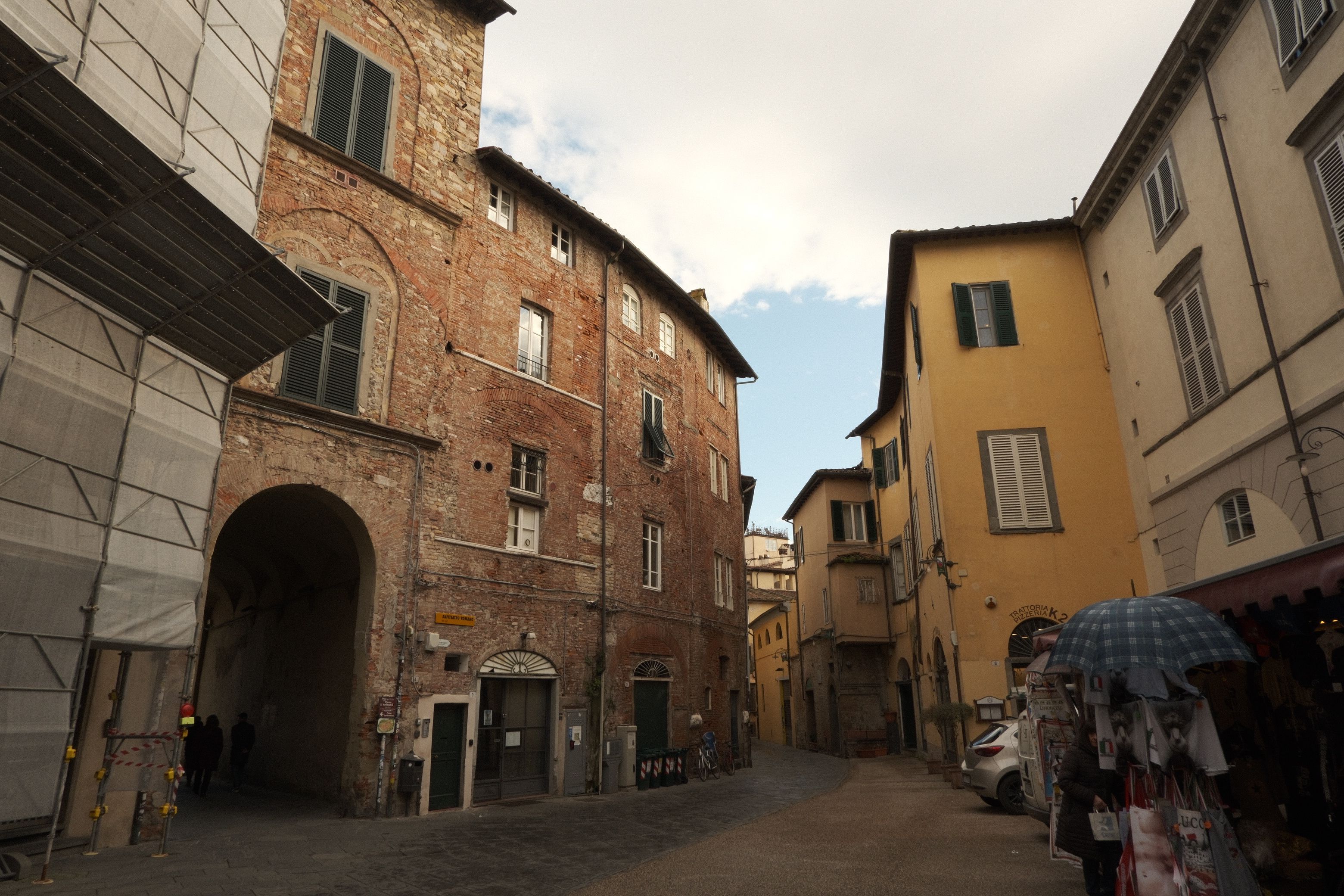
Medieval street in Lucca

DestinationFinderAI premium guide

Italy

Lucca

Lucca, Italy

Lucca offers an unusually livable Tuscan historic center inside intact Renaissance walls, with cycling, music, markets and rail access to Pisa and Florence without the crush of Florence itself.

Overview

The complete picture of Lucca

Lucca is one of the rare Italian heritage cities where the monumental landscape also functions as daily infrastructure. Its Renaissance walls are a four-kilometer elevated park used for cycling and walking; inside them, Piazza Anfiteatro, Torre Guinigi, churches, bakeries and small groceries create a dense pedestrian routine. Unlike Florence, the city is small enough that crossing the center feels like an errand rather than a journey, yet it still has hospitals, rail service and a substantial year-round population. Living inside the walls gives unmatched atmosphere but demands tradeoffs: limited car access, historic buildings, stairs and higher rents. Borgo Giannotti just north of the walls is more local and practical for markets; San Concordio is convenient to the station and larger stores; Sant'Anna offers modern apartments west of the center; Arancio provides residential calm with easier vehicle access. Cycling is unusually useful because the terrain is flat and the walls create a safe recreational loop. The cultural calendar is not decorative. Puccini’s birthplace, Teatro del Giglio, churches, museums and summer events make music central to Lucca’s identity. Food life is rooted in Tuscan staples, local bakeries and markets rather than only high-end tourism. Pisa airport is relatively close, Florence is reachable by rail, and the Garfagnana/Apuan Alps extend the outdoor radius dramatically without changing home base. The friction comes from heritage-city realities. Summer can be humid, major events fill the center, central parking is controlled, and an apartment that looks romantic may have poor accessibility or energy performance. Healthcare is solid but advanced care may mean Pisa or Florence. Test both inside- and outside-wall neighborhoods, ride the train, shop at ordinary supermarkets and spend evenings after day-trippers leave. Lucca is at its best when you want Tuscany as a lived routine rather than a sightseeing project.

Cost of living snapshot

A practical executive summary for residents and relocators

2 budget bands

Executive summary

Estimated one-adult monthly cost of living: $1,956–$3,058 per month (USD).

USDmedium confidence

One adult

$1,956–$3,058 per month (USD)

Couple — two adults sharing housing

$2,641–$4,434 per month (USD)

Estimated for two adults sharing one home. Actual costs vary by housing, lifestyle and healthcare needs.

Monthly cost breakdown

The detailed budget categories that shape the monthly picture

8 live categories

Dining

$280–$438 per month (USD)

Entertainment Fitness

$152–$238 per month (USD)

Groceries

$304–$475 per month (USD)

Healthcare

$152–$238 per month (USD)

Housing

$800–$1,250 per month (USD)

Internet Mobile

$44–$69 per month (USD)

Transport

$80–$125 per month (USD)

Utilities

$144–$225 per month (USD)

How the estimate is framed

Based on the destination's reported monthly cost-of-living range.

Media and atmosphere

Photos, streets, and daily life

8 curated assets

Destination Guide

Destination guide

A magazine-style introduction to Lucca

What you'll learn

  • • Whether the destination deserves serious consideration
  • • Which facts matter most before you dig deeper
  • • The lifestyle qualities that make the place feel distinct

What to know first

Population90,000
ClimateSubtropical
Elevation19 m
Average temperaturesMonthly averages range from 37.4°F to 86°F across the year
WalkabilityCentro Storico is the strongest pedestrian base: Inside the Renaissance walls, nearly every daily errand can be done on foot or bicycle, but ZTL rules, stairs and tourist demand shape housing choices. San Concordio changes the equation because south of the walls and station, san concordio offers modern services and straightforward access to both trains and ring roads.

TransitLucca Railway Station is the clearest transport anchor: Station just south of the walls with direct regional trains to Pisa, Viareggio, Florence and surrounding towns. The mobility tradeoff across Centro Storico and Arancio is materially different.
HealthcareLucca's healthcare test is not whether a clinic exists, but how far routine and specialist care extend. Ospedale San Luca is the main named reference: Modern hospital east of the center providing the city's main acute-care and specialist services. Walls of Lucca adds another option: Tree-lined wall circuit functions as an elevated city park for cycling, jogging and everyday walking.
Airport accessLucca Railway Station
CurrencyEUR
LanguageItalian
Time zoneEurope/Rome
Visa friendlyVisitor / short-stay status

What makes it distinctive

The qualities that shape daily life

Practical Details

Premium intelligence

Scores and fit

16 decision lenses

Airport Access

Moderate

65/100

Climate

Strong

78/100

Connectivity

Strong

72/100

Cost

Moderate

62/100

Family

Strong

75/100

Food Social

Excellent

90/100

Healthcare

Very strong

80/100

Housing

Limited

58/100

LGBTQ+

Moderate

68/100

Lifestyle Culture

Excellent

92/100

Outdoors

Strong

72/100

Relocation Ease

Moderate

62/100

Retirement

Strong

78/100

Safety

Very strong

88/100

Tax & Visa

Limited

55/100

Walkability & Transportation

Very strong

85/100

Lifestyle at a glance

The lifestyle is relaxed, cultured and deeply walkable. Residents cycle on the walls, shop at local markets and gather in neighborhood cafés and piazzas. Music is central to the city’s identity, and access to countryside, coast and mountains makes weekends varied.

Cost of living

Lucca offers an unusually livable Tuscan historic center inside intact Renaissance walls, with cycling, music, markets and rail access to Pisa and Florence without the crush of Florence itself.

One adult: $1,956–$3,058 per month (USD)Couple — two adults sharing housing: $2,641–$4,434 per month (USD)

Neighborhood summary

How the city is experienced block by block

8 districts

Flagship neighborhood 1

Centro Storico

Inside the Renaissance walls, nearly every daily errand can be done on foot or bicycle, but ZTL rules, stairs and tourist demand shape housing choices.

Best for

walkability, culture, cafés

Overall vibe

It offers a clear local rhythm and strong daily-life texture.

Neighborhood resources

Explore this neighborhood

Best For

walkability, culture, cafés

Overall Vibe

It offers a clear local rhythm and strong daily-life texture.

Walkability

very high

Transit

high

Safety

medium-high

Housing

Historic apartments and palazzi, often no lift; renovated units command premiums.

Pros

walls park, culture, car-light routine

Cons

parking restrictions, older buildings, higher rents

Neighborhood intelligence

A curatorial guide to the places that make the neighborhood feel real

Restaurants

Restaurants

Real persisted places tied to this neighborhood.

Buca di Sant'AntonioHistoric restaurant known for Lucchese/Tuscan dishes, useful as a benchmark for traditional city dining.Open

Neighborhood

Centro Storico

Attractions & things to do

Attractions & things to do

Real persisted places tied to this neighborhood.

Palazzo PfannerBaroque palace and formal garden inside the walls, a compact oasis that also demonstrates the city's aristocratic layer.Open

Neighborhood

Centro Storico

Family friendly

Family-friendly places

School choices in Lucca follow Italy's public/private system; language, catchment, admissions and residence status need to be checked before choosing housing.

Remote work

Remote-work-friendly spots

Walkability

Centro Storico is the strongest pedestrian base: Inside the Renaissance walls, nearly every daily errand can be done on foot or bicycle, but ZTL rules, stairs and tourist demand shape housing choices. San Concordio changes the equation because south of the walls and station, san concordio offers modern services and straightforward access to both trains and ring roads.

How easily daily errands and neighborhood life can be handled on foot.

Transit

Lucca Railway Station is the clearest transport anchor: Station just south of the walls with direct regional trains to Pisa, Viareggio, Florence and surrounding towns. The mobility tradeoff across Centro Storico and Arancio is materially different.

How well the area supports car-light routines and local travel.

Safety

In Lucca, crime exposure varies by exact neighborhood, season and time of day. Test Centro Storico after dark as well as the quieter residential blocks you are actually considering.

How the area is perceived for daily calm and residential comfort.

Flagship neighborhood 2

San Concordio

South of the walls and station, San Concordio offers modern services and straightforward access to both trains and ring roads.

Best for

rail commuters, supermarkets, practicality

Overall vibe

It offers a clear local rhythm and strong daily-life texture.

Neighborhood resources

Explore this neighborhood

Best For

rail commuters, supermarkets, practicality

Overall Vibe

It offers a clear local rhythm and strong daily-life texture.

Walkability

high

Transit

very high

Safety

medium-high

Housing

Apartments, postwar blocks and townhouses with more parking.

Pros

station, larger shops, easier cars

Cons

less romantic streetscape

Neighborhood intelligence

A curatorial guide to the places that make the neighborhood feel real

Restaurants

Restaurants

Real persisted places tied to this neighborhood.

Trattoria da GiulioCasual trattoria serving straightforward Lucchese classics, closer to ordinary repeat dining than a tasting-menu destination.Open

Neighborhood

San Concordio

Parks & recreation

Parks & recreation

Real persisted places tied to this neighborhood.

Orto Botanico di LuccaHistoric botanical garden near the walls with pond, arboretum and seasonal collections.Open

Neighborhood

San Concordio

Attractions & things to do

Attractions & things to do

Real persisted places tied to this neighborhood.

Torre GuinigiIconic tower topped by holm oaks, with 360-degree views after a stair climb that doubles as an accessibility reality check.Open

Neighborhood

San Concordio

Museo Nazionale di Palazzo MansiNational museum in a noble palace with paintings, textiles and rooms that contextualize Lucca's mercantile wealth.Open

Neighborhood

San Concordio

Family friendly

Family-friendly places

School choices in Lucca follow Italy's public/private system; language, catchment, admissions and residence status need to be checked before choosing housing.

Remote work

Remote-work-friendly spots

Walkability

Centro Storico is the strongest pedestrian base: Inside the Renaissance walls, nearly every daily errand can be done on foot or bicycle, but ZTL rules, stairs and tourist demand shape housing choices. San Concordio changes the equation because south of the walls and station, san concordio offers modern services and straightforward access to both trains and ring roads.

How easily daily errands and neighborhood life can be handled on foot.

Transit

Lucca Railway Station is the clearest transport anchor: Station just south of the walls with direct regional trains to Pisa, Viareggio, Florence and surrounding towns. The mobility tradeoff across Centro Storico and Arancio is materially different.

How well the area supports car-light routines and local travel.

Safety

In Lucca, crime exposure varies by exact neighborhood, season and time of day. Test Centro Storico after dark as well as the quieter residential blocks you are actually considering.

How the area is perceived for daily calm and residential comfort.

Flagship neighborhood 3

Borgo Giannotti

Just north of Porta Santa Maria, Borgo Giannotti has a strong local retail strip and easy cycle access into the center.

Best for

market life, value, neighborhood feel

Overall vibe

It offers a clear local rhythm and strong daily-life texture.

Neighborhood resources

Explore this neighborhood

Best For

market life, value, neighborhood feel

Overall Vibe

It offers a clear local rhythm and strong daily-life texture.

Walkability

high

Transit

high

Safety

medium-high

Housing

Apartments and attached homes, generally better value than inside walls.

Pros

local shops, market access, near walls

Cons

traffic on main corridor

Neighborhood intelligence

A curatorial guide to the places that make the neighborhood feel real

Attractions & things to do

Attractions & things to do

Real persisted places tied to this neighborhood.

Piazza dell'AnfiteatroOval piazza built on the footprint of the Roman amphitheater, now ringed by apartments, cafés and restaurants.Open

Neighborhood

Borgo Giannotti

Basilica di San FredianoDistinctive mosaic-fronted church close to the walls and northern old-town residential streets.Open

Neighborhood

Borgo Giannotti

Family friendly

Family-friendly places

School choices in Lucca follow Italy's public/private system; language, catchment, admissions and residence status need to be checked before choosing housing.

Remote work

Remote-work-friendly spots

Walkability

Centro Storico is the strongest pedestrian base: Inside the Renaissance walls, nearly every daily errand can be done on foot or bicycle, but ZTL rules, stairs and tourist demand shape housing choices. San Concordio changes the equation because south of the walls and station, san concordio offers modern services and straightforward access to both trains and ring roads.

How easily daily errands and neighborhood life can be handled on foot.

Transit

Lucca Railway Station is the clearest transport anchor: Station just south of the walls with direct regional trains to Pisa, Viareggio, Florence and surrounding towns. The mobility tradeoff across Centro Storico and Arancio is materially different.

How well the area supports car-light routines and local travel.

Safety

In Lucca, crime exposure varies by exact neighborhood, season and time of day. Test Centro Storico after dark as well as the quieter residential blocks you are actually considering.

How the area is perceived for daily calm and residential comfort.

Flagship neighborhood 4

Sant'Anna

Sant'Anna is a large western residential district with schools, supermarkets and practical housing for people who do not need old-town atmosphere every day.

Best for

families, parking, modern housing

Overall vibe

It offers a clear local rhythm and strong daily-life texture.

Neighborhood resources

Explore this neighborhood

Best For

families, parking, modern housing

Overall Vibe

It offers a clear local rhythm and strong daily-life texture.

Walkability

medium-high

Transit

medium

Safety

medium-high

Housing

Modern apartments, townhouses and detached homes.

Pros

parking, value, family services

Cons

car/bike more useful, less historic

Neighborhood intelligence

A curatorial guide to the places that make the neighborhood feel real

Attractions & things to do

Attractions & things to do

Real persisted places tied to this neighborhood.

Lucca Cathedral (San Martino)Romanesque cathedral with Ilaria del Carretto's tomb and the Volto Santo tradition.Open
Torre delle OreTall civic clock tower with rooftop views over the dense walled city and surrounding hills.Open

Family friendly

Family-friendly places

School choices in Lucca follow Italy's public/private system; language, catchment, admissions and residence status need to be checked before choosing housing.

Remote work

Remote-work-friendly spots

Walkability

Centro Storico is the strongest pedestrian base: Inside the Renaissance walls, nearly every daily errand can be done on foot or bicycle, but ZTL rules, stairs and tourist demand shape housing choices. San Concordio changes the equation because south of the walls and station, san concordio offers modern services and straightforward access to both trains and ring roads.

How easily daily errands and neighborhood life can be handled on foot.

Transit

Lucca Railway Station is the clearest transport anchor: Station just south of the walls with direct regional trains to Pisa, Viareggio, Florence and surrounding towns. The mobility tradeoff across Centro Storico and Arancio is materially different.

How well the area supports car-light routines and local travel.

Safety

In Lucca, crime exposure varies by exact neighborhood, season and time of day. Test Centro Storico after dark as well as the quieter residential blocks you are actually considering.

How the area is perceived for daily calm and residential comfort.

Destination highlights

Real recommendations that span all of Lucca

Restaurants across Lucca

Real, verified Lucca places in this category.

Buca di Sant'AntonioHistoric restaurant known for Lucchese/Tuscan dishes, useful as a benchmark for traditional city dining.Open
Trattoria da GiulioCasual trattoria serving straightforward Lucchese classics, closer to ordinary repeat dining than a tasting-menu destination.Open
Carmine MarketCarmine Market is a dining option in Lucca. Check current hours, reservations, menu, and dietary options before going.Open
Ristorante All'OlivoRistorante All'Olivo is a dining option in Lucca. Check current hours, reservations, menu, and dietary options before going.Open
Arianna & Friends Lucca Walls and Typical Sweets WalkArianna & Friends Lucca Walls and Typical Sweets Walk is a dining option in Lucca. Check current hours, reservations, menu, and dietary options before going.Open
Lucca Historic Stores and Aperitif ExperienceLucca Historic Stores and Aperitif Experience is a dining option in Lucca. Check current hours, reservations, menu, and dietary options before going.Open

Coffee across Lucca

Real, verified Lucca places in this category.

Antico Caffè Di SimoAntico Caffè Di Simo is a café option for experiencing everyday life in Lucca. Current hours, seating, and service details should be checked directly.Open

Parks & recreation across Lucca

Real, verified Lucca places in this category.

Puccini cycle/pedestrian pathPuccini cycle/pedestrian path is a named hiking or walking option near Lucca. Review current access, terrain, weather, and difficulty before setting out.Open
Via FrancigenaVia Francigena is a named hiking or walking option near Lucca. Review current access, terrain, weather, and difficulty before setting out.Open
Nottolini AqueductNottolini Aqueduct is a named hiking or walking option near Lucca. Review current access, terrain, weather, and difficulty before setting out.Open
Orto Botanico di LuccaHistoric botanical garden near the walls with pond, arboretum and seasonal collections.Open
Lucca Botanical GardenLucca Botanical Garden is a green-space option in the Lucca area for walking, relaxing, or outdoor time. Use the linked map or site for current access details.Open
Serchio River ParkSerchio River Park is a green-space option in the Lucca area for walking, relaxing, or outdoor time. Use the linked map or site for current access details.Open
Aqueduct ParkAqueduct Park is a green-space option in the Lucca area for walking, relaxing, or outdoor time. Use the linked map or site for current access details.Open
Parco dell'InfinitoParco dell'Infinito is a green-space option in the Lucca area for walking, relaxing, or outdoor time. Use the linked map or site for current access details.Open
Serchio River Cycle LoopSerchio River Cycle Loop is a named hiking or walking option near Lucca. Review current access, terrain, weather, and difficulty before setting out.Open
Villa BottiniVilla Bottini is a green-space option in the Lucca area for walking, relaxing, or outdoor time. Use the linked map or site for current access details.Open
Villa Reale di MarliaVilla Reale di Marlia is a green-space option in the Lucca area for walking, relaxing, or outdoor time. Use the linked map or site for current access details.Open

Shopping across Lucca

Real, verified Lucca places in this category.

Esselunga San ConcordioLarge supermarket outside the walls useful for realistic grocery pricing and car/bike shopping routines.Open
Lucca Antiques MarketLucca Antiques Market is a market for local food, produce, or everyday shopping in Lucca. Days, hours, and vendor mix may change seasonally.Open
Piazza San FredianoPiazza San Frediano is a market for local food, produce, or everyday shopping in Lucca. Days, hours, and vendor mix may change seasonally.Open

Healthcare across Lucca

Real, verified Lucca places in this category.

San Luca HospitalSan Luca Hospital is a healthcare facility serving the Lucca area. Confirm services, hours, insurance acceptance, and emergency capability through the linked source before relying on it.Open
San Luca Hospital PharmacySan Luca Hospital Pharmacy is a pharmacy option for mapping everyday healthcare access in Lucca. Confirm current hours and prescription availability directly.Open
Campo di Marte Continuity PharmacyCampo di Marte Continuity Pharmacy is a pharmacy option for mapping everyday healthcare access in Lucca. Confirm current hours and prescription availability directly.Open
Antica Farmacia MassagliAntica Farmacia Massagli is a pharmacy option for mapping everyday healthcare access in Lucca. Confirm current hours and prescription availability directly.Open
Ponte del Giglio PharmacyPonte del Giglio Pharmacy is a pharmacy option for mapping everyday healthcare access in Lucca. Confirm current hours and prescription availability directly.Open

Entertainment & nightlife across Lucca

Real, verified Lucca places in this category.

Teatro del GiglioTeatro del Giglio is a performing-arts venue contributing to Lucca's cultural calendar. Check the current program, language, accessibility, and ticketing directly.Open
Lucca Summer Festival at Piazza NapoleoneLucca Summer Festival at Piazza Napoleone is a live-music venue in Lucca, useful for catching a show. Use the linked site or map for current hours and details.Open
Gimnasia Fitness ClubGimnasia Fitness Club is an evening venue in Lucca. Confirm the current schedule, atmosphere, accessibility, and transportation plan before going.Open
Fitness XL LuccaFitness XL Lucca is an evening venue in Lucca. Confirm the current schedule, atmosphere, accessibility, and transportation plan before going.Open

Attractions & things to do across Lucca

Real, verified Lucca places in this category.

Torre GuinigiIconic tower topped by holm oaks, with 360-degree views after a stair climb that doubles as an accessibility reality check.Open
Piazza dell'AnfiteatroOval piazza built on the footprint of the Roman amphitheater, now ringed by apartments, cafés and restaurants.Open
Lucca Cathedral (San Martino)Romanesque cathedral with Ilaria del Carretto's tomb and the Volto Santo tradition.Open
Palazzo PfannerBaroque palace and formal garden inside the walls, a compact oasis that also demonstrates the city's aristocratic layer.Open
Basilica di San FredianoDistinctive mosaic-fronted church close to the walls and northern old-town residential streets.Open
Guinigi TowerGuinigi Tower is a historic site in Lucca, useful for its history and architecture. Use the linked site or map for current hours and details.Open
Torre delle OreTall civic clock tower with rooftop views over the dense walled city and surrounding hills.Open
Museo Nazionale di Palazzo MansiNational museum in a noble palace with paintings, textiles and rooms that contextualize Lucca's mercantile wealth.Open
Puccini Museum Birth HomePuccini Museum Birth Home is a cultural anchor that adds depth to a stay in Lucca. Confirm current exhibitions, hours, accessibility, and ticketing through the linked source.Open
National Museum of Villa GuinigiNational Museum of Villa Guinigi is a cultural anchor that adds depth to a stay in Lucca. Confirm current exhibitions, hours, accessibility, and ticketing through the linked source.Open
National Museum of Palazzo MansiNational Museum of Palazzo Mansi is a cultural anchor that adds depth to a stay in Lucca. Confirm current exhibitions, hours, accessibility, and ticketing through the linked source.Open
Cathedral MuseumCathedral Museum is a cultural anchor that adds depth to a stay in Lucca. Confirm current exhibitions, hours, accessibility, and ticketing through the linked source.Open
Museum of the Ancient Mint of LuccaMuseum of the Ancient Mint of Lucca is a cultural anchor that adds depth to a stay in Lucca. Confirm current exhibitions, hours, accessibility, and ticketing through the linked source.Open
Paolo Cresci MuseumPaolo Cresci Museum is a cultural anchor that adds depth to a stay in Lucca. Confirm current exhibitions, hours, accessibility, and ticketing through the linked source.Open
Piazza NapoleonePiazza Napoleone is a public square in Lucca, useful for a central gathering spot. Use the linked site or map for current hours and details.Open
Ducal Palace of LuccaDucal Palace of Lucca is a historic site in Lucca, useful for its history and architecture. Use the linked site or map for current hours and details.Open
Lucca Walls Info Point at Porta San DonatoLucca Walls Info Point at Porta San Donato is a visitor center in Lucca, useful for orientation and local trip planning. Use the linked site or map for current hours and details.Open
Via delle VilleVia delle Ville is an attraction in Lucca, useful for a notable stop for visitors. Use the linked site or map for current hours and details.Open
Lucca Tourism Info Point – Palazzo SantiniLucca Tourism Info Point – Palazzo Santini is a tourism service in Lucca, useful for planning day trips and activities. Use the linked site or map for current hours and details.Open
Lucca Accessible Electric Scooter ServiceLucca Accessible Electric Scooter Service is an attraction in Lucca, useful for a notable stop for visitors. Use the linked site or map for current hours and details.Open
Porta San PietroPorta San Pietro is an attraction in Lucca, useful for a notable stop for visitors. Use the linked site or map for current hours and details.Open
Villa BernardiniVilla Bernardini is an attraction in Lucca, useful for a notable stop for visitors. Use the linked site or map for current hours and details.Open
Real CollegioReal Collegio is an attraction in Lucca, useful for a notable stop for visitors. Use the linked site or map for current hours and details.Open
Tourist Center Lucca Private City-and-Walls WalkTourist Center Lucca Private City-and-Walls Walk is an attraction in Lucca, useful for a notable stop for visitors. Use the linked site or map for current hours and details.Open

Outdoor recreation across Lucca

Real, verified Lucca places in this category.

Massaciuccoli LakeMassaciuccoli Lake is a water recreation excursion option for getting onto or alongside the water near Lucca. Conditions, operating schedules, and safety guidance can vary by season.Open

Neighborhood

Lucca

Sports & recreation across Lucca

Real, verified Lucca places in this category.

Palazzetto dello Sport di LuccaPalazzetto dello Sport di Lucca is a sports venue in Lucca, useful for staying active. Use the linked site or map for current hours and details.Open

Services & government resources across Lucca

Real, verified Lucca places in this category.

Cathedral of San MartinoCathedral of San Martino is a church in Lucca, useful for its architecture and role as a place of worship. Use the linked site or map for current hours and details.Open
Basilica of San FredianoBasilica of San Frediano is a church in Lucca, useful for its architecture and role as a place of worship. Use the linked site or map for current hours and details.Open
San Michele in ForoSan Michele in Foro is a church in Lucca, useful for its architecture and role as a place of worship. Use the linked site or map for current hours and details.Open
Church of San FrancescoChurch of San Francesco is a church in Lucca, useful for its architecture and role as a place of worship. Use the linked site or map for current hours and details.Open

Other useful destination resources across Lucca

Real, verified Lucca places in this category.

Walls of LuccaTree-lined wall circuit functions as an elevated city park for cycling, jogging and everyday walking.Open
Mercato del Carmine / Carmine AreaHistoric market area and surrounding food shops illustrate how daily shopping intersects with the tourist center.Open
Teatro del Giglio Giacomo PucciniHistoric municipal theater with opera, drama and music programming central to Lucca's cultural calendar.Open
Ospedale San LucaModern hospital east of the center providing the city's main acute-care and specialist services.Open
Lucca Railway StationStation just south of the walls with direct regional trains to Pisa, Viareggio, Florence and surrounding towns.Open
Pasticceria TaddeucciCentral bakery associated with buccellato, Lucca's sweet anise-and-raisin bread, and a natural everyday coffee stop.Open

Maps and resources

Discovery links grouped by category

Deep Dive

Editorial overview

The living rhythms that shape the place

Movement

Getting around

Station just south of the walls with direct regional trains to Pisa, Viareggio, Florence and surrounding towns.

Seasonal living

Climate and recreation

Humid subtropical climate with hot summers and cool, damp winters. Summer highs often reach the upper 80s°F, while winter days are generally in the 40s and 50s. Rain is common in autumn and spring. Late April through June and September through October are the best periods for outdoor exploration.

Living there

Daily life

The lifestyle is relaxed, cultured and deeply walkable. Residents cycle on the walls, shop at local markets and gather in neighborhood cafés and piazzas. Music is central to the city’s identity, and access to countryside, coast and mountains makes weekends varied.

Continue reading

Morning: Lucca offers an unusually livable Tuscan historic center inside intact Renaissance walls, with cycling, music, markets and rail access to Pisa and Florence without the crush of Florence itself. Evening: Lucca is one of the rare Italian heritage cities where the monumental landscape also functions as daily infrastructure. Its Renaissance walls are a four-kilometer elevated park used for cycling and walking; inside them, Piazza Anfiteatro, Torre Guinigi, churches, bakeries and small groceries create a dense pedestrian routine. Unlike Florence, the city is small enough that crossing the center feels like an errand rather than a journey, yet it still has hospitals, rail service and a substantial year-round population. Living inside the walls gives unmatched atmosphere but demands tradeoffs: limited car access, historic buildings, stairs and higher rents. Borgo Giannotti just north of the walls is more local and practical for markets; San Concordio is convenient to the station and larger stores; Sant'Anna offers modern apartments west of the center; Arancio provides residential calm with easier vehicle access. Cycling is unusually useful because the terrain is flat and the walls create a safe recreational loop. The cultural calendar is not decorative. Puccini’s birthplace, Teatro del Giglio, churches, museums and summer events make music central to Lucca’s identity. Food life is rooted in Tuscan staples, local bakeries and markets rather than only high-end tourism. Pisa airport is relatively close, Florence is reachable by rail, and the Garfagnana/Apuan Alps extend the outdoor radius dramatically without changing home base. The friction comes from heritage-city realities. Summer can be humid, major events fill the center, central parking is controlled, and an apartment that looks romantic may have poor accessibility or energy performance. Healthcare is solid but advanced care may mean Pisa or Florence. Test both inside- and outside-wall neighborhoods, ride the train, shop at ordinary supermarkets and spend evenings after day-trippers leave. Lucca is at its best when you want Tuscany as a lived routine rather than a sightseeing project. Seasonal rhythm: Humid subtropical climate with hot summers and cool, damp winters. Summer highs often reach the upper 80s°F, while winter days are generally in the 40s and 50s. Rain is common in autumn and spring. Late April through June and September through October are the best periods for outdoor exploration.

Weather

Climate

Humid subtropical climate with hot summers and cool, damp winters. Summer highs often reach the upper 80s°F, while winter days are generally in the 40s and 50s. Rain is common in autumn and spring. Late April through June and September through October are the best periods for outdoor exploration.

Movement

Transportation

Station just south of the walls with direct regional trains to Pisa, Viareggio, Florence and surrounding towns.

Continue reading

Airport access: Regional and international access

Wellness

Healthcare

Lucca's healthcare test is not whether a clinic exists, but how far routine and specialist care extend. Ospedale San Luca is the main named reference: Modern hospital east of the center providing the city's main acute-care and specialist services. Walls of Lucca adds another option: Tree-lined wall circuit functions as an elevated city park for cycling, jogging and everyday walking.

Continue reading

Insurance and access: For a long stay in Lucca, private or international insurance is most useful as a bridge where public eligibility, wait times or specialist access are uncertain. The need should be tested against Ospedale San Luca and the escalation path to the nearest higher-acuity center. In Lucca, the practical stress point is tourist pressure in the historic core, expensive central housing, humid summers, ZTL driving restrictions and older buildings with stairs or limited parking, so coverage should be tested against the real referral path beyond Ospedale San Luca.

Retirement

Retirement

Lucca can fit culture-focused retirees, cyclists, walkers, food lovers and people who want Tuscany with strong rail connections and a manageable city scale, but healthcare escalation, immigration/tax status, housing accessibility and tourist pressure in the historic core, expensive central housing, humid summers, ZTL driving restrictions and older buildings with stairs or limited parking should be stress-tested before retirement commitment.

Continue reading

Who should not: Lucca is one of the rare Italian heritage cities where the monumental landscape also functions as daily infrastructure. Its Renaissance walls are a four-kilometer elevated park used for cycling and walking; inside them, Piazza Anfiteatro, Torre Guinigi, churches, bakeries and small groceries create a dense pedestrian routine. Unlike Florence, the city is small enough that crossing the center feels like an errand rather than a journey, yet it still has hospitals, rail service and a substantial year-round population. Living inside the walls gives unmatched atmosphere but demands tradeoffs: limited car access, historic buildings, stairs and higher rents. Borgo Giannotti just north of the walls is more local and practical for markets; San Concordio is convenient to the station and larger stores; Sant'Anna offers modern apartments west of the center; Arancio provides residential calm with easier vehicle access. Cycling is unusually useful because the terrain is flat and the walls create a safe recreational loop. The cultural calendar is not decorative. Puccini’s birthplace, Teatro del Giglio, churches, museums and summer events make music central to Lucca’s identity. Food life is rooted in Tuscan staples, local bakeries and markets rather than only high-end tourism. Pisa airport is relatively close, Florence is reachable by rail, and the Garfagnana/Apuan Alps extend the outdoor radius dramatically without changing home base. The friction comes from heritage-city realities. Summer can be humid, major events fill the center, central parking is controlled, and an apartment that looks romantic may have poor accessibility or energy performance. Healthcare is solid but advanced care may mean Pisa or Florence. Test both inside- and outside-wall neighborhoods, ride the train, shop at ordinary supermarkets and spend evenings after day-trippers leave. Lucca is at its best when you want Tuscany as a lived routine rather than a sightseeing project. Best neighborhoods: Centro Storico, San Concordio, Borgo Giannotti, Sant'Anna, Arancio, Pontetetto, San Marco, San Vito Climate considerations: Humid subtropical climate with hot summers and cool, damp winters. Summer highs often reach the upper 80s°F, while winter days are generally in the 40s and 50s. Rain is common in autumn and spring. Late April through June and September through October are the best periods for outdoor exploration. Taxes: Estimated one-adult monthly cost of living: $1,956–$3,058 per month (USD).

Family

Family

School choices in Lucca follow Italy's public/private system; language, catchment, admissions and residence status need to be checked before choosing housing.

Continue reading

Activities: The lifestyle is relaxed, cultured and deeply walkable. Residents cycle on the walls, shop at local markets and gather in neighborhood cafés and piazzas. Music is central to the city’s identity, and access to countryside, coast and mountains makes weekends varied. Neighborhood recommendations: Centro Storico, San Concordio, Borgo Giannotti, Sant'Anna, Arancio, Pontetetto, San Marco, San Vito

Remote work

Digital nomad

culture-focused retirees, cyclists, walkers, food lovers and people who want Tuscany with strong rail connections and a manageable city scale For serious remote work, compare fixed broadband, mobile signal and noise in the exact property, and remember that tourist pressure in the historic core, expensive central housing, humid summers, ZTL driving restrictions and older buildings with stairs or limited parking may matter more than a speed-test screenshot.

Continue reading

Coworking: The lifestyle is relaxed, cultured and deeply walkable. Residents cycle on the walls, shop at local markets and gather in neighborhood cafés and piazzas. Music is central to the city’s identity, and access to countryside, coast and mountains makes weekends varied. Visa: Requirements vary by citizenship Monthly costs: One adult: $1,956–$3,058 per month (USD) • Couple — two adults sharing housing: $2,641–$4,434 per month (USD) Best neighborhoods: Centro Storico, San Concordio, Borgo Giannotti, Sant'Anna, Arancio, Pontetetto, San Marco, San Vito

Practical Living Snapshot

Personal safety

  • In Lucca, crime exposure varies by exact neighborhood, season and time of day. Test Centro Storico after dark as well as the quieter residential blocks you are actually considering. The destination's overall safety score suggests generally low personal-safety concern. Neighborhood-level safety evidence exists and varies by district - check the specific area before assuming citywide consistency.

Walkability and terrain

  • Accessibility planning should combine paving/curbs, heat or rain, stairs, transit boarding and the distance to Mercato del Carmine / Carmine Area. The right neighborhood may matter more than the city's overall rating. The same trip can feel very different when tourist pressure in the historic core, expensive central housing, humid summers, ZTL driving restrictions and older buildings with stairs or limited parking are in play, so assess the route in the season you would actually live there.

Daily errands and convenience

  • Mercato del Carmine / Carmine Area is a practical everyday shopping anchor: Historic market area and surrounding food shops illustrate how daily shopping intersects with the tourist center. Pair it with neighborhood supermarkets and pharmacies when judging whether a car-free grocery routine is realistic.
  • The most common relocation surprise is that the destination average hides block-level tradeoffs. In Lucca, test an ordinary week from the exact building, including evening errands, weather, parking/transit and access to Mercato del Carmine / Carmine Area. In practice, Mercato del Carmine / Carmine Area and Lucca Railway Station are the two named anchors that reveal whether the chosen neighborhood works without constant improvisation. What makes the point place-specific is the underlying lifestyle: a flat, bicycle-friendly Tuscan city enclosed by tree-lined Renaissance walls, where Piazza Anfiteatro, Puccini heritage and neighborhood groceries sit within an everyday urban fabric. The counterweight is tourist pressure in the historic core, expensive central housing, humid summers, ZTL driving restrictions and older buildings with stairs or limited parking.

Internet and remote-work reliability

  • culture-focused retirees, cyclists, walkers, food lovers and people who want Tuscany with strong rail connections and a manageable city scale For serious remote work, compare fixed broadband, mobile signal and noise in the exact property, and remember that tourist pressure in the historic core, expensive central housing, humid summers, ZTL driving restrictions and older buildings with stairs or limited parking may matter more than a speed-test screenshot.

Language ease

  • Use local classes, tutors, municipal/university programs and language-exchange groups; verify current offerings. A week of errands around Borgo Giannotti and Mercato del Carmine / Carmine Area gives a much more honest language test than staying inside the most visitor-facing streets. What makes the point place-specific is the underlying lifestyle: a flat, bicycle-friendly Tuscan city enclosed by tree-lined Renaissance walls, where Piazza Anfiteatro, Puccini heritage and neighborhood groceries sit within an everyday urban fabric. The counterweight is tourist pressure in the historic core, expensive central housing, humid summers, ZTL driving restrictions and older buildings with stairs or limited parking.
  • English tends to be more usable in tourism-facing and international businesses than in bureaucracy, trades and neighborhood services.

Community and Personal Comfort

Social integration and community character

  • Community fit in Lucca is easiest to judge through repeat routines, not expat headcounts. Mercato del Carmine / Carmine Area and Walls of Lucca create different kinds of recurring contact, while Centro Storico and San Concordio reveal how visitor-facing and residential social life differ. The local character is anchored by Puccini Museum - Birth Home and Walls of Lucca, which gives newcomers something concrete to participate in beyond expat-only events. What makes the point place-specific is the underlying lifestyle: a flat, bicycle-friendly Tuscan city enclosed by tree-lined Renaissance walls, where Piazza Anfiteatro, Puccini heritage and neighborhood groceries sit within an everyday urban fabric. The counterweight is tourist pressure in the historic core, expensive central housing, humid summers, ZTL driving restrictions and older buildings with stairs or limited parking.
  • Look for groups tied to the destination's actual assets: Puccini Museum - Birth Home, Walls of Lucca, food/market life around Mercato del Carmine / Carmine Area, or professional/university networks where present. Those are more durable than generic newcomer mixers. The local character is anchored by Puccini Museum - Birth Home and Walls of Lucca, which gives newcomers something concrete to participate in beyond expat-only events. What makes the point place-specific is the underlying lifestyle: a flat, bicycle-friendly Tuscan city enclosed by tree-lined Renaissance walls, where Piazza Anfiteatro, Puccini heritage and neighborhood groceries sit within an everyday urban fabric. The counterweight is tourist pressure in the historic core, expensive central housing, humid summers, ZTL driving restrictions and older buildings with stairs or limited parking.

LGBTQ+ considerations

  • Qualitative assessment combines Italy's legal framework with Lucca's actual urban/tourism profile and should be rechecked before relocation.
  • Visible community infrastructure is more likely around central/cultural districts such as Centro Storico, but verify current local organizations and venues directly.
  • This reflects general legal and cultural context only - not individualized legal advice, and not a guarantee of safety or comfort.

Family

  • School choices in Lucca follow Italy's public/private system; language, catchment, admissions and residence status need to be checked before choosing housing.
  • Regional tertiary options should be checked from Walls of Lucca.
  • Childcare fit in Lucca is neighborhood-specific: commute, opening hours and waitlists matter as much as headline fees.
  • Higher-education presence can influence rentals, cafés, cultural programming and age mix even for households without students.
  • Use current local/regional university directories; a named reference is Walls of Lucca.

Pets

  • Pet acceptance is property-specific in Lucca; ask about size limits, deposits, common-area rules and landlord consent before paying a holding deposit.
  • For exercise, check the actual rules at Orto Botanico di Lucca; leash, wildlife, beach-season and protected-area restrictions can differ.

Reality and Environment

Environmental and natural-hazard risks

  • Air comfort in Lucca is shaped by its walled Tuscan city setting; traffic, marine air, dust, winter inversions, smoke or humidity should be tested in the least favorable season.
  • Water practicality in Lucca should be checked at the building level: municipal supply may be reliable while old plumbing, storage tanks, taste/mineral content or storm disruptions vary by neighborhood. Ask what residents in Centro Storico actually drink. The outdoor reference point Walls of Lucca makes the contrast tangible because tree-lined wall circuit functions as an elevated city park for cycling, jogging and everyday walking.
  • The environmental risk profile is tied to the real setting around Walls of Lucca: tourist pressure in the historic core, expensive central housing, humid summers, ZTL driving restrictions and older buildings with stairs or limited parking.
  • Transport risk is about adapting to local road and pedestrian behavior around Lucca Railway Station, Centro Storico and outer districts rather than assuming home-country driving norms transfer cleanly.

Crowds and seasonality

  • This is when Lucca's best-known assets such as Walls of Lucca are easiest to enjoy, but it is also when parking, restaurant demand and short-stay housing can distort the year-round resident experience. For Lucca, the test is whether you still like the destination when tourist pressure in the historic core, expensive central housing, humid summers, ZTL driving restrictions and older buildings with stairs or limited parking are present rather than hidden by the event/holiday atmosphere.
  • Use this period to expose the housing and mobility weaknesses hidden by peak weather: tourist pressure in the historic core, expensive central housing, humid summers, ZTL driving restrictions and older buildings with stairs or limited parking.
  • Confirm the current dates and street/venue impacts for Lucca Summer Festival; festivals can temporarily change traffic, lodging prices and the feel of Centro Storico.

Who tends to love or struggle with this destination

  • Lucca is attractive because a flat, bicycle-friendly Tuscan city enclosed by tree-lined Renaissance walls, where Piazza Anfiteatro, Puccini heritage and neighborhood groceries sit within an everyday urban fabric. Daily life still has friction: tourist pressure in the historic core, expensive central housing, humid summers, ZTL driving restrictions and older buildings with stairs or limited parking. Test ordinary weekdays before making a move.
  • Centro Storico works for walkability, culture, cafés, while Arancio is better for hospital access, quiet, road connections. Housing, car need and noise can change quickly between them.
  • Healthcare is a fit question, not a checkbox. Ospedale San Luca is a named local healthcare reference, but a household that needs frequent specialty care should verify referral travel, language and after-hours escalation before treating Lucca as retirement-ready. That is part of the same broader fit question: a flat, bicycle-friendly Tuscan city enclosed by tree-lined Renaissance walls, where Piazza Anfiteatro, Puccini heritage and neighborhood groceries sit within an everyday urban fabric.
  • The least comfortable season exposes the real version of Lucca: tourist pressure in the historic core, expensive central housing, humid summers, ZTL driving restrictions and older buildings with stairs or limited parking. Visit then, not only during the destination's showcase weather.
  • The regional lifestyle radius can be a major strength: Walls of Lucca and Lucca Railway Station show what sits beyond the immediate neighborhood. But if every beach, trail, airport or medical referral requires a car and careful timing, that convenience cost belongs in the relocation decision. That is part of the same broader fit question: a flat, bicycle-friendly Tuscan city enclosed by tree-lined Renaissance walls, where Piazza Anfiteatro, Puccini heritage and neighborhood groceries sit within an everyday urban fabric.

Real destination-level research

Lifestyle & Recreation

What day-to-day life, the surrounding landscape, and recreation genuinely look like here - based on verified research, never a generic checklist.

Coffee & Cafés

Pasticceria Taddeucci gives the clearest named café reference: Central bakery associated with buccellato, Lucca's sweet anise-and-raisin bread, and a natural everyday coffee stop. The social rhythm around Centro Storico and San Concordio is more useful for judging repeat-week livability than a one-off tourist coffee stop.

Named places

Community

culture-focused retirees, cyclists, walkers, food lovers and people who want Tuscany with strong rail connections and a manageable city scale The most realistic social entry points are the repeat-use environments around Centro Storico, San Concordio, Mercato del Carmine / Carmine Area and Orto Botanico di Lucca, not a generic expat bubble.

Culture & Museums

Puccini Museum - Birth Home and Museo Nazionale di Palazzo Mansi capture two different layers of local identity. Composer Giacomo Puccini's birthplace, essential for understanding Lucca's strong musical identity. National museum in a noble palace with paintings, textiles and rooms that contextualize Lucca's mercantile wealth.

Named places

Museum of the Ancient Mint of LuccaVisit websiteOpen on Google Maps
National Museum of Palazzo MansiVisit websiteOpen on Google Maps
National Museum of Villa GuinigiVisit websiteOpen on Google Maps
Teatro del Giglio Giacomo PucciniVisit websiteOpen on Google Maps
Puccini Museum Birth HomeVisit websiteOpen on Google Maps

Dining

Buca di Sant'Antonio anchors one side of the local food scene: Historic restaurant known for Lucchese/Tuscan dishes, useful as a benchmark for traditional city dining. Mercato del Carmine / Carmine Area matters just as much for a long stay because historic market area and surrounding food shops illustrate how daily shopping intersects with the tourist center.

Named places

Arianna & Friends Lucca Walls and Typical Sweets WalkVisit websiteOpen on Google Maps
Lucca Historic Stores and Aperitif ExperienceVisit websiteOpen on Google Maps

Groceries

Mercato del Carmine / Carmine Area is the practical grocery/market anchor: Historic market area and surrounding food shops illustrate how daily shopping intersects with the tourist center. Housing in Centro Storico versus Sant'Anna changes whether shopping is a frequent walking errand or a planned car/taxi trip.

Named places

Healthcare

Ospedale San Luca is a key local-care reference: Modern hospital east of the center providing the city's main acute-care and specialist services. For serious relocation planning, the tradeoff to stress-test is tourist pressure in the historic core, expensive central housing, humid summers, ZTL driving restrictions and older buildings with stairs or limited parking.

Named places

Internet / Remote Work

Remote-work fit is strongest where reliable fixed broadband and mobile backup can be confirmed at the building level; Centro Storico and Borgo Giannotti offer different housing/amenity tradeoffs. The broader fit is culture-focused retirees, cyclists, walkers, food lovers and people who want Tuscany with strong rail connections and a manageable city scale.

Language

Inside Lucca’s walls, English is common in tourism, but Italian becomes important as soon as life shifts from sightseeing to leases, utilities, healthcare and dealing with building managers. Conversational Italian also changes the social experience in neighborhood bars and markets where regulars are mostly local.

Natural Setting

Historic botanical garden near the walls with pond, arboretum and seasonal collections. Tree-lined wall circuit functions as an elevated city park for cycling, jogging and everyday walking.

Parks / Outdoors

Orto Botanico di Lucca is the first outdoor reference: Historic botanical garden near the walls with pond, arboretum and seasonal collections. Walls of Lucca broadens the lifestyle radius: Tree-lined wall circuit functions as an elevated city park for cycling, jogging and everyday walking.

Settlement Type

a flat, bicycle-friendly Tuscan city enclosed by tree-lined Renaissance walls, where Piazza Anfiteatro, Puccini heritage and neighborhood groceries sit within an everyday urban fabric

Shopping & Markets

Mercato del Carmine / Carmine Area is a practical shopping/market anchor for day-to-day life: Historic market area and surrounding food shops illustrate how daily shopping intersects with the tourist center. Esselunga San Concordio adds another useful shopping pattern: Large supermarket outside the walls useful for realistic grocery pricing and car/bike shopping routines. For a longer stay, this gives a more realistic read on Lucca than visitor retail alone.

Transit / Mobility

Lucca Railway Station is the clearest transport anchor: Station just south of the walls with direct regional trains to Pisa, Viareggio, Florence and surrounding towns. The mobility tradeoff across Centro Storico and Arancio is materially different.

Walkability

Centro Storico is the strongest pedestrian base: Inside the Renaissance walls, nearly every daily errand can be done on foot or bicycle, but ZTL rules, stairs and tourist demand shape housing choices. San Concordio changes the equation because south of the walls and station, san concordio offers modern services and straightforward access to both trains and ring roads.

Climate (monthly)

  • Jan: 37.4–51.8°F
  • Feb: 39.2–53.6°F
  • Mar: 42.8–59°F
  • Apr: 48.2–64.4°F
  • May: 55.4–73.4°F
  • Jun: 62.6–80.6°F
  • Jul: 66.2–86°F
  • Aug: 66.2–86°F
  • Sep: 60.8–78.8°F
  • Oct: 53.6–69.8°F
  • Nov: 44.6–59°F
  • Dec: 39.2–51.8°F

Media gallery

8 verified assets
Home