Lifestyle at a glance
Best for students, cyclists, culture lovers and residents seeking beautiful everyday urbanism.

DestinationFinderAI premium guide
Belgium
Ghent, Belgium
A compact Flemish university city with canals, medieval architecture, cycling, restaurants and a car-light center that delivers big-city culture at a human scale.
Overview
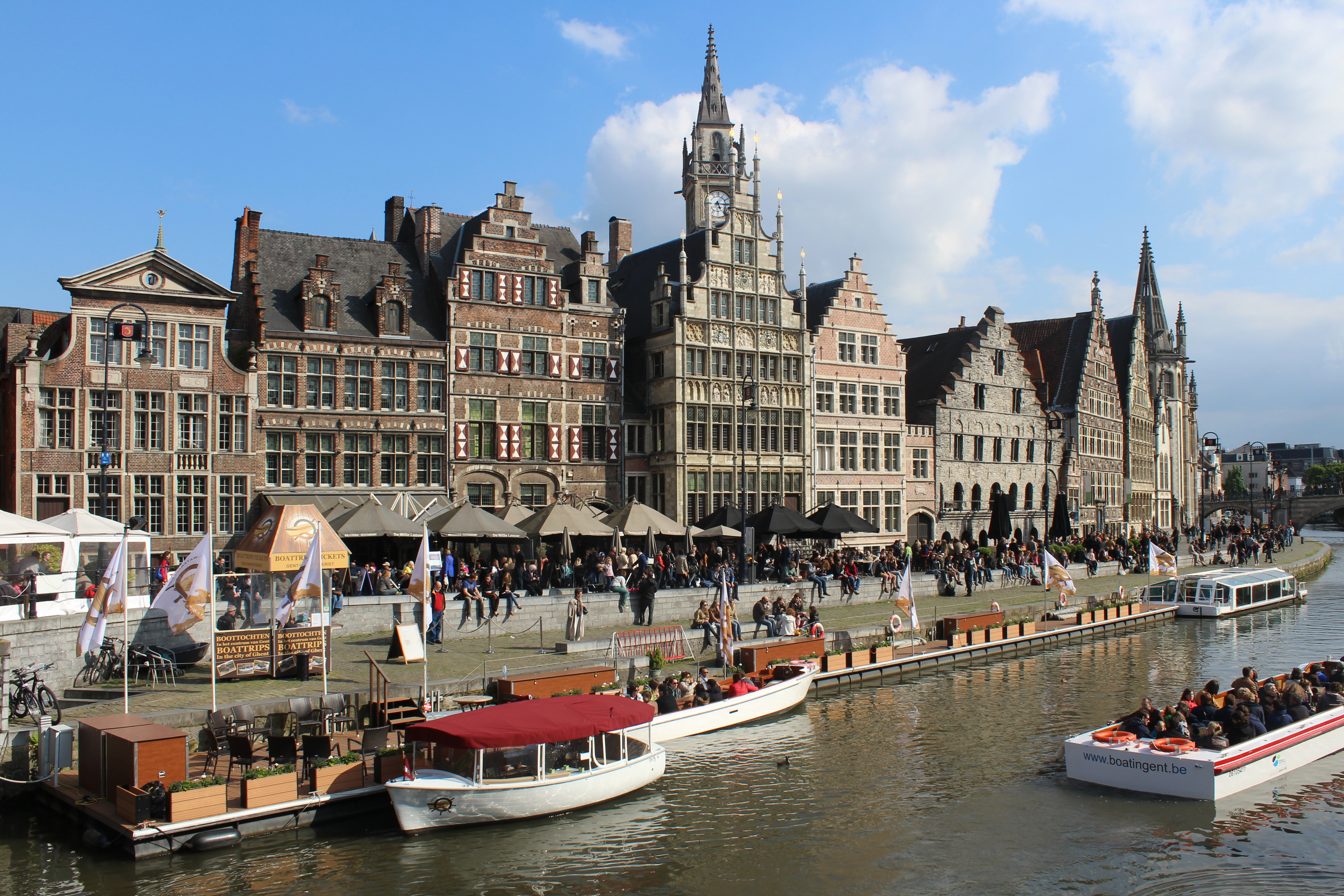
Ghent is one of Europe’s strongest examples of a city that feels substantial without feeling overwhelming. Medieval towers, canals and guild houses define the historic core, but the city is not preserved as a museum piece. A large student population, active cultural scene, creative businesses and dense neighborhood life keep it contemporary. For relocators who want European urbanism without the scale and cost pressure of the continent’s largest capitals, Ghent offers an unusually balanced proposition. The historic center is highly walkable and largely car-free, with trams, buses and cycling handling a large share of everyday mobility. Patershol provides narrow streets and restaurants close to the Castle of the Counts, while neighborhoods around Sint-Pieters station offer easier rail access and more residential streets. The Dok Noord and old-port areas have seen major redevelopment, blending apartments, creative spaces and waterfront paths. Gentbrugge and other outer districts provide quieter housing while remaining connected by bike and transit. Ghent’s quality of life comes from density of useful things: supermarkets, healthcare, museums, cafés, universities, public transport and parks are all woven into a relatively compact city. The culinary scene ranges from Flemish classics to vegetarian restaurants and international food, while the student population supports nightlife and events. The annual Gentse Feesten transforms the center for ten days and demonstrates just how social the city can be. Belgium’s healthcare system, rail network and social infrastructure are major relocation advantages, though bureaucracy, taxation and housing rules require attention. Dutch is the primary language in Ghent; English is widely usable in universities, tourism and many professional environments, but deeper local integration benefits from learning Dutch. Housing is cheaper than central Brussels or Amsterdam in many cases, yet prices have risen and energy efficiency can vary greatly in historic buildings. Weather is mild but often cloudy and wet. Winters are damp rather than severe, and summers are moderate. Cycling works year-round for many residents, but rain gear becomes part of ordinary life. Brussels Airport is reachable by rail, and high-speed train networks make Paris, Amsterdam, London and Cologne practical regional trips. Ghent best fits someone who values walkability, culture, cycling and everyday urban convenience more than sunshine or dramatic scenery. It is a particularly strong option for digital professionals, academics, couples and retirees who want active city life without depending on a car. A relocation test should include a wet winter week as well as summer, because the city’s charm is easy to appreciate in good weather; the more important question is whether its gray-season rhythm still feels comfortable.
Cost of living snapshot
2 budget bands
Executive summary
Estimated one-adult monthly cost of living: $3,000–$4,000 per month (USD).
One adult
$3,000–$4,000 per month (USD)
Couple — two adults sharing housing
$4,200–$5,400 per month (USD)
Estimated for two adults sharing one home. Actual costs vary by housing, lifestyle and healthcare needs.
Monthly cost breakdown
8 live categories
Dining
$300–$500 per month (USD)
Entertainment Fitness
$180–$320 per month (USD)
Groceries
$350–$520 per month (USD)
Healthcare
$250–$450 per month (USD)
Housing
$1,100–$1,700 per month (USD)
Internet Mobile
$55–$90 per month (USD)
Transport
$80–$180 per month (USD)
Utilities
$220–$340 per month (USD)
How the estimate is framed
Based on the destination's reported monthly cost-of-living range.
Media and atmosphere
4 curated assets
Destination guide
What you'll learn
What to know first
What makes it distinctive
Premium intelligence
Best for students, cyclists, culture lovers and residents seeking beautiful everyday urbanism.
A compact Flemish university city with canals, medieval architecture, cycling, restaurants and a car-light center that delivers big-city culture at a human scale.
Neighborhood summary
Flagship neighborhood 1
Medieval core around Korenmarkt, Graslei and the cathedral district, dense with culture and everyday amenities.
Best for
walkability, culture, car-free living
Overall vibe
It offers a clear local rhythm and strong daily-life texture.
Neighborhood resources
Best For
walkability, culture, car-free living
Overall Vibe
It offers a clear local rhythm and strong daily-life texture.
Walkability
very high
Transit
very high
Safety
high
Housing
Historic apartments, renovated townhouses, mixed-use buildings.
Pros
Car-free, culture, transit, dining
Cons
Tourism, smaller units, heritage constraints
Neighborhood intelligence
Restaurants
Restaurants
Real persisted places tied to this neighborhood.
Neighborhood
Historic Centre
Coffee
Coffee
Real persisted places tied to this neighborhood.
Neighborhood
Historic Centre
Shopping
Shopping
Real persisted places tied to this neighborhood.
Neighborhood
Historic Centre
Neighborhood
Historic Centre
Neighborhood
Historic Centre
Entertainment & nightlife
Entertainment & nightlife
Real persisted places tied to this neighborhood.
Neighborhood
Historic Centre
Attractions & things to do
Attractions & things to do
Real persisted places tied to this neighborhood.
Neighborhood
Historic Centre
Neighborhood
Historic Centre
Family friendly
Family-friendly places
Ghent has local public/private schooling options appropriate to its country; families should verify catchments, language and admissions before housing decisions.
Remote work
Remote-work-friendly spots
Walkability
The center is exceptionally walkable and car-light; cycling and trams extend practical mobility well beyond the old town.
How easily daily errands and neighborhood life can be handled on foot.
Transit
Trams, buses, cycling and intercity rail make Ghent one of the most car-optional destinations in this batch.
How well the area supports car-light routines and local travel.
Safety
Dense cycling, trams and pedestrian activity require attention at crossings and shared streets.
How the area is perceived for daily calm and residential comfort.
Live neighborhood resources
Flagship neighborhood 2
Compact medieval quarter north of the center with narrow streets, restaurants and renovated homes.
Best for
restaurants and character
Overall vibe
It offers a clear local rhythm and strong daily-life texture.
Neighborhood resources
Best For
restaurants and character
Overall Vibe
It offers a clear local rhythm and strong daily-life texture.
Walkability
very high
Transit
high
Safety
high
Housing
Historic row houses and apartments.
Pros
Character, restaurants, central
Cons
Noise, small streets, limited parking
Neighborhood intelligence
Restaurants
Restaurants
Real persisted places tied to this neighborhood.
Neighborhood
Patershol
Family friendly
Family-friendly places
Ghent has local public/private schooling options appropriate to its country; families should verify catchments, language and admissions before housing decisions.
Remote work
Remote-work-friendly spots
Walkability
The center is exceptionally walkable and car-light; cycling and trams extend practical mobility well beyond the old town.
How easily daily errands and neighborhood life can be handled on foot.
Transit
Trams, buses, cycling and intercity rail make Ghent one of the most car-optional destinations in this batch.
How well the area supports car-light routines and local travel.
Safety
Dense cycling, trams and pedestrian activity require attention at crossings and shared streets.
How the area is perceived for daily calm and residential comfort.
Live neighborhood resources
Flagship neighborhood 3
Residential district around Gent-Sint-Pieters station with excellent rail/tram access and schools.
Best for
commuters, professionals
Overall vibe
It offers a clear local rhythm and strong daily-life texture.
Neighborhood resources
Best For
commuters, professionals
Overall Vibe
It offers a clear local rhythm and strong daily-life texture.
Walkability
high
Transit
very high
Safety
high
Housing
Apartments, townhouses and larger prewar homes.
Pros
Best rail access, residential, practical
Cons
Less atmospheric than old center
Neighborhood intelligence
Parks & recreation
Parks & recreation
Real persisted places tied to this neighborhood.
Neighborhood
Sint-Pieters / Stationsbuurt
Attractions & things to do
Attractions & things to do
Real persisted places tied to this neighborhood.
Neighborhood
Sint-Pieters / Stationsbuurt
Neighborhood
Sint-Pieters / Stationsbuurt
Neighborhood
Sint-Pieters / Stationsbuurt
Services & government resources
Services & government resources
Real persisted places tied to this neighborhood.
Neighborhood
Sint-Pieters / Stationsbuurt
Family friendly
Family-friendly places
Ghent has local public/private schooling options appropriate to its country; families should verify catchments, language and admissions before housing decisions.
Remote work
Remote-work-friendly spots
Walkability
The center is exceptionally walkable and car-light; cycling and trams extend practical mobility well beyond the old town.
How easily daily errands and neighborhood life can be handled on foot.
Transit
Trams, buses, cycling and intercity rail make Ghent one of the most car-optional destinations in this batch.
How well the area supports car-light routines and local travel.
Safety
Dense cycling, trams and pedestrian activity require attention at crossings and shared streets.
How the area is perceived for daily calm and residential comfort.
Live neighborhood resources
Flagship neighborhood 4
Former docklands redeveloped with apartments, retail, sports and waterfront public space.
Best for
newer apartments, creative scene
Overall vibe
It offers a clear local rhythm and strong daily-life texture.
Neighborhood resources
Best For
newer apartments, creative scene
Overall Vibe
It offers a clear local rhythm and strong daily-life texture.
Walkability
high
Transit
high
Safety
medium-high
Housing
Modern apartments and conversions.
Pros
Modern, waterfront, cycling
Cons
Construction/redevelopment feel
Neighborhood intelligence
Restaurants
Restaurants
Real persisted places tied to this neighborhood.
Neighborhood
Dok Noord / Oude Dokken
Coffee
Coffee
Real persisted places tied to this neighborhood.
Neighborhood
Dok Noord / Oude Dokken
Healthcare
Healthcare
Real persisted places tied to this neighborhood.
Neighborhood
Dok Noord / Oude Dokken
Family friendly
Family-friendly places
Ghent has local public/private schooling options appropriate to its country; families should verify catchments, language and admissions before housing decisions.
Remote work
Remote-work-friendly spots
Walkability
The center is exceptionally walkable and car-light; cycling and trams extend practical mobility well beyond the old town.
How easily daily errands and neighborhood life can be handled on foot.
Transit
Trams, buses, cycling and intercity rail make Ghent one of the most car-optional destinations in this batch.
How well the area supports car-light routines and local travel.
Safety
Dense cycling, trams and pedestrian activity require attention at crossings and shared streets.
How the area is perceived for daily calm and residential comfort.
Live neighborhood resources
Destination highlights
Restaurants across Ghent
Real, verified Ghent places in this category.
Neighborhood
Ghent
Neighborhood
Ghent
Neighborhood
Ghent
Coffee across Ghent
Real, verified Ghent places in this category.
Neighborhood
Ghent
Neighborhood
Ghent
Parks & recreation across Ghent
Real, verified Ghent places in this category.
Neighborhood
Ghent
Shopping across Ghent
Real, verified Ghent places in this category.
Neighborhood
Ghent
Neighborhood
Ghent
Neighborhood
Ghent
Healthcare across Ghent
Real, verified Ghent places in this category.
Neighborhood
Ghent
Neighborhood
Ghent
Entertainment & nightlife across Ghent
Real, verified Ghent places in this category.
Neighborhood
Ghent
Attractions & things to do across Ghent
Real, verified Ghent places in this category.
Neighborhood
Ghent
Neighborhood
Ghent
Neighborhood
Ghent
Neighborhood
Ghent
Neighborhood
Ghent
Services & government resources across Ghent
Real, verified Ghent places in this category.
Neighborhood
Ghent
Maps and resources
Hotels
Vacation Rentals
Transportation
Weather
Nightlife
Consulates
Social Discovery
Editorial overview
Movement
Main international gateway with global network; frequent train connection to Ghent.
Seasonal living
Oceanic climate with mild summers, cool winters and regular rain.
Living there
Best for students, cyclists, culture lovers and residents seeking beautiful everyday urbanism.
Morning: A compact Flemish university city with canals, medieval architecture, cycling, restaurants and a car-light center that delivers big-city culture at a human scale. Evening: Ghent is one of Europe’s strongest examples of a city that feels substantial without feeling overwhelming. Medieval towers, canals and guild houses define the historic core, but the city is not preserved as a museum piece. A large student population, active cultural scene, creative businesses and dense neighborhood life keep it contemporary. For relocators who want European urbanism without the scale and cost pressure of the continent’s largest capitals, Ghent offers an unusually balanced proposition. The historic center is highly walkable and largely car-free, with trams, buses and cycling handling a large share of everyday mobility. Patershol provides narrow streets and restaurants close to the Castle of the Counts, while neighborhoods around Sint-Pieters station offer easier rail access and more residential streets. The Dok Noord and old-port areas have seen major redevelopment, blending apartments, creative spaces and waterfront paths. Gentbrugge and other outer districts provide quieter housing while remaining connected by bike and transit. Ghent’s quality of life comes from density of useful things: supermarkets, healthcare, museums, cafés, universities, public transport and parks are all woven into a relatively compact city. The culinary scene ranges from Flemish classics to vegetarian restaurants and international food, while the student population supports nightlife and events. The annual Gentse Feesten transforms the center for ten days and demonstrates just how social the city can be. Belgium’s healthcare system, rail network and social infrastructure are major relocation advantages, though bureaucracy, taxation and housing rules require attention. Dutch is the primary language in Ghent; English is widely usable in universities, tourism and many professional environments, but deeper local integration benefits from learning Dutch. Housing is cheaper than central Brussels or Amsterdam in many cases, yet prices have risen and energy efficiency can vary greatly in historic buildings. Weather is mild but often cloudy and wet. Winters are damp rather than severe, and summers are moderate. Cycling works year-round for many residents, but rain gear becomes part of ordinary life. Brussels Airport is reachable by rail, and high-speed train networks make Paris, Amsterdam, London and Cologne practical regional trips. Ghent best fits someone who values walkability, culture, cycling and everyday urban convenience more than sunshine or dramatic scenery. It is a particularly strong option for digital professionals, academics, couples and retirees who want active city life without depending on a car. A relocation test should include a wet winter week as well as summer, because the city’s charm is easy to appreciate in good weather; the more important question is whether its gray-season rhythm still feels comfortable. Seasonal rhythm: Oceanic climate with mild summers, cool winters and regular rain.
Weather
Oceanic climate with mild summers, cool winters and regular rain.
Movement
Main international gateway with global network; frequent train connection to Ghent.
Airport access: Regional and international access
Wellness
Belgium has compulsory health insurance through recognized sickness funds and a dense public/private provider network. Ghent has university-level tertiary care.
Insurance and access: Private supplementary insurance can cover room, dental or other gaps beyond compulsory insurance.
Retirement
Excellent aging infrastructure, but taxes, language and immigration matter for non-EU retirees.
Who should not: Ghent is one of Europe’s strongest examples of a city that feels substantial without feeling overwhelming. Medieval towers, canals and guild houses define the historic core, but the city is not preserved as a museum piece. A large student population, active cultural scene, creative businesses and dense neighborhood life keep it contemporary. For relocators who want European urbanism without the scale and cost pressure of the continent’s largest capitals, Ghent offers an unusually balanced proposition. The historic center is highly walkable and largely car-free, with trams, buses and cycling handling a large share of everyday mobility. Patershol provides narrow streets and restaurants close to the Castle of the Counts, while neighborhoods around Sint-Pieters station offer easier rail access and more residential streets. The Dok Noord and old-port areas have seen major redevelopment, blending apartments, creative spaces and waterfront paths. Gentbrugge and other outer districts provide quieter housing while remaining connected by bike and transit. Ghent’s quality of life comes from density of useful things: supermarkets, healthcare, museums, cafés, universities, public transport and parks are all woven into a relatively compact city. The culinary scene ranges from Flemish classics to vegetarian restaurants and international food, while the student population supports nightlife and events. The annual Gentse Feesten transforms the center for ten days and demonstrates just how social the city can be. Belgium’s healthcare system, rail network and social infrastructure are major relocation advantages, though bureaucracy, taxation and housing rules require attention. Dutch is the primary language in Ghent; English is widely usable in universities, tourism and many professional environments, but deeper local integration benefits from learning Dutch. Housing is cheaper than central Brussels or Amsterdam in many cases, yet prices have risen and energy efficiency can vary greatly in historic buildings. Weather is mild but often cloudy and wet. Winters are damp rather than severe, and summers are moderate. Cycling works year-round for many residents, but rain gear becomes part of ordinary life. Brussels Airport is reachable by rail, and high-speed train networks make Paris, Amsterdam, London and Cologne practical regional trips. Ghent best fits someone who values walkability, culture, cycling and everyday urban convenience more than sunshine or dramatic scenery. It is a particularly strong option for digital professionals, academics, couples and retirees who want active city life without depending on a car. A relocation test should include a wet winter week as well as summer, because the city’s charm is easy to appreciate in good weather; the more important question is whether its gray-season rhythm still feels comfortable. Best neighborhoods: Historic Centre, Patershol, Sint-Pieters / Stationsbuurt, Dok Noord / Oude Dokken, Gentbrugge Climate considerations: Oceanic climate with mild summers, cool winters and regular rain. Taxes: Estimated one-adult monthly cost of living: $3,000–$4,000 per month (USD).
Family
Ghent has local public/private schooling options appropriate to its country; families should verify catchments, language and admissions before housing decisions.
Activities: Best for students, cyclists, culture lovers and residents seeking beautiful everyday urbanism. Neighborhood recommendations: Historic Centre, Patershol, Sint-Pieters / Stationsbuurt, Dok Noord / Oude Dokken, Gentbrugge
Remote work
Excellent infrastructure; time-zone overlap with U.S. teams is the main tradeoff.
Coworking: Best for students, cyclists, culture lovers and residents seeking beautiful everyday urbanism. Visa: Requirements vary by citizenship Monthly costs: One adult: $3,000–$4,000 per month (USD) • Couple — two adults sharing housing: $4,200–$5,400 per month (USD) Best neighborhoods: Historic Centre, Patershol, Sint-Pieters / Stationsbuurt, Dok Noord / Oude Dokken, Gentbrugge
Personal safety
Walkability and terrain
Daily errands and convenience
Internet and remote-work reliability
Language ease
Social integration and community character
LGBTQ+ considerations
Family
Pets
Environmental and natural-hazard risks
Crowds and seasonality
Who tends to love or struggle with this destination
Real destination-level research
What day-to-day life, the surrounding landscape, and recreation genuinely look like here - based on verified research, never a generic checklist.
Coffee
Strong specialty-coffee and café culture is embedded in the student and creative economy.
Named places
Culture Museums
Major museums, medieval heritage, live music and festivals create exceptional cultural density for the city's size.
Named places
Dining
Dense restaurant scene ranges from Flemish classics to vegetarian and international cuisine, supported by students and tourism.
Named places
Grocery
Supermarkets, neighborhood grocers and weekly markets make car-free grocery shopping realistic in many districts.
Named places
Healthcare
UZ Gent and major general hospitals provide tertiary and specialist healthcare within the city.
Named places
Internet
Belgian fixed broadband and mobile networks make remote work straightforward in most housing.
Language
Dutch is the local language; English is widely usable in university, professional and tourism settings.
Natural Setting
Canals, river corridors and urban parks provide water and greenery rather than dramatic wilderness.
Named places
Nightlife
Student population and dense bars produce lively nightlife without requiring a large metropolitan scale.
Named places
Parks Gardens
Citadelpark, Blaarmeersen and green corridors provide meaningful recreation within the urban fabric.
Performing Arts
VIERNULVIER, opera, theaters and festival programming support a sophisticated performing-arts scene.
Settlement Type
Historic university city with substantial employment, services and cultural infrastructure but a human-scale urban core.
Transit
Trams, buses, cycling and intercity rail make Ghent one of the most car-optional destinations in this batch.
Named places
Walkability
The center is exceptionally walkable and car-light; cycling and trams extend practical mobility well beyond the old town.
Climate (monthly)