
DestinationFinderAI premium guide
Germany
Baden-Baden
Baden-Baden, Germany
An elegant Black Forest spa city centered on thermal baths, parks, museums, classical culture and a compact urban core with strong access to nature.
Overview
The complete picture of Baden-Baden
Baden-Baden occupies a distinctive niche among European relocation destinations. It is not a major metropolis, a conventional resort or simply a historic small city. Its identity is built around thermal bathing, landscaped parks, high culture, grand hotels, museums, the casino and immediate access to the northern Black Forest. That combination gives it a refined, slower-paced atmosphere while still supporting amenities that are unusually sophisticated for a city of its size. The thermal tradition is the clearest signature. Hot mineral springs have shaped Baden-Baden for centuries, and modern facilities such as Caracalla Spa sit alongside historic bathing culture. Lichtentaler Allee, the Oos River corridor, museums and cultural venues create a walkable central experience, while Merkur Mountain and surrounding forest trails make it easy to move from urban streets into nature. The nearby Rebland wine villages add another dimension, particularly for food, wine and cycling. For retirees and lifestyle-focused relocators, Baden-Baden’s appeal lies in comfort and polish rather than bargain pricing. Housing and hospitality can be expensive, especially in prestigious central areas, but the city offers excellent public infrastructure, rail access to the wider region and proximity to airports serving Karlsruhe/Baden-Baden, Stuttgart, Frankfurt and Strasbourg. Germany’s healthcare and transit systems provide a strong national framework, though residency, taxation and insurance requirements still need to be evaluated at the individual level. The city’s social rhythm is quieter than Berlin, Munich or Hamburg. Nightlife exists, but cultural events, restaurants, spas, galleries, parks and outdoor recreation matter more than club culture. German is important for deeper integration and bureaucracy even though tourism and international visitors make English relatively common in many central businesses. The surrounding Black Forest also broadens the lifestyle beyond the city itself, with hiking, scenic drives, villages and winter recreation accessible regionally. Baden-Baden is therefore a strong match for someone who wants a small, elegant European city with wellness, culture and nature in unusually close proximity. It is less suitable for someone seeking a large labor market, youthful nightlife or low-cost housing. Its strongest proposition is quality of life rather than spectacle: thermal wellness, cultural depth, an exceptionally maintained public realm and immediate Black Forest access create a lifestyle that feels distinct from both large German cities and conventional resort towns. A relocation trial should extend beyond the spa core. Walking from likely residential neighborhoods, using the buses to the rail station, handling ordinary grocery and medical errands, and spending time in a quiet winter week provide a much more realistic picture than a weekend around the Kurhaus. Prospective residents should also test how comfortable they are conducting practical tasks in German, because the city's international polish does not remove the language demands of contracts, insurance and administration. That exercise helps reveal whether Baden-Baden's cultivated calm feels restorative or simply too quiet for the lifestyle a household actually wants.
Cost of living snapshot
A practical executive summary for residents and relocators
2 budget bands
Executive summary
Estimated one-adult monthly cost of living: $2,700–$3,800 per month (USD).
USDmedium confidence
One adult
$2,700–$3,800 per month (USD)
Couple — two adults sharing housing
$3,900–$5,200 per month (USD)
Estimated for two adults sharing one home. Actual costs vary by housing, lifestyle and healthcare needs.
Monthly cost breakdown
The detailed budget categories that shape the monthly picture
8 live categories
Housing
$1,100–$1,700 per month (USD)
Utilities
$220–$350 per month (USD)
Groceries
$320–$480 per month (USD)
Dining
$250–$450 per month (USD)
Transport
$80–$200 per month (USD)
Healthcare
$200–$450 per month (USD)
Internet Mobile
$50–$90 per month (USD)
Entertainment Fitness
$150–$300 per month (USD)
How the estimate is framed
Based on the destination's reported monthly cost-of-living range.
Media and atmosphere
Photos, streets, and daily life
4 curated assets
Destination Guide
Destination guide
A magazine-style introduction to Baden-Baden
What you'll learn
- • Whether the destination deserves serious consideration
- • Which facts matter most before you dig deeper
- • The lifestyle qualities that make the place feel distinct
What to know first
Population58,499
Elevation181 m
Average temperaturesMonthly averages range from 32°F to 78.8°F across the year
WalkabilityThe pedestrian centre, Kurhaus, thermal baths and Lichtentaler Allee are comfortably walkable, though residential hills matter outside the core.
TransitLocal buses connect neighbourhoods to the centre and Baden-Baden station links the city to Germany's national rail network.
HealthcareGermany requires health insurance and combines statutory and private systems. Baden-Baden has local physicians, specialist clinics and hospital access, with additional tertiary options in Karlsruhe and other regional centres.
Airport accessBaden-Baden bus network
CurrencyEUR
LanguageGerman
Time zoneEurope/Berlin
Visa friendlySchengen short stay
What makes it distinctive
The qualities that shape daily life
Practical Details
Premium intelligence
Scores and fit
Cost of living
An elegant Black Forest spa city centered on thermal baths, parks, museums, classical culture and a compact urban core with strong access to nature.
One adult: $2,700–$3,800 per month (USD)Couple — two adults sharing housing: $3,900–$5,200 per month (USD)
Neighborhood summary
How the city is experienced block by block
5 districts
Flagship neighborhood 1
Altstadt / Kernstadt
The historic core around Leopoldsplatz, the thermal baths and pedestrian streets concentrates Baden-Baden's spa identity, shopping and cultural attractions.
Best for
walkability, spas, culture and restaurants
Overall vibe
It offers a clear local rhythm and strong daily-life texture.
Neighborhood resources
Explore this neighborhood
Best For
walkability, spas, culture and restaurants
Overall Vibe
It offers a clear local rhythm and strong daily-life texture.
Walkability
very high
Transit
high
Safety
high
Housing
Historic apartments, renovated townhouses and upscale flats above commercial streets.
Pros
Walk to thermal baths, cafés, shops and cultural venues.
Cons
Tourist activity and premium central pricing.
Neighborhood intelligence
A curatorial guide to the places that make the neighborhood feel real
Entertainment & nightlife
Entertainment & nightlife
Real persisted places tied to this neighborhood.
Casino Baden-BadenAn ornate historic casino in the Kurhaus complex, central to Baden-Baden's glamorous resort identity and evening culture.Open
Neighborhood
Altstadt / Kernstadt
Festspielhaus Baden-BadenOne of Germany's major performance halls, presenting opera, orchestras, ballet and international touring productions.Open
Neighborhood
Altstadt / Kernstadt
Theater Baden-BadenAn ornate municipal theatre near the Kurhaus and Lichtentaler Allee with drama and seasonal productions.Open
Neighborhood
Altstadt / Kernstadt
Attractions & things to do
Attractions & things to do
Real persisted places tied to this neighborhood.
Caracalla SpaA large modern thermal-bathing complex using Baden-Baden's hot mineral springs, with indoor and outdoor pools and sauna areas.Open
Neighborhood
Altstadt / Kernstadt
FriedrichsbadA 19th-century Roman-Irish bathhouse offering a structured bathing ritual in one of Baden-Baden's most atmospheric spa buildings.Open
Neighborhood
Altstadt / Kernstadt
Kurhaus Baden-BadenThe neoclassical social and event heart of the spa city, housing the casino and surrounded by the Kurgarten.Open
Neighborhood
Altstadt / Kernstadt
Merkur Mountain RailwayA steep funicular climbing Merkur Mountain for panoramic views, hiking access and an easy nature excursion from the city.Open
Neighborhood
Altstadt / Kernstadt
Old Castle HohenbadenRuins of the medieval margraves' castle above the city, reached by road or hiking routes and valued for Rhine Valley views.Open
Neighborhood
Altstadt / Kernstadt
TrinkhalleA 19th-century pump-room colonnade beside the Kurhaus, lined with frescoes and tied to Baden-Baden's spa heritage.Open
Neighborhood
Altstadt / Kernstadt
Fabergé MuseumA private museum devoted to Fabergé and related decorative arts, adding a distinctive specialty collection to the spa-center museum mix.Open
Neighborhood
Altstadt / Kernstadt
Stadtmuseum Baden-BadenThe city history museum along the Lichtentaler Allee, covering Baden-Baden's development from Roman spa to international resort.Open
Neighborhood
Altstadt / Kernstadt
Family friendly
Family-friendly places
Baden-Baden has German public/private schools; international-school options are stronger in larger nearby cities.
Remote work
Remote-work-friendly spots
Walkability
The pedestrian centre, Kurhaus, thermal baths and Lichtentaler Allee are comfortably walkable, though residential hills matter outside the core.
How easily daily errands and neighborhood life can be handled on foot.
Transit
Local buses connect neighbourhoods to the centre and Baden-Baden station links the city to Germany's national rail network.
How well the area supports car-light routines and local travel.
Safety
Routine urban theft risk exists around tourist areas and transit, but violent-crime concerns are not a defining lifestyle issue.
How the area is perceived for daily calm and residential comfort.
Live neighborhood resources
Flagship neighborhood 2
Lichtental
South of the center, Lichtental extends along the Oos and the famous avenue toward the abbey, combining residential streets with green space.
Best for
parks, quieter living and access to Lichtentaler Allee
Overall vibe
It offers a clear local rhythm and strong daily-life texture.
Neighborhood resources
Explore this neighborhood
Best For
parks, quieter living and access to Lichtentaler Allee
Overall Vibe
It offers a clear local rhythm and strong daily-life texture.
Walkability
high
Transit
medium
Safety
high
Housing
Apartments, villas and traditional residential buildings.
Pros
Green surroundings and direct access to Lichtentaler Allee.
Cons
Farther from the rail station and some central services.
Neighborhood intelligence
A curatorial guide to the places that make the neighborhood feel real
Parks & recreation
Parks & recreation
Real persisted places tied to this neighborhood.
Lichtentaler AlleeA roughly three-kilometre landscaped promenade along the River Oos linking the Kurhaus area with museums, gardens and Lichtenthal.Open
Neighborhood
Lichtental
GönneranlageA formal garden off the Lichtentaler Allee with thousands of rose bushes and a quiet residential-park setting.Open
Neighborhood
Lichtental
Geroldsau WaterfallA wooded walking destination in the Geroldsau valley, especially popular when rhododendrons flower and the stream runs strongly.Open
Neighborhood
Lichtental
Attractions & things to do
Attractions & things to do
Real persisted places tied to this neighborhood.
Museum Frieder BurdaA major private art museum on the Lichtentaler Allee in a Richard Meier building, with rotating modern and contemporary exhibitions.Open
Neighborhood
Lichtental
Staatliche Kunsthalle Baden-BadenA state art institution on the Museum Mile with changing contemporary exhibitions beside Museum Frieder Burda.Open
Neighborhood
Lichtental
Brahms HouseThe preserved house where Johannes Brahms spent summers, offering a small-scale music-history experience in Lichtental.Open
Neighborhood
Lichtental
Family friendly
Family-friendly places
Baden-Baden has German public/private schools; international-school options are stronger in larger nearby cities.
Remote work
Remote-work-friendly spots
Walkability
The pedestrian centre, Kurhaus, thermal baths and Lichtentaler Allee are comfortably walkable, though residential hills matter outside the core.
How easily daily errands and neighborhood life can be handled on foot.
Transit
Local buses connect neighbourhoods to the centre and Baden-Baden station links the city to Germany's national rail network.
How well the area supports car-light routines and local travel.
Safety
Routine urban theft risk exists around tourist areas and transit, but violent-crime concerns are not a defining lifestyle issue.
How the area is perceived for daily calm and residential comfort.
Live neighborhood resources
Flagship neighborhood 3
Oos
The district around Baden-Baden's main railway station is the city's strongest location for regional rail access and tends to feel more practical than resort-like.
Best for
rail access, value and regional mobility
Overall vibe
It offers a clear local rhythm and strong daily-life texture.
Neighborhood resources
Explore this neighborhood
Best For
rail access, value and regional mobility
Overall Vibe
It offers a clear local rhythm and strong daily-life texture.
Walkability
medium
Transit
very high
Safety
medium
Housing
Apartments, postwar residential buildings and mixed commercial-residential streets.
Pros
Best rail connectivity and generally more practical housing options.
Cons
Less atmospheric and farther from the thermal-spa center.
Neighborhood intelligence
A curatorial guide to the places that make the neighborhood feel real
Family friendly
Family-friendly places
Baden-Baden has German public/private schools; international-school options are stronger in larger nearby cities.
Remote work
Remote-work-friendly spots
Walkability
The pedestrian centre, Kurhaus, thermal baths and Lichtentaler Allee are comfortably walkable, though residential hills matter outside the core.
How easily daily errands and neighborhood life can be handled on foot.
Transit
Local buses connect neighbourhoods to the centre and Baden-Baden station links the city to Germany's national rail network.
How well the area supports car-light routines and local travel.
Safety
Routine urban theft risk exists around tourist areas and transit, but violent-crime concerns are not a defining lifestyle issue.
How the area is perceived for daily calm and residential comfort.
Live neighborhood resources
Flagship neighborhood 4
Rebland (Neuweier / Varnhalt / Steinbach)
Baden-Baden's western wine villages sit among vineyards and offer a rural counterpoint to the spa center while remaining within the city municipality.
Best for
vineyards, space and village living
Overall vibe
It offers a clear local rhythm and strong daily-life texture.
Neighborhood resources
Explore this neighborhood
Best For
vineyards, space and village living
Overall Vibe
It offers a clear local rhythm and strong daily-life texture.
Walkability
low
Transit
low
Safety
high
Housing
Village houses, apartments, vineyard-edge homes and guesthouses.
Pros
Vineyard landscape, quiet streets and village character.
Cons
Car dependence is much higher and central attractions are farther away.
Neighborhood intelligence
A curatorial guide to the places that make the neighborhood feel real
Attractions & things to do
Attractions & things to do
Real persisted places tied to this neighborhood.
Rebland Wine VillagesThe vineyard villages of Neuweier, Varnhalt and Steinbach form Baden-Baden's wine-growing district and a quieter rural counterpoint to the spa center.Open
Neighborhood
Rebland (Neuweier / Varnhalt / Steinbach)
Family friendly
Family-friendly places
Baden-Baden has German public/private schools; international-school options are stronger in larger nearby cities.
Remote work
Remote-work-friendly spots
Walkability
The pedestrian centre, Kurhaus, thermal baths and Lichtentaler Allee are comfortably walkable, though residential hills matter outside the core.
How easily daily errands and neighborhood life can be handled on foot.
Transit
Local buses connect neighbourhoods to the centre and Baden-Baden station links the city to Germany's national rail network.
How well the area supports car-light routines and local travel.
Safety
Routine urban theft risk exists around tourist areas and transit, but violent-crime concerns are not a defining lifestyle issue.
How the area is perceived for daily calm and residential comfort.
Live neighborhood resources
Destination highlights
Real recommendations that span all of Baden-Baden
Parks & recreation across Baden-Baden
Real, verified Baden-Baden places in this category.
Lichtentaler AlleeA roughly three-kilometre landscaped promenade along the River Oos linking the Kurhaus area with museums, gardens and Lichtenthal.Open
Neighborhood
Baden-Baden
GönneranlageA formal garden off the Lichtentaler Allee with thousands of rose bushes and a quiet residential-park setting.Open
Neighborhood
Baden-Baden
Geroldsau WaterfallA wooded walking destination in the Geroldsau valley, especially popular when rhododendrons flower and the stream runs strongly.Open
Neighborhood
Baden-Baden
Entertainment & nightlife across Baden-Baden
Real, verified Baden-Baden places in this category.
Casino Baden-BadenAn ornate historic casino in the Kurhaus complex, central to Baden-Baden's glamorous resort identity and evening culture.Open
Neighborhood
Baden-Baden
Festspielhaus Baden-BadenOne of Germany's major performance halls, presenting opera, orchestras, ballet and international touring productions.Open
Neighborhood
Baden-Baden
Theater Baden-BadenAn ornate municipal theatre near the Kurhaus and Lichtentaler Allee with drama and seasonal productions.Open
Neighborhood
Baden-Baden
Attractions & things to do across Baden-Baden
Real, verified Baden-Baden places in this category.
Caracalla SpaA large modern thermal-bathing complex using Baden-Baden's hot mineral springs, with indoor and outdoor pools and sauna areas.Open
Neighborhood
Baden-Baden
FriedrichsbadA 19th-century Roman-Irish bathhouse offering a structured bathing ritual in one of Baden-Baden's most atmospheric spa buildings.Open
Neighborhood
Baden-Baden
Kurhaus Baden-BadenThe neoclassical social and event heart of the spa city, housing the casino and surrounded by the Kurgarten.Open
Neighborhood
Baden-Baden
Museum Frieder BurdaA major private art museum on the Lichtentaler Allee in a Richard Meier building, with rotating modern and contemporary exhibitions.Open
Neighborhood
Baden-Baden
Staatliche Kunsthalle Baden-BadenA state art institution on the Museum Mile with changing contemporary exhibitions beside Museum Frieder Burda.Open
Neighborhood
Baden-Baden
Merkur Mountain RailwayA steep funicular climbing Merkur Mountain for panoramic views, hiking access and an easy nature excursion from the city.Open
Neighborhood
Baden-Baden
Old Castle HohenbadenRuins of the medieval margraves' castle above the city, reached by road or hiking routes and valued for Rhine Valley views.Open
Neighborhood
Baden-Baden
TrinkhalleA 19th-century pump-room colonnade beside the Kurhaus, lined with frescoes and tied to Baden-Baden's spa heritage.Open
Neighborhood
Baden-Baden
Fabergé MuseumA private museum devoted to Fabergé and related decorative arts, adding a distinctive specialty collection to the spa-center museum mix.Open
Neighborhood
Baden-Baden
Brahms HouseThe preserved house where Johannes Brahms spent summers, offering a small-scale music-history experience in Lichtental.Open
Neighborhood
Baden-Baden
Stadtmuseum Baden-BadenThe city history museum along the Lichtentaler Allee, covering Baden-Baden's development from Roman spa to international resort.Open
Neighborhood
Baden-Baden
Rebland Wine VillagesThe vineyard villages of Neuweier, Varnhalt and Steinbach form Baden-Baden's wine-growing district and a quieter rural counterpoint to the spa center.Open
Neighborhood
Baden-Baden
Maps and resources
Discovery links grouped by category
Hotels
Vacation Rentals
Healthcare
Weather
Nightlife
Consulates
Social Discovery
Deep Dive
Editorial overview
The living rhythms that shape the place
Movement
Getting around
City buses connect the railway station in Oos with the spa center, Lichtental and outer districts. Central neighborhoods are also very walkable.
Seasonal living
Climate and recreation
Movement
Transportation
City buses connect the railway station in Oos with the spa center, Lichtental and outer districts. Central neighborhoods are also very walkable.
Continue reading
Airport access: Regional and international access
Wellness
Healthcare
Germany requires health insurance and combines statutory and private systems. Baden-Baden has local physicians, specialist clinics and hospital access, with additional tertiary options in Karlsruhe and other regional centres.
Continue reading
Insurance and access: Newcomers need statutory or qualifying private insurance appropriate to their residence/work status.
Retirement
Retirement
Aging infrastructure is stronger than in many resort towns, but residency and health-insurance setup must be solved before relocation.
Continue reading
Who should not: Baden-Baden occupies a distinctive niche among European relocation destinations. It is not a major metropolis, a conventional resort or simply a historic small city. Its identity is built around thermal bathing, landscaped parks, high culture, grand hotels, museums, the casino and immediate access to the northern Black Forest. That combination gives it a refined, slower-paced atmosphere while still supporting amenities that are unusually sophisticated for a city of its size. The thermal tradition is the clearest signature. Hot mineral springs have shaped Baden-Baden for centuries, and modern facilities such as Caracalla Spa sit alongside historic bathing culture. Lichtentaler Allee, the Oos River corridor, museums and cultural venues create a walkable central experience, while Merkur Mountain and surrounding forest trails make it easy to move from urban streets into nature. The nearby Rebland wine villages add another dimension, particularly for food, wine and cycling. For retirees and lifestyle-focused relocators, Baden-Baden’s appeal lies in comfort and polish rather than bargain pricing. Housing and hospitality can be expensive, especially in prestigious central areas, but the city offers excellent public infrastructure, rail access to the wider region and proximity to airports serving Karlsruhe/Baden-Baden, Stuttgart, Frankfurt and Strasbourg. Germany’s healthcare and transit systems provide a strong national framework, though residency, taxation and insurance requirements still need to be evaluated at the individual level. The city’s social rhythm is quieter than Berlin, Munich or Hamburg. Nightlife exists, but cultural events, restaurants, spas, galleries, parks and outdoor recreation matter more than club culture. German is important for deeper integration and bureaucracy even though tourism and international visitors make English relatively common in many central businesses. The surrounding Black Forest also broadens the lifestyle beyond the city itself, with hiking, scenic drives, villages and winter recreation accessible regionally. Baden-Baden is therefore a strong match for someone who wants a small, elegant European city with wellness, culture and nature in unusually close proximity. It is less suitable for someone seeking a large labor market, youthful nightlife or low-cost housing. Its strongest proposition is quality of life rather than spectacle: thermal wellness, cultural depth, an exceptionally maintained public realm and immediate Black Forest access create a lifestyle that feels distinct from both large German cities and conventional resort towns. A relocation trial should extend beyond the spa core. Walking from likely residential neighborhoods, using the buses to the rail station, handling ordinary grocery and medical errands, and spending time in a quiet winter week provide a much more realistic picture than a weekend around the Kurhaus. Prospective residents should also test how comfortable they are conducting practical tasks in German, because the city's international polish does not remove the language demands of contracts, insurance and administration. That exercise helps reveal whether Baden-Baden's cultivated calm feels restorative or simply too quiet for the lifestyle a household actually wants. Best neighborhoods: Altstadt / Kernstadt, Lichtental, Oos, Rebland (Neuweier / Varnhalt / Steinbach), Weststadt Taxes: Estimated one-adult monthly cost of living: $2,700–$3,800 per month (USD).
Family
Family
Baden-Baden has German public/private schools; international-school options are stronger in larger nearby cities.
Continue reading
Neighborhood recommendations: Altstadt / Kernstadt, Lichtental, Oos, Rebland (Neuweier / Varnhalt / Steinbach), Weststadt
Remote work
Digital nomad
Fixed broadband and mobile service are strong in the urban core; older buildings and outer wine villages should be checked address by address.
Continue reading
Visa: Requirements vary by citizenship Monthly costs: One adult: $2,700–$3,800 per month (USD) • Couple — two adults sharing housing: $3,900–$5,200 per month (USD) Best neighborhoods: Altstadt / Kernstadt, Lichtental, Oos, Rebland (Neuweier / Varnhalt / Steinbach), Weststadt
Practical Living Snapshot
Personal safety
- Routine urban theft risk exists around tourist areas and transit, but violent-crime concerns are not a defining lifestyle issue. Neighborhood-level safety evidence exists and varies by district - check the specific area before assuming citywide consistency.
Walkability and terrain
- The center has pedestrian zones and accessible public transport, but the city's hills, historic buildings and cobbled surfaces create uneven accessibility outside modern facilities.
- medium-high
Daily errands and convenience
- excellent supermarkets and weekly markets across the city
- The spa-center image can obscure that Baden-Baden is a normal German city with taxes, registration, utility contracts and transit patterns that reward German-language competence.
Internet and remote-work reliability
- Fixed broadband and mobile service are strong in the urban core; older buildings and outer wine villages should be checked address by address.
Language ease
- English is common in hotels, spas and tourism-facing businesses, but German materially improves healthcare, contracts, bureaucracy and social integration.
Community and Personal Comfort
Social integration and community character
- Baden-Baden has a mature local population, international spa visitors and a notable foreign-resident share. Cultural institutions, clubs, churches and neighborhood associations are stronger integration routes than nightlife.
- music, museums, sports clubs, wine villages and volunteer associations
LGBTQ+ considerations
- Legal protections are strong; visible community infrastructure is modest because of city size.
- Small local scene; Karlsruhe and Stuttgart offer larger networks.
- This reflects general legal and cultural context only - not individualized legal advice, and not a guarantee of safety or comfort.
Family
- Baden-Baden has German public/private schools; international-school options are stronger in larger nearby cities.
- Universities are in Karlsruhe and other regional cities.
- Kita/Kindergarten is part of normal German family infrastructure, but placement should be arranged early.
- Regional universities accessible by rail/car.
- Lichtentaler Allee, Merkur, museums, theater and Black Forest excursions provide a refined family activity mix.
Pets
- Pet-friendly rentals are common but landlord/building rules and dog obligations should be checked.
- Black Forest trails are excellent for dogs; leash/wildlife rules and dog tax/registration may apply locally.
Reality and Environment
Environmental and natural-hazard risks
- Generally good for a small European city, with traffic corridors producing localized pollution.
- German municipal drinking water standards are high and supply is reliable.
- Heavy rain and flash-flood conditions can affect valleys and waterways in southwest Germany.
- Summer heatwaves are increasingly relevant, especially for older residents in buildings without strong cooling.
Crowds and seasonality
- Mild early autumn turning cooler and wetter.
- Warm, sometimes hot; thunderstorms possible.
- Cool, damp, occasional snow; thermal spas are especially appealing.
Who tends to love or struggle with this destination
- Baden-Baden's spa reputation, central location and high-end housing market can push costs above many similarly sized German cities.
- English may work in hotels and visitor-facing businesses, but contracts, local administration, healthcare paperwork and deeper social integration are much easier in German.
- The spa core is pleasant on foot, but residential areas rise into Black Forest slopes and can be less convenient for limited mobility.
- People seeking a loud nightlife or youthful big-city scene may find the city formal, mature and subdued outside cultural events.
- Long-distance trains stop in the Oos district rather than the historic spa core, so bus/taxi connections are part of many rail journeys.
Real destination-level research
Lifestyle & Recreation
What day-to-day life, the surrounding landscape, and recreation genuinely look like here - based on verified research, never a generic checklist.
Strong café tradition
Cafés and pastry shops are embedded in the central pedestrian district and spa culture.
Established resident and visitor mix
The city combines long-term German residents, spa visitors, cultural tourists and an international affluent population, producing a polished but sometimes formal social scene.
Exceptional culture for city size
Museum Frieder Burda, Kunsthalle, Festspielhaus, Theater Baden-Baden and the Kurhaus create unusually deep cultural infrastructure.
Named places
Polished dining scene
Baden-Baden supports refined German and international dining, hotel restaurants and cafés shaped by spa and cultural tourism.
Excellent everyday grocery access
German supermarkets, pharmacies and specialty food shops are readily available across the city and surrounding districts.
Strong German healthcare access
The city benefits from Germany's established healthcare system, local specialist care and access to larger regional medical centres.
Strong urban connectivity
Fixed broadband and mobile coverage are generally strong in the city, supporting remote work and normal digital services.
German primary; English useful in tourism
German is important for long-term integration and bureaucracy, while English is common in higher-end tourism and many visitor-facing services.
Black Forest foothills
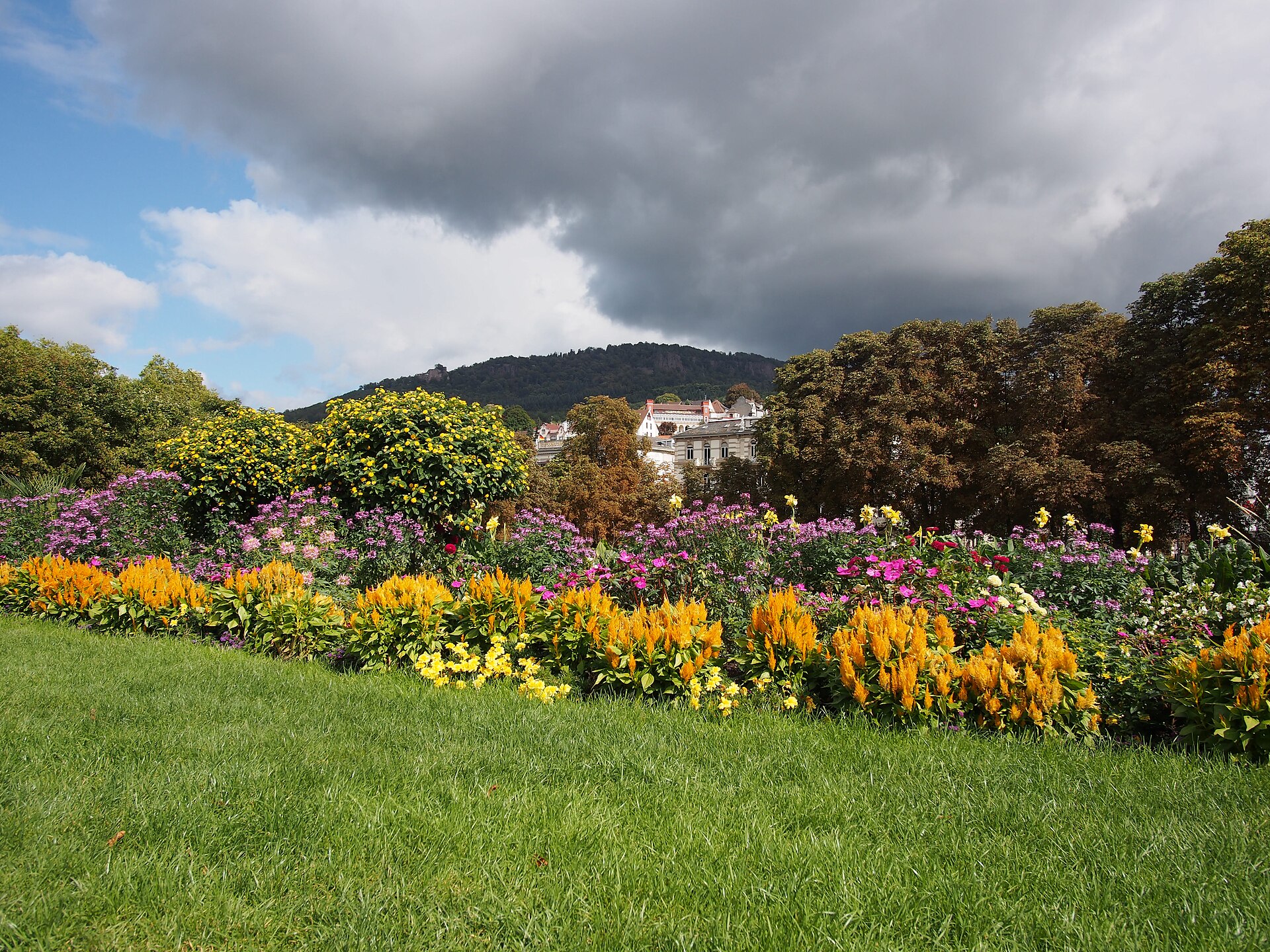
The city sits at the western edge of the Black Forest with wooded hills, gardens and vineyard districts immediately around the urban core.
Named places
Geroldsau WaterfallOpen on Google Maps
GönneranlageOpen on Google Maps
Lichtentaler AlleeOpen on Google Maps
Signature park-and-garden network
Lichtentaler Allee, Gönneranlage and surrounding wooded hills make landscaped green space central to everyday life.
Spa and culture city
Baden-Baden is a compact Black Forest spa city built around thermal bathing, parks, cultural institutions and high-end hospitality.
Boutique-oriented central shopping
The compact centre emphasizes boutiques, specialty shops and upscale retail rather than large suburban shopping complexes.
Good local/regional public transport
Local buses connect neighbourhoods to the centre and Baden-Baden station links the city to Germany's national rail network.
Strong central walkability
The pedestrian centre, Kurhaus, thermal baths and Lichtentaler Allee are comfortably walkable, though residential hills matter outside the core.
Climate (monthly)
- Jan: 32–41°F
- Feb: 32–44.6°F
- Mar: 37.4–53.6°F
- Apr: 42.8–60.8°F
- May: 50–68°F
- Jun: 57.2–75.2°F
- Jul: 60.8–78.8°F
- Aug: 59–78.8°F
- Sep: 53.6–69.8°F
- Oct: 46.4–59°F
- Nov: 39.2–48.2°F
- Dec: 33.8–42.8°F